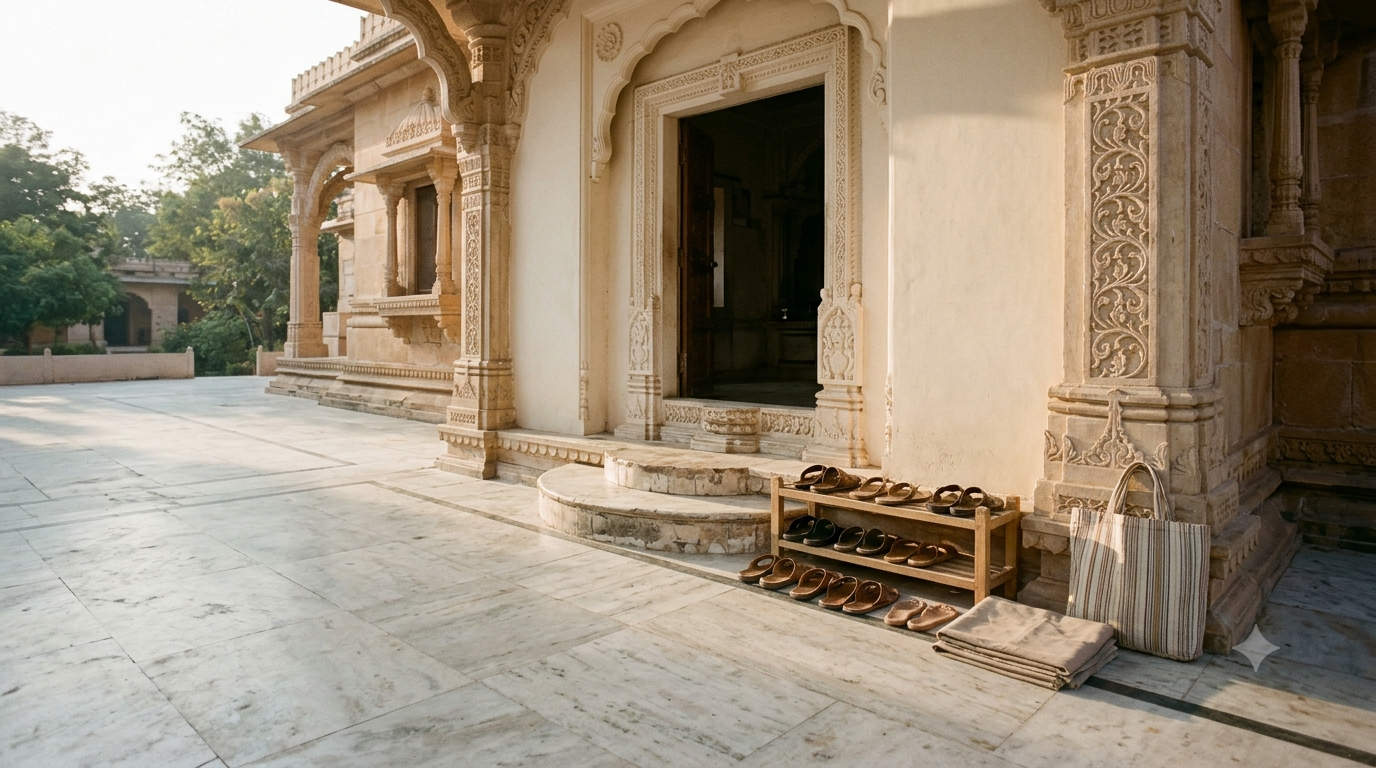
Jain temple etiquette begins with a simple idea: enter as a guest in a place of worship, not as a tourist claiming access. Clean clothes, quiet behaviour and respect for living things matter everywhere. Yet the rules about leather, phones, photographs and visiting hours can differ sharply between temples.
This independent guide is not affiliated with any temple or trust and accepts no bookings, donations or payments. Check official tourism information and the temple’s own notices before visiting.
Jain temple etiquette at a glance
- Wear clean, modest clothes; covered shoulders and knees are a sensible starting point, not a substitute for a temple’s posted dress code.
- Expect to remove footwear before entering a shrine. Check where the shoe-free area begins, especially at hill complexes.
- Leave leather accessories behind if the temple prohibits them. The restriction can reach beyond shoes to belts, wallets and straps.
- Never assume that a silent phone or paid camera ticket gives permission to photograph worship, people or sacred images.
- Confirm access for sightseeing visitors separately from the hours for Jain devotees and worship.
The most useful rule in Jain temple etiquette is also the least dramatic: an entrance notice outranks any general travel guide. If the policy is unclear, ask an attendant before entering or taking a picture.
Why Jain temple customs differ
Jain temple etiquette draws on ahimsa, the Jain principle of non-violence. Care in walking, speaking and handling objects forms part of this outlook. The Federation of Jain Associations in North America explains these habits through traditional principles of careful conduct.
In a temple, that spirit often means clean clothing, shoes left outside, a calm voice and care around insects or animals. However, theology does not automatically create one nationwide rulebook for visitors. Each temple or managing trust controls its own entry arrangements.
Some complexes mainly serve worshippers in the morning and sightseers later. Others welcome respectful guests through much of the day. A hill pilgrimage may regulate the whole route, while a city temple may set rules only at the shrine door.
Jain temple etiquette: five named examples compared
Our Jain temple etiquette comparison separates published guidance from points that still require local confirmation. It is a planning aid, not a promise of admission or camera permission.
| Temple | Dress and leather | Phones and photography | Visitor access |
|---|---|---|---|
| Dilwara, Mount Abu | Cover shoulders and knees; leather items barred. | Phones and cameras barred; no interior photos. | Tourist visits generally start at noon; morning worship has a separate window. |
| Ranakpur, Rajasthan | Dress modestly; prepare to leave leather items outside. | Ask about camera permission and any charge; phone policy needs a gate check. | Visitor timing and any worshipper distinction need confirmation. |
| Shatrunjaya, Palitana | Modest dress; avoid bringing leather onto the sacred hill. | Confirm rules for each shrine; do not assume hill views mean shrine photos are allowed. | A long daytime climb, with return before closure. |
| Shravanabelagola, Karnataka | Wear practical climbing clothes; remove shoes where the shrine requires. | Tourism promotes landscape photos; individual temples may restrict photography. | Confirm local hill and shrine hours. |
| Tijara Jain Temple, Alwar | Wear respectful clothing; check leather and shoe notices locally. | No verified blanket phone or photography rule in the cited tourism guidance. | Government tourism describes it as open to people of all backgrounds. |
Dilwara Jain Temples: strict phone and camera rules
For Jain temple etiquette at Dilwara in Mount Abu, the Government of India’s Incredible India website provides unusually clear guidance. It says visitors must cover their shoulders and knees. It also prohibits cameras, mobile phones and leather items.
That means switching a phone to silent is not enough. Plan to leave restricted belongings in a permitted storage area, if one is available, or elsewhere safely. Do not assume you can carry a phone inside simply because you will not use it.
The same government guide describes separate visiting periods. Jain worship takes place in the morning, while tourist access generally starts at noon and runs into late afternoon. It gives a closing range rather than one fixed tourist cutoff, so confirm the day’s entry arrangement.
Dilwara is the clearest example of why a photograph from another Jain temple proves nothing. Its marble carving invites admiration, but the interior is not a photography venue. See the government’s Dilwara entry guidance before travelling. For a regional itinerary, our Rajasthan temples guide also covers Dilwara and Ranakpur.
Ranakpur Jain Temple: ask before paying for photographs
At Ranakpur, Jain temple etiquette starts with respect for the Chaumukha temple’s carved marble halls. Rajasthan Tourism describes it as an important Jain place of worship. Tourists should approach it with the same restraint they would show during a service. Our Indian temple architecture guide explains the regional styles behind such carved stonework.
Wear clothing that covers your shoulders and knees. Visitors should also plan around the customary restrictions on leather goods. A belt, wallet, watch strap or handbag can cause more trouble at the entrance than a pair of shoes.
For photography, the Government of India’s Ranakpur visitor account advises asking at the ticket counter about camera charges. That is not confirmation that photography is always allowed, or that every interior area is open to cameras.
Check whether your phone counts as a camera, whether a separate pass applies, and which areas remain off limits. Ranakpur’s current tourist window is not established by that government page. Therefore, confirm access with the management before planning an early-morning sightseeing visit.
Palitana and Shatrunjaya: respect the entire hill
At Shatrunjaya Hill near Palitana in Gujarat, Jain temple etiquette extends beyond a single temple doorway. Incredible India describes an ascent of more than 3,750 stone steps to the temple complex. This is a substantial pilgrimage, not a brief indoor visit.
Choose modest clothing that works for a long climb, and plan to keep leather items out of the sacred area. Published accounts of the hill describe restrictions on footwear, food and overnight stays. However, present-day boundaries and exceptions need confirmation from current notices and attendants.
Do not treat a view from the steps as automatic permission to photograph inside a shrine. Ask separately about outdoor photos, temple courtyards and images of Tirthankaras. Rules may change at different points along the route.
Gujarat Tourism publishes a daytime visiting window, but hill access can depend on weather and local religious arrangements. Start with enough daylight to descend and never plan an overnight stay on the hill. For planning context, use Gujarat Tourism’s Shatrunjaya guide. For other regional stops, see our Gujarat temples itinerary.
Shravanabelagola: outdoor photos are not shrine permission
At Shravanabelagola in Karnataka, Jain temple etiquette meets a hill pilgrimage and the celebrated Gommateshwara statue. Karnataka Tourism describes a climb of more than 600 steps on Vindhyagiri. It also mentions photography of panoramic views and architecture.
That wording is narrow. It does not say that every basadi, sanctum or ritual can be photographed. In fact, the same tourism guidance warns that photography restrictions may apply inside some temples.
Wear comfortable footwear for the approach where it is permitted, then follow the shoe-removal point marked at the religious area. Do not copy the footwear rule from Palitana or assume the entire route uses identical boundaries.
Keep your phone away during worship, even if staff allow it on an outdoor path. Before entering an individual shrine, ask whether phones, cameras and leather accessories may cross its threshold. Consult Karnataka Tourism’s Shravanabelagola guidance.
Tijara Jain Temple: who can visit?
Tijara Jain Temple in Rajasthan shows why Jain temple etiquette must leave room for different access arrangements. Incredible India explicitly describes the temple as open to visitors regardless of caste, creed or gender. It also welcomes people interested in Jain architecture and history.
However, an open-door description is not a promise that every room or ceremony is open. The government page does not settle all questions about leather, mobile devices or taking pictures. Ask the temple attendants rather than copying Dilwara’s prohibitions or Ranakpur’s camera arrangements.
For current public information, see the official tourism page for Tijara Jain Temple. Its published hours can help plan a visit, but local notices should settle access on the day.
What should you wear to a Jain temple?
For Jain temple etiquette, start with clean, simple clothing that covers shoulders and knees unless local rules differ. A long skirt, salwar suit, sari, kurta with trousers or plain shirt with full-length trousers may suit many visits. Comfort matters, especially on exposed stone steps.
Do not mistake a sensible general outfit for an official dress code at every shrine. Some places or special worship areas may require additional clothing or impose their own limits. Ask before entering if you are unsure, rather than relying on a photograph of another visitor.
A light scarf can be useful, but there is no reliable basis for declaring that every Jain temple requires all visitors to cover their heads. Likewise, avoid publishing a blanket ban on jeans, colours or specific fabrics without a current temple notice.
What about leather, shoes and socks?
Many Jain worship traditions avoid leather because of its connection with harm to animals. That concern shapes Jain temple etiquette. Dilwara’s leather prohibition appears explicitly in government tourist guidance. At other sites, the exact boundary and the range of restricted items must be checked locally.
Before leaving for a temple, inspect your accessories. A leather wallet, belt, handbag, watch strap or camera strap is easy to overlook. Carry essentials in a small cloth bag if you expect a leather restriction.
Remove shoes before the shrine wherever staff direct you. Do not presume socks are always acceptable, or always forbidden. A hill path and an inner sanctum may have different rules, so follow the signs at each transition.
Jain temple etiquette for phones and photography
The safest principle of Jain temple etiquette for cameras is to assume nothing until the temple gives permission. Dilwara prohibits phones and cameras. Ranakpur’s government visitor advice says to inquire about camera charges. Shravanabelagola’s tourism guidance permits discussion of outdoor photography while warning about restrictions inside some shrines.
Even when photos are permitted, avoid flashes, close-ups of worshippers and recording rituals without consent. A ticket, if offered, may cover only selected spaces or equipment. Ask what it includes before paying.
Do not stream prayers or photograph children and monks without permission. If an attendant asks you to stop, put the device away promptly. A quiet visit without photographs is still a complete visit.
How to behave during prayers and darshan
Darshan means respectfully seeing the revered image. Visitors need not imitate every ritual to show respect. Stand aside when others approach for worship, and speak softly so prayers can continue without interruption.
Avoid touching images, carved walls, bells, offerings or ritual vessels unless someone responsible invites you. Jain practices differ across traditions and temples, so a ritual observed elsewhere may not belong here. Never move an offering for a better photograph.
Jain educational guidance also stresses keeping food, drink and chewing gum out of worship spaces. Eat in designated areas where the temple allows it. Take litter away and watch your step around small living creatures.
Before you enter: a practical six-step check
- Confirm admission: Check whether your intended time serves worshippers, general visitors or both.
- Read the dress notice: Adjust clothing before joining the entrance line.
- Check every accessory: Ask about leather, shoes, socks, belts, wallets and bags.
- Deal with devices: Find out whether phones must stay outside and whether photography needs separate approval.
- Ask about boundaries: Identify rooms, ritual areas and routes that visitors should not enter.
- Leave quietly: Keep the space clean, avoid obstructing worship and follow closing instructions.
Access is never guaranteed merely because a travel page lists hours. Worship, festivals, maintenance and safety can change entry arrangements. When a rule is unclear, use the staffed entrance or official management channel rather than trusting an old social-media post.
Common mistakes that spoil a respectful visit
The first mistake is treating all Jain temples as interchangeable. A Dilwara phone prohibition should not become a national phone rule. Equally, outdoor photography at Shravanabelagola should not become permission to photograph any Jain shrine.
The second mistake is thinking only shoes can contain leather. Belts and wallets often go unnoticed until a visitor reaches a restricted doorway. A quick accessory check prevents an awkward return to the vehicle.
Another error is arriving during a worship-only period with a sightseeing itinerary. At Dilwara, published tourist hours differ from the morning worship window. Finally, do not assume a hill pilgrimage is a short stop. Shatrunjaya needs time, daylight and suitable physical preparation.
Before you go
Good Jain temple etiquette is less about memorising one universal list and more about watching the place in front of you. Cover up, arrive clean, protect the quiet and ask before using a camera. Most importantly, treat the individual temple’s present-day instructions as final.
If you plan a long climb at Shatrunjaya or Shravanabelagola, consider the heat, steep steps and your fitness. Carry necessary medication and water for the permitted portions of the journey. Anyone with a condition that limits exertion should seek medical advice before a demanding ascent.
Frequently asked questions
Can non-Jains enter Jain temples?
Some Jain temples welcome respectful visitors of all backgrounds, but access is site-specific. Incredible India explicitly describes Tijara Jain Temple as open regardless of caste, creed or gender. Dilwara also has a tourist visiting window, although it differs from the morning worship period. Check the local rule before travelling.
Can I wear jeans inside a Jain temple?
Do not assume either that jeans are always allowed or that all Jain temples ban them. Modest coverage is the safer general choice, but a temple may post stricter clothing rules. For Dilwara, the government guidance specifies covered shoulders and knees. Follow any additional local notice.
Are leather belts and wallets allowed?
At Dilwara, government tourism guidance explicitly prohibits leather items. Elsewhere, many visitors avoid leather as a respectful precaution, but the exact restrictions require local confirmation. Check belts, wallets, handbags and straps before joining the queue.
Can I take my phone into a Jain temple?
There is no dependable answer for all temples. Dilwara prohibits mobile phones according to Incredible India. The available official visitor pages do not establish the same blanket rule for Ranakpur, Tijara or Shravanabelagola. Ask at each entrance, even when your device is silent.
Is photography allowed at Ranakpur Jain Temple?
Do not assume unrestricted photography. Incredible India’s Ranakpur guidance advises visitors to ask at the ticket counter about camera charges. Confirm whether permission covers phones, cameras and specific interiors. Never photograph worshippers or sacred images against local instructions.
Can I photograph the Gommateshwara statue at Shravanabelagola?
Karnataka Tourism describes photography of panoramic views and architecture at Shravanabelagola. However, it also warns that photography restrictions may apply in individual temples. Ask staff about the statue precinct and any worship in progress before taking pictures.
Must I climb Shatrunjaya Hill barefoot?
Footwear practices on Shatrunjaya are stricter than at many ordinary tourist sites, but visitors should verify the current starting boundary and any exceptions locally. Do not transfer Shravanabelagola’s approach-footwear advice to Palitana. Plan for a long climb and follow attendants at the base.
Do I need to perform a Jain prayer or ritual?
No visitor should assume participation in a ritual is required for a respectful sightseeing visit. Quiet observation, suitable clothing and care around sacred objects are appropriate starting points. Ask before joining any worship activity, because permissions and customs vary between temples.
What if I arrive and the temple will not admit me?
Admission is subject to the temple’s current rules, not a travel guide’s schedule. If your clothes or belongings cause the problem, correct them where practical and ask whether you may re-enter. If the visitor window has closed or an area is reserved for worship, respect the decision and return at a permitted time.