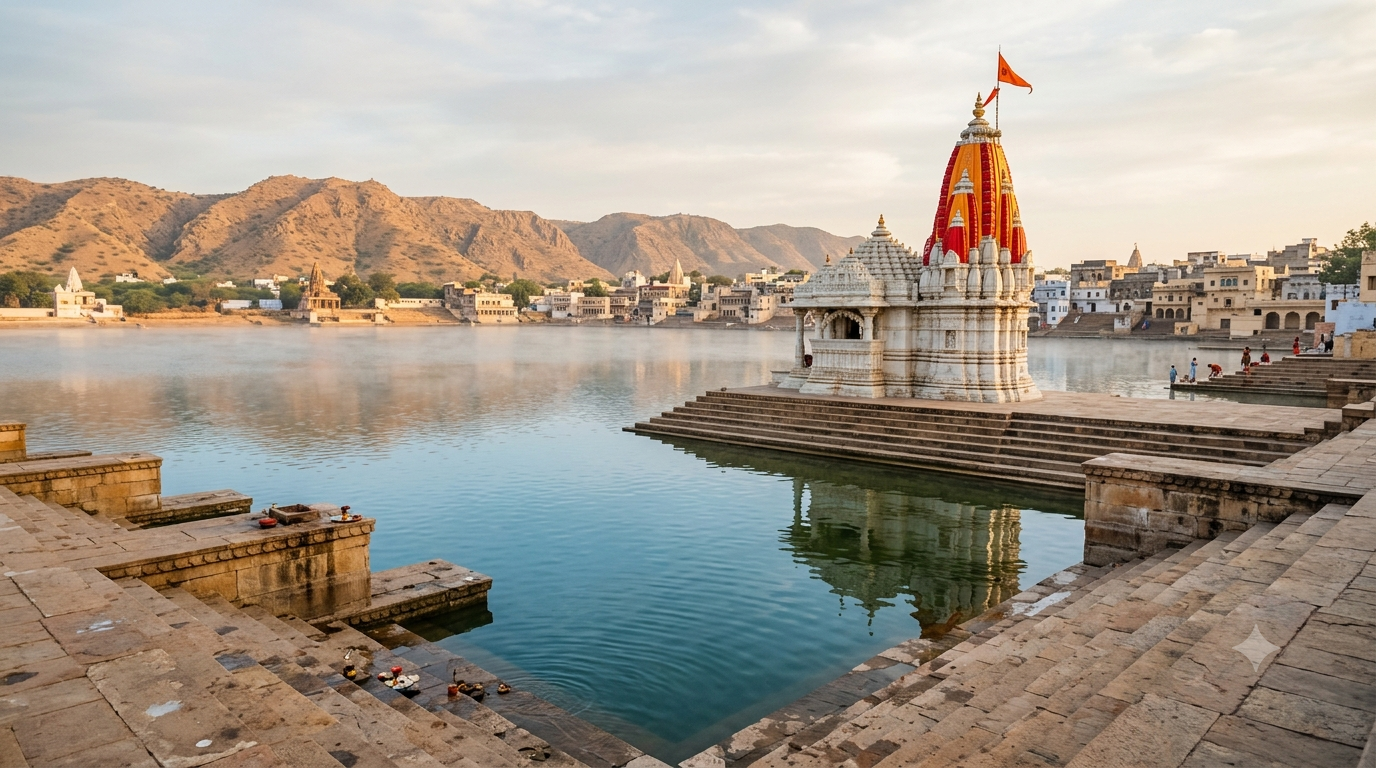
The famous temples in Rajasthan run from a rare shrine to Lord Brahma, to a lace-like Jain masterpiece in marble, to a desert temple where thousands of rats are revered. If you are planning a temple trip across the state, this guide gives you the deities, the real timings, and the travel logic in one place. You will also see the myths that most listicles repeat wrong, corrected against what these temples actually are. So whether you want a quiet darshan or a grand mela, you can plan the route that fits you.
Temples Map is an independent temple-guide website. It is not the official portal of any temple or trust listed here, nor is it affiliated with one. We take no bookings, donations, or payments, so please use each temple’s official channel for reservations and confirmed information.
Famous Temples in Rajasthan at a Glance
Rajasthan holds hundreds of shrines. Yet a handful of the famous temples in Rajasthan stand out for their rarity, art, or sheer devotional pull. The table below maps them before we go deeper into each one.
| Temple | Nearest city | Main deity | Known for |
|---|---|---|---|
| Brahma Temple, Pushkar | Ajmer | Lord Brahma | One of very few Brahma shrines in India |
| Dilwara Temples | Mount Abu | Jain Tirthankaras | Marble carving that rivals the Taj Mahal |
| Karni Mata Temple | Bikaner (Deshnok) | Karni Mata | The “Rat Temple” with sacred kabas |
| Srinathji Temple | Nathdwara | Shrinathji (Krishna) | Chief seat of the Pushtimarg tradition |
| Khatu Shyam Ji | Sikar | Shyam Baba (Barbarika) | Huge Phalgun Mela crowds |
| Salasar Balaji | Churu | Hanuman | Wish-granting Hanuman shrine |
| Ranakpur Jain Temple | Pali | Adinath | 1,444 carved pillars, no two alike |
A few facts hold true across almost all of them. Entry is usually free at the Hindu shrines, though the heritage Jain temples may still charge for cameras or guides. Most temples open early, break at midday, and reopen in the evening. The comfortable season everywhere is October to March, since Rajasthan summers turn brutally hot.
The Brahma Temple in Pushkar
The Jagatpita Brahma Mandir in Pushkar ranks as one of very few temples anywhere dedicated to Lord Brahma. Brahma is the creator in the Hindu trinity, yet shrines to him are rare. Because of that rarity, this red-spired marble temple beside Pushkar Lake became a major pilgrimage centre. Most sources date the current structure to around the 14th century.
Is it really the “only” Brahma temple?
You will often read that Pushkar has the “only” Brahma temple in India. That is not quite accurate. Other Brahma shrines exist at places such as Kumbakonam in Tamil Nadu, and in parts of Goa and the Himalayas. So the honest description is “one of the very few,” which is exactly why Pushkar draws such crowds.
Entry is free, and the temple gets busiest during Kartik Purnima, when the Pushkar Camel Fair fills the town. Timings shift by season and usually include a midday break. A rough guide is early morning until late evening, with the sanctum shut around noon. Since these hours change, confirm them locally before you go.
Dilwara Temples, Mount Abu
Few of the famous temples in Rajasthan match Dilwara for craft. These five Jain shrines went up between the 11th and 13th centuries. Many visitors rate their marble carving above the Taj Mahal itself. Jain ministers of the Solanki era, including Vimal Shah, funded them, while artisans hauled white marble uphill from the Arasuri hills near Ambaji.
What tourists get wrong about Dilwara
Two myths trip up first-time visitors. First, photography inside the temples is strictly banned, so any guide claiming you can shoot the carvings is wrong. Second, tourists cannot enter in the morning, because the temple keeps those hours for Jain prayer. Non-Jain visitors usually get the afternoon window, roughly noon to around 5 or 6 PM.
Entry itself is free, although donations support upkeep. Leather items, including belts and bags, stay outside. Modest dress covering shoulders and knees is expected. The temples sit about 2.5 km from Mount Abu town, so a short taxi ride gets you there.
Karni Mata Temple, Deshnok
The Karni Mata Temple at Deshnok, near Bikaner, is the world-famous “Rat Temple.” Roughly 25,000 rats live inside, and devotees treat them as sacred. These rats, called kabas, are honoured as reborn followers of Karni Mata. She herself is revered as an incarnation of the goddess. Spotting a rare white rat counts as especially lucky.
Two temples, one goddess
Here is a mix-up worth clearing. The rat temple sits at Deshnok, about 30 km from Bikaner. A separate Karni Mata temple near Udaipur is a hilltop shrine reached by a ropeway. They honour the same goddess, yet they are very different places, so do not plan the Udaipur ropeway expecting the rats.
You can read our detailed Karni Mata Temple ropeway and timings guide for the Bikaner side. The Deshnok temple usually opens from early morning until late at night. Eating prasad the rats have nibbled counts as a blessing here, not a health worry.
Krishna and Shiva Shrines of Mewar
Some of the famous temples in Rajasthan cluster around Udaipur, central to the region’s royal faith. Srinathji Temple at Nathdwara is the chief seat of the Pushtimarg tradition. Devotees worship Shrinathji, a form of Krishna, in timed darshan slots called jhankis. The temple opens early, around 5:30 AM, after which priests reveal the deity in stages through the day.
Nearby stands Eklingji, the Shiva temple long treated as the ruling deity of Mewar, about 22 km from Udaipur. The Maharanas of Mewar historically ruled as the god’s regents, which gives the shrine deep weight. For live darshan details, see our Nathdwara Srinathji darshan guide. Both temples reward an unhurried morning visit, since crowds swell later.
The Hanuman and Shyam Trail
Rajasthan’s Shekhawati belt holds three magnetic Hanuman and Krishna shrines. Pilgrims often visit them together on a single loop. Each draws enormous weekend and festival crowds. So timing your trip well matters as much as the darshan itself.
Salasar and Mehandipur Balaji
Salasar Balaji in Churu district honours Hanuman as a wish-granting deity. It lies about 170 km from Jaipur. Tuesdays and Saturdays bring the heaviest rush, so a weekday visit is calmer. Our Salasar Balaji darshan timings guide covers the details.
Mehandipur Balaji, in Dausa district, is tied to rituals for people believed to be troubled by evil spirits. These beliefs are matters of faith and folk tradition, not medical treatment. If you or a family member has a health or mental-health condition, please consult a qualified doctor rather than rely on ritual alone. You can check hours in our Mehandipur Balaji timings guide.
Khatu Shyam Ji, Sikar
Khatu Shyam Ji at Sikar honours Shyam Baba, worshipped as Barbarika. Legend calls him the grandson of Bhima, blessed by Krishna to be revered in the Kali Yuga. The marble temple sits about 80 km from Jaipur. Ringas Junction, the nearest railway station, lies some 17 km away.
Darshan is free. Timings run in two seasonal shifts, roughly early morning to early afternoon, then again in the evening. During the Phalgun Mela, crowds swell into the lakhs. So plan carefully and follow crowd-control instructions.
Ranakpur and More Marble Marvels
Ranakpur Jain Temple in Pali district is a 15th-century Chaumukha shrine to Adinath. It is famous for 1,444 marble pillars, no two carved alike. The play of light through its columned halls is unforgettable, and it pairs naturally with a Mount Abu trip. Non-Jain tourists usually enter in an afternoon window, and a camera or entry charge may apply, so confirm current rules first.
Jaipur adds its own set. Govind Dev Ji, inside the City Palace complex, is one of India’s most beloved Krishna temples. Priests reveal the deity through several daily jhankis. Birla Mandir, a modern white-marble temple below Moti Dungri, glows at dusk.
Galtaji, the spring-fed “Monkey Temple” in the hills east of the city, offers a wilder, quieter contrast. For the styles behind all this stonework, our guide to Indian temple architecture makes a useful companion read.
Timings, Fees & Dress Code at Famous Temples in Rajasthan
Practical rules are simple once you know the pattern. The famous temples in Rajasthan mostly charge no entry fee. Only the heritage Jain temples at Dilwara and Ranakpur may bill for cameras or guides. Because timings shift with season and festivals, treat the hours below as a guide and verify on the day.
| Temple | Entry | Photography inside | Rough timing pattern |
|---|---|---|---|
| Brahma Temple, Pushkar | Free | Limited | Morning to evening, midday break |
| Dilwara Temples | Free (camera/guide may cost) | Not allowed | Tourists afternoon only |
| Karni Mata, Deshnok | Free | Allowed in courtyards | Early morning to late night |
| Khatu Shyam Ji | Free | Restricted near sanctum | Two seasonal shifts |
Dress modestly at every shrine, covering shoulders and knees. Remove footwear and any leather items before you enter, especially at the Jain temples. When a temple bans photography of the deity, respect it. These rules protect both the art and the sanctity of worship.
Planning Your Visit to the Famous Temples in Rajasthan
The smartest way to see the famous temples in Rajasthan is to group them by region. Chasing them one by one wastes days, because the desert is vast. A themed loop saves that backtracking. Three natural circuits cover almost everything on this list.
Best Time and Routes for the Famous Temples in Rajasthan
October to March is the ideal season, because daytime heat stays manageable and festivals cluster then. The Mewar loop links Udaipur, Nathdwara, Eklingji, Ranakpur, and Mount Abu’s Dilwara. The Shekhawati loop ties Khatu Shyam, Salasar, and Mehandipur Balaji from a Jaipur base. A western loop joins Pushkar near Ajmer with Bikaner’s Karni Mata at Deshnok.
Getting around is easiest by road, since many shrines sit in small towns off the rail network. Jaipur, Udaipur, and Bikaner make the best hub cities for hired cars or buses. Trains help for major stops, such as Ajmer for Pushkar and Ringas for Khatu Shyam. After that, a short local ride finishes the trip.
Health and Safety Tips for Famous Temples in Rajasthan
A little caution keeps every trip to the famous temples in Rajasthan joyful. Rajasthan’s heat is the biggest risk outside winter. So carry water, wear a hat, and avoid long midday queues in summer. At huge gatherings such as the Phalgun Mela, crowd surges are real, so keep children close and follow marshals.
At the Karni Mata rat temple you walk barefoot among the kabas. Wash your feet well afterwards, and skip the visit if you have open wounds. Older pilgrims and anyone with mobility limits should note that some shrines involve steps or long walking. As noted earlier, treat ritual “cures” as faith and tradition, never as a substitute for medical care.
Before You Go to the Famous Temples in Rajasthan
The famous temples in Rajasthan reward planning far more than luck. Pick a season in the cool months, group your shrines by region, and confirm live timings before you set out, since seasonal and festival changes are common. Above all, carry the state’s official tourism guidance and each temple’s own updates with you. For trusted references, start with Rajasthan Tourism, the Archaeological Survey of India, and India’s Incredible India portal.
Famous Temples in Rajasthan: Common Questions
Which famous temples in Rajasthan should I visit first?
Start with the Brahma Temple in Pushkar and the Dilwara Temples at Mount Abu, since they are the most distinctive of the famous temples in Rajasthan. Pushkar offers a rare Brahma shrine, while Dilwara shows India’s finest Jain marble work. Add Karni Mata at Deshnok for a truly unusual experience.
Is the Brahma Temple in Pushkar the only Brahma temple in India?
No, it is one of very few, not the only one. Other Brahma shrines exist in Tamil Nadu, Goa, and the Himalayan region. Pushkar is simply the most famous and important, which is why it draws the biggest pilgrim crowds.
Can tourists take photos inside the Dilwara Temples?
No, photography inside the Dilwara Temples is strictly banned. The rule protects the delicate marble carvings and keeps the temples calm. Tourists also enter only in the afternoon, since mornings belong to Jain worship.
Is the Karni Mata rat temple safe to visit?
Yes, most visitors find it safe, though you should take basic care. You walk barefoot among the rats, so wash your feet afterwards and avoid the visit with open cuts. The rats are used to people and rarely bother anyone.
Do the famous temples in Rajasthan charge entry fees?
Most Hindu temples in Rajasthan charge no entry fee at all. The heritage Jain temples at Dilwara and Ranakpur are free to enter, but may charge for cameras or guides. Confirm current rules at the gate, since they can change.
When is the best time to visit famous temples in Rajasthan?
October to March is the best window, because the weather stays cool and pleasant. Many major festivals also fall in these months. Summer months from April to June turn extremely hot, so avoid long temple trips then.
What should I wear to Rajasthan’s temples?
Dress modestly, covering shoulders and knees at every shrine. Remove shoes and leather items before you enter, especially at Jain temples like Dilwara and Ranakpur. Light cotton clothing works well for the region’s warm climate.
Can I photograph the deity at Nathdwara Srinathji Temple?
No, photography of the deity is not permitted at Nathdwara. The temple reveals Shrinathji in timed darshan slots, and cameras stay restricted throughout. Arrive early to catch the calmer morning jhankis.