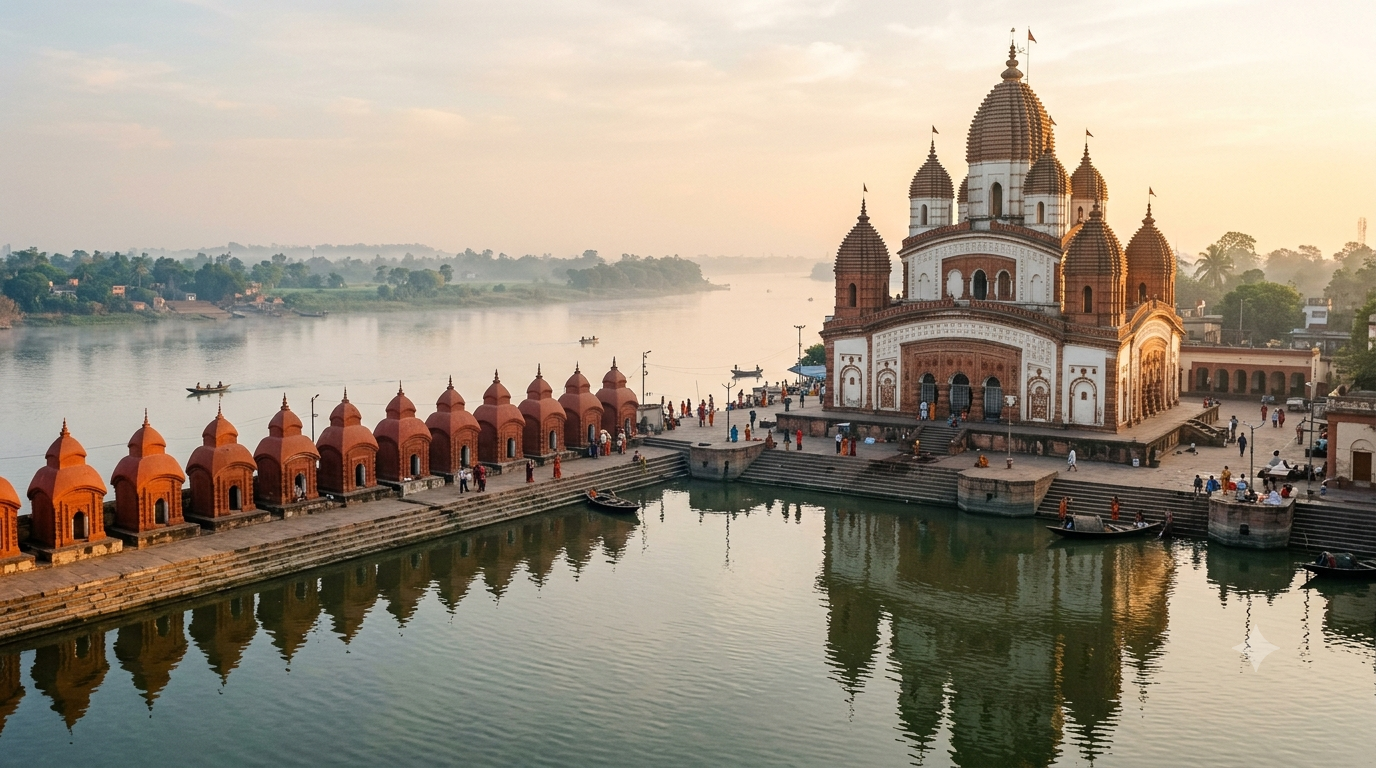
The temples in West Bengal tell the story of Bengal in brick, terracotta and devotion. They range from the towering Kali shrines of Kolkata to the tantric heartland of Birbhum. Now they also include a brand-new Jagannath temple by the sea at Digha.
This guide covers the state’s most famous shrines in one place. You get verified darshan timings, honest travel routes, and a clear warning about the fake booking portals that target pilgrims. Because Bengal worships the Goddess above all, many of its holiest sites are Shakti Peethas, where devotees believe parts of Sati’s body fell. You will also find Vaishnava landmarks, Shiva shrines, and living heritage temples.
TemplesMap.com is an independent temple-information guide. We are not affiliated with, endorsed by, or the official website of any temple, trust, or the West Bengal government. We do not accept bookings, donations, or payments, so always use the official portals linked below for reservations and confirmed information.
Temples in West Bengal at a Glance
Here is a quick snapshot before the detailed guide, so you can plan fast:
- Goddess-first state: Kalighat, Dakshineswar and Tarapith are the three most visited Devi shrines, and all draw huge crowds on Tuesdays and Saturdays.
- Newest landmark: the Jagannath Temple at Digha opened on 30 April 2025, so it is the freshest pilgrimage stop on the map.
- Heritage cluster: Bishnupur’s terracotta temples are ASI-protected monuments, and one ticket covers them all.
- Entry is free at almost every major shrine, though a few heritage sites charge a small ticket.
- Best season: October to March, because summer heat and monsoon humidity make queues tiring.
Most Famous Temples in West Bengal You Should Visit
The list below covers the shrines that matter most to devotees and travellers. Since timings can shift on festival days, treat them as a reliable guide, and confirm locally before a long trip.
| Temple | Deity & Location | General Timings | Entry |
|---|---|---|---|
| Kalighat Kali Temple | Goddess Kali, South Kolkata | 5:00 AM–2:00 PM, 5:00 PM–10:30 PM | Free |
| Dakshineswar Kali Temple | Bhavatarini Kali, Kolkata | Early morning to evening, midday break | Free |
| Belur Math | Sri Ramakrishna, Howrah | 6:30–11:30 AM, 4:00–9:00 PM (seasonal) | Free |
| Tarapith Temple | Goddess Tara, Birbhum | Around 6:00 AM–9:00 PM | Free |
| ISKCON Mayapur | Radha Madhava, Nadia | 7:00 AM–1:00 PM, 4:00–8:00 PM | Free |
| Jagannath Temple, Digha | Lord Jagannath, Purba Medinipur | Around 6:00 AM–9:00 PM, midday break | Free |
| Bishnupur Terracotta Temples | Heritage shrines, Bankura | 6:00 AM–6:00 PM | Small ASI ticket |
Kalighat Kali Temple, Kolkata
Kalighat is the spiritual heart of Kolkata. It is one of the 51 Shakti Peethas, where the toes of Sati’s right foot are believed to have fallen. The city itself likely takes its name from this shrine.
General darshan is free. The temple usually opens at 5:00 AM and closes at 10:30 PM, though it shuts from 2:00 PM to 5:00 PM for bhog. Because Tuesdays and Saturdays are especially sacred to Kali, crowds swell on those days, so a weekday morning is far calmer.
One honest warning matters here. Since some priests and touts near the queue demand large sums for a “VIP” darshan, decline anything that is not an official temple counter. You can read our detailed Dakshineswar Kali Temple guide for the sister shrine most visitors pair with Kalighat.
Dakshineswar Kali Temple, Kolkata
Dakshineswar sits on the eastern bank of the Hooghly River. It is famous as the shrine where the mystic Sri Ramakrishna served as priest. The presiding goddess is Bhavatarini, a form of Kali, while the complex also holds twelve Shiva shrines along the riverbank.
Its nine-spired Navaratna architecture makes it one of Bengal’s most photographed temples. Because the shrine links directly to Belur Math by ferry, many devotees visit both in one morning.
Belur Math, Howrah
Belur Math is the global headquarters of the Ramakrishna Math and Mission. Swami Vivekananda founded it in 1898, and the main temple was consecrated in 1938.
The design blends Hindu, Islamic, Christian and Buddhist motifs into one façade, so it deliberately looks like a temple, mosque and church at once. Although the campus opens in the morning and again in the afternoon, timings shift with the season. Entry is free, while donations support the Mission’s schools and hospitals.
For confirmed hours, check the official Belur Math website before you travel.
Tarapith Temple, Birbhum
Tarapith is the most powerful tantric shrine in Bengal, dedicated to Goddess Tara. Because devotees believe the third eye of Sati fell here, it ranks among the state’s holiest sites.
The red-brick temple stands beside a cremation ground, or mahasmashan. That ground is central to its tantric traditions, and also to the legend of the saint Bamakhepa. The mandir generally opens around 6:00 AM and closes by 9:00 PM. Since animal sacrifice is still practised here by some devotees, sensitive visitors may prefer the outer complex during peak ritual hours.
ISKCON Mayapur, Nadia
Mayapur is the birthplace of Sri Chaitanya Mahaprabhu, and also the worldwide headquarters of ISKCON, founded in 1972. The vast Temple of the Vedic Planetarium is set to become one of the largest religious monuments on Earth.
Darshan of Radha Madhava usually runs from 7:00 AM to 1:00 PM, then reopens from 4:00 PM to 8:00 PM. Because the Mangala Arati begins at 4:30 AM, early risers get the calmest slot. Since Mayapur sits about 130 km from Kolkata, most pilgrims travel via Krishnanagar or Nabadwip.
Jagannath Temple, Digha (New in 2025)
The Jagannath Temple at Digha is the newest major shrine in the state. It opened for darshan on 30 April 2025, after a prana pratishtha ceremony on Akshaya Tritiya. Because the West Bengal government built it at a cost reported near ₹250 crore, it quickly became a flagship project.
It is a Kalinga-style replica of the Puri temple. Builders used Rajasthani pink sandstone, while the vimana rises around 65 metres tall. Darshan generally begins in the early morning and runs to about 9:00 PM, with a midday break. Since entry is free and the temple sits close to New Digha beach, a coastal trip now pairs neatly with a pilgrimage.
Bishnupur Terracotta Temples, Bankura
Bishnupur is a living museum of Bengal temple art. The Malla kings built it between the 17th and 18th centuries. The towerless Rasmancha, raised around 1600, anchors the cluster, while the Jor Bangla, Shyam Rai and Eka-Ratna Madan Mohan temples surround it.
Their terracotta panels retell the Ramayana, Mahabharata and Krishna Lila in fired clay. Because these are ASI-protected monuments rather than busy worship halls, the mood is that of a heritage park. One ticket bought at Rasmancha covers the ticketed sites, which stay open from 6:00 AM to 6:00 PM.
The New Digha Jagannath Temple: What Pilgrims Should Know
Because the Digha temple is so new, reliable information is still scarce, and that gap has created real risk for pilgrims. Several look-alike websites now present themselves as the temple’s official portal, and some even invite donations or payments.
No confirmed official booking or donation portal has been widely verified yet, so treat any site asking for money with caution. A genuine government or trust portal will never demand an upfront “processing fee” through a private-looking page.
The temple was inspired by Puri, and it briefly used the name “Jagannath Dham.” Since that drew objections from Puri servitors, the word “Dham” was later dropped. Because Digha’s shrine follows Puri-style rituals, it may close during Snana Yatra and the days before Rath Yatra, so confirm current timings locally.
Planning a Trip Around the Temples in West Bengal
Bengal’s shrines cluster neatly, so you can group them into short circuits instead of criss-crossing the state. This saves time, and it keeps travel costs sensible.
The Kolkata circuit
Kalighat, Dakshineswar and Belur Math sit within the Kolkata metro area, so you can cover all three in a single day. Because Dakshineswar and Belur Math face each other across the Hooghly, a ferry links them directly. Start early at Kalighat, then head north.
The Birbhum circuit
Tarapith pairs well with the nearby Shakti Peethas of Kankalitala and Nalateswari, while Shantiniketan adds a cultural break. Rampurhat, about 9 km away, is the nearest railway station. Since this cluster is rural, plan overnight stays rather than long day trips.
Mayapur, Bishnupur and Digha
These three lie in different directions, so treat each as its own trip. Mayapur suits a Nadia weekend, Bishnupur pairs with Bankura’s heritage trail, and Digha works as a beach-plus-temple getaway. To understand the styles you will see, our overview of Indian temple architectural styles explains the terracotta and Nagara forms behind these temples in West Bengal.
Best Time to Visit Temples in West Bengal
The best window for the temples in West Bengal is October to March, because cooler, drier weather makes long queues bearable. Winter also aligns with the biggest festivals, so the atmosphere is at its richest. Summer, from April to June, brings heavy heat, while the monsoon can flood approach roads in rural districts.
Festival timing changes the experience completely. Durga Puja transforms all of Bengal in autumn, while Kali Puja lights up Kalighat and Dakshineswar around Diwali. Gaura Purnima fills Mayapur with kirtan, and Rath Yatra now draws big crowds to both Digha and ISKCON centres. If you want a calm darshan instead, avoid these peak dates.
Dress Code, Rules and Safety
Most Bengal temples expect modest dress, so cover shoulders and knees, and remove footwear before entering. Although photography inside the sanctum is usually banned, outer courtyards are often fine. At many shrines you deposit your phone at a counter for a small fee.
A brief safety note helps, because crowds and heat are the real risks here rather than treks. Carry water, and keep an eye on children and elderly companions in dense queues. Because Tarapith’s cremation-ground rituals are spiritually intense, prepare younger travellers in advance.
Faith practices and astrological remedies at these temples are matters of tradition and belief. They are not a substitute for medical care.
Insider Tips Most Guides Miss
- Go before 8:00 AM. Because queues at Kalighat and Tarapith thin out fast in the early morning, you save hours.
- Skip the “VIP” touts. Only pay at official temple counters, since unofficial pandas often overcharge for line access that is otherwise free.
- Pair the river shrines. Dakshineswar and Belur Math share a ferry, so do them together.
- Buy the Bishnupur ticket at Rasmancha. Because it covers the ticketed monuments, you avoid paying at each gate.
- Verify Digha details twice. Since the temple is new, timings and booking claims change often, so confirm through official channels only.
Bengal Beyond the Big Names
Several smaller shrines reward a detour. Tarakeswar in Hooghly is Bengal’s most important Shiva temple, and it draws lakhs during the Shravan month, when devotees walk barefoot carrying holy water.
Kankalitala near Bolpur is another of the 51 Shakti Peethas, while Bakreshwar in Birbhum is known for its hot springs. The Hangseshwari temple at Bansberia stands out for its unusual thirteen-tower design. Each of these adds depth once you have covered the headline temples in West Bengal. For official heritage and travel information, the West Bengal Tourism portal is the most reliable starting point.
The Bottom Line
Bengal rewards the pilgrim who plans by cluster and travels in winter. Start with the Kolkata trio of Kalighat, Dakshineswar and Belur Math, then add Tarapith for its raw tantric power. After that, slot in Mayapur, Bishnupur or the new Digha temple, depending on your route.
Keep timings flexible around festivals, and use only official counters for any payment. Because the newest shrines attract scam sites, treat them with extra caution online. Do that, and the temples in West Bengal offer one of India’s richest spiritual journeys.
Frequently Asked Questions
Which is the most famous temple in West Bengal?
Kalighat Kali Temple in Kolkata is the most famous, because it is one of the 51 Shakti Peethas and gave the city its name. Dakshineswar Kali Temple runs a close second. Both draw their largest crowds during Kali Puja and Durga Puja.
Are the temples in West Bengal free to enter?
Yes, entry is free at almost every major shrine, including Kalighat, Dakshineswar, Belur Math, Tarapith, Mayapur and Digha. Only heritage monuments such as the Bishnupur terracotta temples charge a small ASI ticket. Special pujas and sevas cost extra at temple counters.
When did the Digha Jagannath Temple open?
The Jagannath Temple at Digha opened for darshan on 30 April 2025, on the auspicious day of Akshaya Tritiya. The West Bengal government built it as a Kalinga-style replica of the Puri temple. Entry is free.
Can I book darshan online for Bengal temples?
Most Bengal shrines run free general darshan with no online booking, so be wary of websites claiming otherwise. This is especially true for the new Digha temple, where fake portals have appeared. Always confirm through official channels before paying anything.
Which temples in West Bengal are Shakti Peethas?
Kalighat, Tarapith and Kankalitala are the best-known Shakti Peethas in the state, while others include Nalateswari and Bakreswar. Devotees believe different parts of Sati’s body fell at each site. This is why Bengal is so strongly associated with Goddess worship.
How many days do I need to see the main temples?
You can cover the Kolkata cluster in one full day, then add two to three days for Tarapith, Mayapur or Bishnupur. Because Digha lies on the coast, it needs its own overnight trip. A week comfortably covers the headline shrines.
What is the best time to visit temples in West Bengal?
October to March is ideal, because the weather is cool and dry and the major festivals fall in this window. Avoid the summer heat and the monsoon months if you want comfortable queuing. Early mornings are always the calmest for darshan.
Is photography allowed inside Bengal temples?
Photography inside the main sanctum is usually not allowed at Kalighat, Dakshineswar, Tarapith and Mayapur. Although outer courtyards and heritage sites like Bishnupur are generally fine, always check first. Many temples also ask you to deposit your phone before entering.