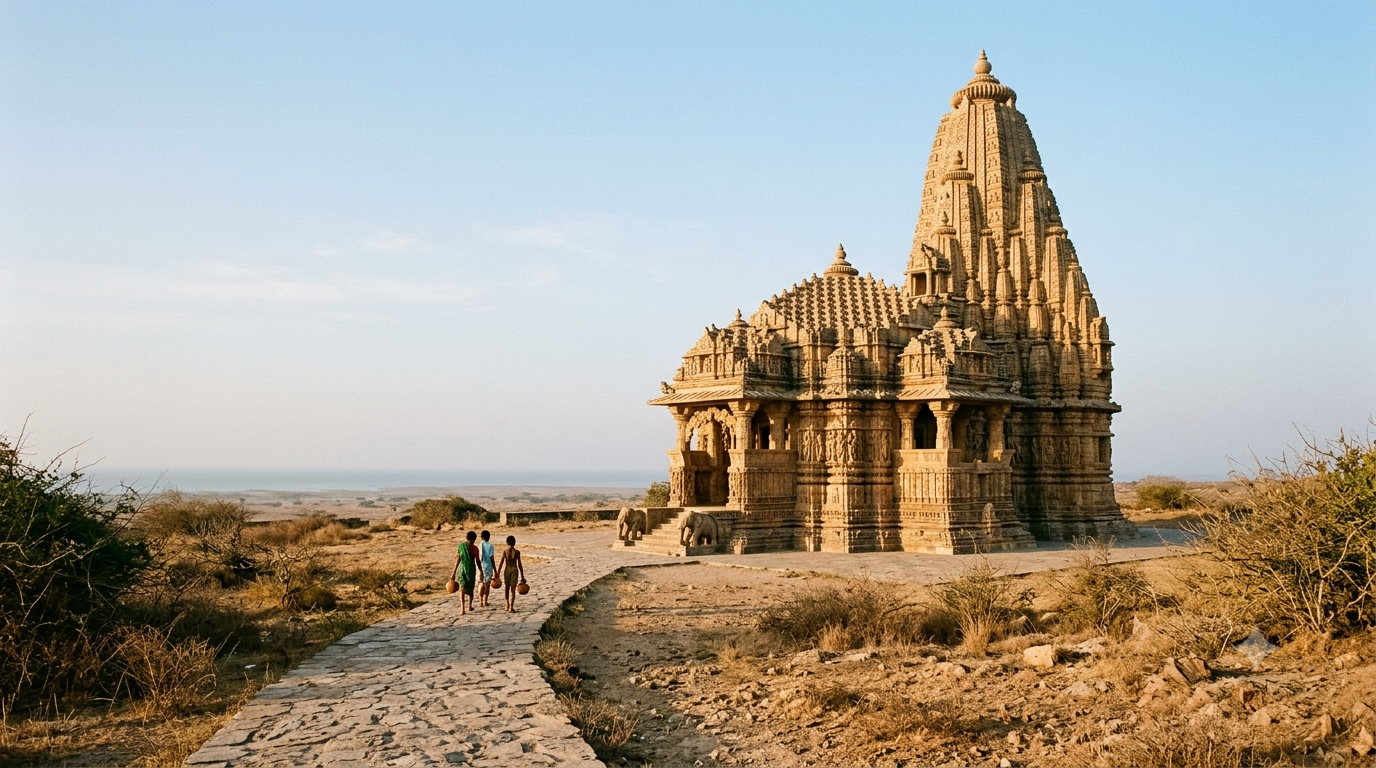
The Rukmini Devi Temple Dwarka opens daily from around 6:00 AM to 12:00 noon, then reopens from about 4:00 PM to 9:30 PM. Most pilgrims plan darshan in one of these two windows. This ancient shrine sits roughly 2 km from the main Dwarkadhish Temple, on the quieter outskirts of town.
Because it closes through the middle of the day, timing matters more here than at the busier Krishna shrine. This guide covers the verified timings, the free-entry facts, the famous curse legend, and a simple plan to see both temples in one morning.
Temples Map is an independent guide and is not affiliated with, endorsed by, or the official website of the Rukmini Devi Temple or its administration. We do not accept bookings, donations, or payments. Please confirm live timings and offerings at the temple directly.
Quick Facts About Rukmini Devi Temple Dwarka
- Timings: Around 6:00 AM–12:00 noon and 4:00 PM–9:30 PM (closed midday; varies by season and festival).
- Entry fee: Free. Only voluntary donations are accepted.
- Distance: About 2 km from Dwarkadhish Temple; roughly 4–5 km from Dwarka Railway Station.
- Dedicated to: Goddess Rukmini, the chief queen of Lord Krishna and a form of Goddess Lakshmi.
- Famous for: The unique jal daan (water donation) tradition and 12th-century Nagara-style carvings.
- Best time to visit: October to March, when the coastal weather stays pleasant.
Rukmini Devi Temple Dwarka Darshan Timings Today
The Rukmini Devi Temple Dwarka follows a two-session schedule. It opens for morning darshan at about 6:00 AM and closes near 12:00 noon. In the evening, it reopens around 4:00 PM and stays open until roughly 9:30 PM. The temple stays shut through the hottest part of the afternoon, so avoid arriving between noon and 4 PM.
| Session | Timing | Notes |
|---|---|---|
| Morning darshan | ~6:00 AM – 12:00 noon | Cooler and calmer; best for a peaceful visit |
| Midday break | 12:00 noon – 4:00 PM | Temple closed; plan around this gap |
| Evening darshan | ~4:00 PM – 9:30 PM | Evening aarti falls in this window |
These timings are widely reported, yet a few sources list a slightly different afternoon reopening (around 5:00 PM) or an earlier close (around 9:00 PM). Because temple hours can shift with the season and on festival days, treat these as a reliable guide and confirm on the day of your trip. The core pattern rarely changes: a morning slot, a long midday closure, and an evening slot.
Aarti and Puja Timings
The evening aarti is the highlight of a visit, and it usually takes place in the early evening after the temple reopens. It is a quiet, unhurried ceremony, quite unlike the large aartis at the main Dwarkadhish shrine. Since exact aarti times can move with the season, ask a temple priest on arrival if you want to attend it.
Rukmini Devi Temple Dwarka Entry Fee and Jal Daan
Entry to the Rukmini Devi Temple Dwarka is completely free. There is no ticket, no VIP darshan queue, and no paid line. The temple accepts only voluntary donations. Priests may accept a small dakshina for a personal puja at the Rukmini Devi Temple Dwarka.
The temple’s most striking custom is jal daan, the donation of drinking water. Water is offered to the goddess and then given back to devotees as prasad. This tradition is not decorative; it carries deep meaning tied to the temple’s founding legend. Many pilgrims bring a small quantity of fresh drinking water to donate, so you may wish to carry some.
Why Water Matters Here
Local belief holds that the land around Dwarka was cursed to have only salty, barren water, which is why fresh water became a sacred offering. Donating water is therefore seen as an act that eases that ancient curse. The practice makes this shrine unlike almost any other temple in Gujarat.
The Legend Behind the Temple’s Location
Rukmini Devi was the princess of Vidarbha and the daughter of King Bhishmaka. She is worshipped as Krishna’s principal queen and a form of Goddess Lakshmi. The most widely told legend explains why her temple stands apart from Krishna’s, a full 2 km away.
According to the story, Krishna and Rukmini once travelled with the short-tempered sage Durvasa. On the way, Rukmini grew intensely thirsty. Krishna pressed his toe into the earth, and a spring of holy Ganga water rose up.
Rukmini then drank first without offering water to the sage. Because this broke the rules of hospitality, Durvasa felt insulted. He cursed her to live separately from Krishna.
Some tellings add that the sage also cursed the land itself to hold only salty water. This is the mythological reason devotees give for the region’s brackish groundwater and for the jal daan tradition. Several versions of the legend circulate, and priests at Dwarka narrate their own variations, so treat these as devotional tradition rather than settled history.
Architecture and the Rukmini Idol
The Rukmini Devi Temple Dwarka is a fine example of the Nagara style, with a tall, tiered shikhara (spire) rising above the sanctum. Historians believe the present structure dates to the 12th century, though tradition places the shrine’s origins far earlier. The exterior walls carry rich carvings, including panels of elephants and human figures that show real craftsmanship.
Inside the sanctum stands the idol of Rukmini, often described as holding the conch, discus, mace, and lotus. The idol is adorned in gold jewellery and fine clothing that changes with festivals and seasons. Painted walls narrate scenes from the story of Krishna and Rukmini, and many visitors linger to take them in.
How to Reach Rukmini Devi Temple Dwarka
Reaching the temple is simple because it sits just outside Dwarka town, close to the Dwarka–Okha road. Since it is only about 2 km from the Dwarkadhish Temple, most pilgrims combine both in a single trip by auto or taxi.
By Air
The nearest airport is Jamnagar Airport, roughly 130–145 km away. Porbandar Airport is another option at around 100–115 km. From either airport, you can hire a taxi or take a bus onward to Dwarka.
By Train
Dwarka Railway Station lies about 4–5 km from the temple and sits on the Ahmedabad–Okha line. Regular trains connect it to Ahmedabad, Rajkot, Jamnagar, and other cities. From the station, autos and taxis are easy to find.
By Road
Dwarka is well connected by state and private buses. The Dwarka bus stand is only 2–3 km from the temple. If you drive from Ahmedabad, expect roughly 450 km and about 8 hours on the highway.
Best Time to Visit Rukmini Devi Temple Dwarka
The best time to visit the Rukmini Devi Temple Dwarka is between October and March, when coastal Gujarat stays cool and comfortable. Summers here get hot and humid, so a winter trip is far more pleasant. Early morning is ideal because the shrine is calm and the light is soft.
Dress modestly out of respect, and avoid shorts or sleeveless clothing. You must remove footwear before entering. Photography is generally allowed outside the temple, but avoid photographing inside the sanctum unless a priest permits it.
A Brief Word on Comfort
The coastal heat can tire visitors, especially older pilgrims, so carry water and a hat if you visit outside winter. If you are travelling with elderly family members, the calm layout here is easier to manage than the crowded main shrine. Take your time, because there is no rush at this quieter temple.
What If You Arrive During the Midday Closure?
This is the single most common problem visitors face, since the temple shuts from about noon to 4 PM. Darshan here is never guaranteed at a fixed minute, because hours flex with the season and with festival crowds. If you reach the gate during the closed window, you have good options rather than a wasted trip.
- Wait for the evening slot: The temple reopens around 4:00 PM, and the evening aarti is worth the wait.
- Cover a nearby site first: Nageshwar Jyotirlinga (about 22 km) or Bet Dwarka (about 30 km via Okha) pair well with the gap.
- Reorder your day: Visit Dwarkadhish in the morning, then swing by Rukmini Devi before the noon closure.
On big festival days such as Janmashtami or Rukmini Ashtami, the queue can stretch outside the compound. Plan for extra time, and arrive early if you visit during a festival.
Combining Dwarkadhish and Rukmini Devi in One Morning
The cleanest plan is to see both temples in a single morning. Start at the Dwarkadhish Temple soon after it opens, then take a short auto ride to Rukmini Devi before its noon closure. This way you avoid backtracking and beat the afternoon heat. For the main shrine’s schedule, check our guide to Dwarkadhish Temple darshan timings before you set out.
Many pilgrims consider a Dwarka yatra incomplete without paying respects to Rukmini Maharani, so this side trip is more than a tourist stop. If you have extra time, the seafront Bhadkeshwar Mahadev Mandir and the many festivals celebrated in Dwarka are worth exploring too.
A Common Point of Confusion
Many online listings mix up two different temples. The ancient Rukmini Devi Temple Dwarka described here is the 12th-century shrine 2 km from Dwarkadhish. It is not the same as the newer “Sri Sri Rukmini Dwarkadhish Dham,” an ISKCON-linked temple set up in 1996.
That newer temple keeps different hours and sits elsewhere. So if you find timings that look unusual, check which temple the source actually means.
Before You Go
The Rukmini Devi Temple Dwarka rewards a calm, unhurried visit, so plan around its morning and evening windows and skip the midday gap. Carry a little drinking water for the jal daan offering, dress modestly, and pair the trip with Dwarkadhish for a complete Dwarka darshan. For live timings on any given day, official Gujarat tourism resources such as Incredible India and the Devbhumi Dwarka district portal are reliable starting points. Above all, give yourself time to sit with the story this quiet shrine tells.
Frequently Asked Questions
What are the Rukmini Devi Temple Dwarka darshan timings today?
The temple is usually open from about 6:00 AM to 12:00 noon and again from 4:00 PM to 9:30 PM. It stays closed through the midday hours. Timings can shift on festival days, so confirm locally before you visit.
Is there an entry fee at the Rukmini Devi Temple Dwarka?
No, entry is free for everyone. The temple accepts only voluntary donations. There is no VIP darshan or paid queue at this shrine.
How far is Rukmini Devi Temple from Dwarkadhish Temple?
It is about 2 km from the Dwarkadhish Temple. You can reach it easily by auto or taxi in a few minutes. Many pilgrims cover both temples in one trip.
Why is the Rukmini Temple located away from Krishna’s temple?
Legend says sage Durvasa cursed Rukmini to live apart from Krishna after she drank water without offering it to him first. This story explains why her shrine stands 2 km from Dwarkadhish. Devotees treat it as sacred tradition.
What is the jal daan tradition?
Jal daan is the donation of drinking water, the temple’s signature custom. Water is offered to the goddess and returned to devotees as prasad. It ties back to the legend of the region’s cursed, salty water.
What is the best time to visit Rukmini Devi Temple Dwarka?
The winter months from October to March are ideal, thanks to the pleasant coastal weather. Early morning offers the calmest darshan. Festival days are vibrant but far more crowded.
How do I reach Rukmini Devi Temple Dwarka?
The nearest airport is Jamnagar (around 130–145 km), and Dwarka Railway Station is about 4–5 km away. Buses and taxis are easy to find from the town. The temple sits just off the Dwarka–Okha road.
Can I take photographs inside the temple?
Photography is generally allowed outside the temple. Inside the sanctum it is best avoided unless a priest gives permission. Always dress modestly and remove footwear before entering.