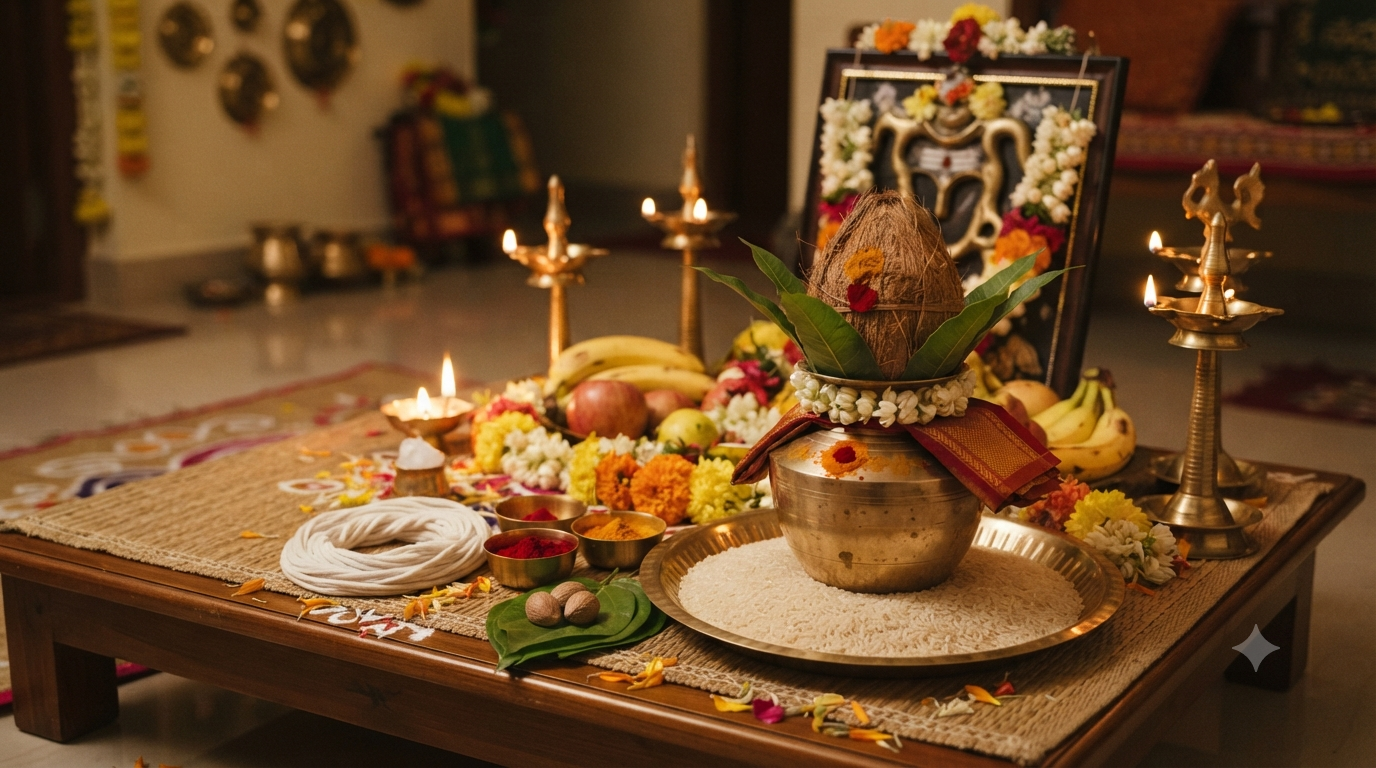
Kedara Gowri Vratham Nomulu in 2026 concludes on Sunday, 8 November, the Deepavali Amavasya day. Families in Andhra Pradesh, Telangana, Tamil Nadu and Karnataka may follow different household procedures, so the calendar date is easier to standardise than the exact ritual sequence. This refreshed guide focuses on the Telugu-style nomu angle: date, tithi, 21-day start, common pooja items, fasting safety and the family customs that often cause confusion.
Temples Map is an independent Hindu festival and temple information guide. We are not affiliated with any temple, trust or endowments department, and we do not accept pooja bookings, donations or payments. Use a reliable local panchangam and your family priest or elder for city-specific muhurtham and inherited ritual rules.
Kedara Gowri Vratham Nomulu 2026 at a Glance
- Main observance date: Sunday, 8 November 2026.
- 21-day vratham start: Monday, 19 October 2026, in commonly published panchang listings.
- Vratham end: Sunday, 8 November 2026.
- Tithi: Deepavali Amavasya.
- Deities: Lord Shiva as Kedareswara and Goddess Gowri.
- Common Telugu names: Kedareswara Vratham, Kedara Gowri Nomu and Kedara Gowri Vratham.
- Important caution: exact pooja timing and thread practice can vary by family tradition and location.
The most important 2026 correction is the date. Do not reuse 24 October 2022, because lunar festival dates move each year. Both Drik Panchang and Prokerala place Kedara Gauri Vrata on 8 November 2026, and both list the 21-day start on 19 October.
Kedara Gowri Vratham Nomulu 2026 Date and Amavasya Tithi
Kedara Gowri Vratham Nomulu 2026 falls on Sunday, 8 November. Drik Panchang lists Amavasya beginning at about 11:27 AM on 8 November and ending about 12:31 PM on 9 November for its Andhra Pradesh reference location. Prokerala gives about 11:28 AM to 12:32 PM for its reference location, so the two sources agree closely on the tithi window.
| Detail | 2026 reference | What devotees should do |
|---|---|---|
| Main vratham date | Sunday, 8 November | Keep the final Kedara Gowri observance on Deepavali Amavasya |
| 21-day start | Monday, 19 October | Use this only if your family follows the full 21-day form |
| Amavasya begins | About 11:27-11:28 AM, 8 November | Check your city before fixing a clock time |
| Amavasya ends | About 12:31-12:32 PM, 9 November | Do not assume the next civil day becomes the festival day |
| Calendar basis | Deepavali Amavasya | Follow the current-year panchang, not an older calendar |
You can cross-check the date on Drik Panchang’s Kedara Gauri Vrat page and Prokerala’s Kedara Gauri Vrata page. Their one-minute difference is small and expected because location settings and calculation methods can differ.
Why the 2022 timing should not be copied into 2026
The old version of this post listed Monday, 24 October 2022, with Amavasya beginning at 5:27 PM. Those values were correct only for that year’s calendar reference. In 2026, an Adhika lunar month occurs earlier in the year, so several later festivals fall noticeably later in the Gregorian calendar.
This is why a festival page needs a real annual calculation rather than a date copied forward. When a family uses an old screenshot or wall calendar, the weekday and tithi can both be wrong. The safest habit is to confirm the current year’s panchang before making a sankalpa or inviting relatives.
What Does “Nomulu” Mean in Kedara Gowri Vratham?
In Telugu usage, a nomu is a devotional vow or ritual observance followed according to family custom. Kedara Gowri Nomu usually refers to worship of Lord Shiva as Kedareswara together with Goddess Gowri. The observance is linked in tradition with the Ardhanarishvara form of Shiva and Shakti.
The word does not mean every family must follow one identical printed procedure. One household may keep the full 21-day vow, while another performs only the final Amavasya pooja. The kalasam arrangement, naivedyam, fasting level and placement of the sacred thread can also differ.
That variation matters because many online pages present one household custom as a universal rule. A better method is to separate the parts that the calendar fixes from the parts that family tradition fixes. The date and tithi come from the panchang; the detailed vidhanam should come from your inherited sampradaya.
When Does the 21-Day Kedara Gowri Vratham Begin?
For 2026, widely used panchang sources list Monday, 19 October as the start of the 21-day Kedara Gauri observance. The vow then ends on Sunday, 8 November, the Deepavali Amavasya day. The full form is traditional, but many families now observe only the final day.
A “21-day vratham” should not be read as twenty-one days without food. Traditional vrata practice can include a controlled diet, one meal, fruit or another family-approved form of fasting. The exact rule varies, so a strict no-food interpretation is both inaccurate and unsafe for many people.
If your household already has a long-established start date or daily routine, follow that practice instead of changing it from a website. If you are beginning the vratham for the first time, ask a knowledgeable elder or priest how your family tradition counts the days.
Kedara Gowri Vratham Nomulu Pooja Items
Kedara Gowri Vratham Nomulu usually use a simple Shiva-Gowri pooja setup centred on a kalasam and sacred thread. However, the exact list varies by household. Prepare the common items below, then add or remove items according to the tradition followed in your family.
| Common item | Typical use | Family variation |
|---|---|---|
| Kalasam with clean water | Main ritual vessel | Decoration and placement differ |
| Coconut and betel leaves | Placed with the kalasam | Number of leaves may vary |
| Turmeric and kumkum | For worship and decoration | Some homes also prepare a turmeric Gowri form |
| Rice or akshata | Base and offering | Quantity is not universal |
| Flowers and bilva leaves | Offerings to Shiva and Gowri | Availability and family custom matter |
| Oil or ghee lamp | Deepam during pooja | Use the lamp type followed at home |
| Fruits and naivedyam | Food offering | Recipes differ by region and family |
| Sacred cotton thread | Associated with the 21-count tradition | Knot count and tying practice should follow family custom |
Do not treat a long online shopping list as compulsory. The purpose of a family vratham is not to create pressure to buy every possible ritual item. If your elders use a simpler setup, that inherited method is usually the better reference.
Kedara Gowri Vratham Nomulu: Simple Home Pooja Sequence
Kedara Gowri Vratham Nomulu at home commonly begin with cleaning the pooja space, taking a bath and preparing the kalasam. The sequence below is a general planning outline rather than a replacement for your family priest’s instructions. Keep the inherited sankalpa, mantras and thread practice if your household already follows them.
- Prepare the pooja space. Clean the area, place a fresh cloth or plate, and arrange the lamp, flowers and offerings before you begin.
- Set the kalasam. Fill the vessel with clean water as your family tradition directs, then arrange betel leaves and coconut if that is your custom.
- Invoke Ganesha first. Many Hindu home poojas begin with a short Ganesha prayer before the main worship.
- Worship Kedareswara and Gowri. Offer turmeric, kumkum, flowers, akshata, lamp and incense while reciting the prayers used in your family.
- Keep the sacred thread near the deity. If your family follows the 21-knot tradition, prepare it according to the method taught at home.
- Offer naivedyam. Present the food prepared for the vratham before anyone eats it.
- Complete the pooja and thread custom. Tie or retain the sacred thread only according to your inherited practice, because placement differs between traditions.
The older article gave fixed instructions for where men and women must tie the thread. That is too absolute. Since published traditions vary, the refreshed guidance does not impose one gender-specific placement on every family.
What Time Should the Nomu Be Performed?
There is no single clock time that can safely be printed for every household and every city. The tithi is the key calendar factor, while the exact pooja window may depend on local sunset, family custom, temple practice or the purohit guiding the observance. Use the current city setting in your panchang rather than a national one-size-fits-all time.
Many families complete Kedara Gowri worship during the Deepavali Amavasya evening, but it is safer to describe that as a common practice rather than a universal rule. Do not borrow the Lakshmi Puja muhurtham automatically unless your family specifically follows the same evening window for the nomu.
For a broader Deepavali household timing explanation, see our Deepavali Nomulu 2026 guide. For the longer fasting, story and regional background, use the site’s full Kedara Gowri Vratham guide.
Fasting Rules and Health Safety
Kedara Gowri fasting rules differ because the observance has both long-form and single-day traditions. Some devotees take fruits or a light meal, while others keep a stricter fast until the pooja finishes. A website should not turn one family’s food rule into a compulsory rule for everyone.
If you have diabetes, are pregnant, take regular medicine, are elderly or have another medical condition, speak with a qualified doctor before attempting a long or strict fast. Do not stop prescribed medicine for a vratham. A lighter observance can still preserve the devotional purpose when a strict fast is unsafe.
Also avoid treating the vratham as a guaranteed way to obtain wealth, marriage, health or another life outcome. Traditional texts and family stories describe spiritual benefits as matters of faith. They are not medical, financial or personal guarantees.
Common Mistakes in Kedara Gowri Vratham Nomulu
Kedara Gowri Vratham Nomulu become confusing when calendar facts and family customs are mixed together. The biggest errors are easy to avoid once you know which details are universal and which are local.
- Reusing an old date: 24 October applied to 2022, not 2026. The current observance falls on 8 November 2026.
- Calling the 21-day vratham a total food fast: fasting practice varies, and complete food avoidance for 21 days is not a safe blanket instruction.
- Printing one exact muhurtham for all cities: local panchang settings change tithi and sunset-based windows.
- Making one thread rule universal: knot count and tying practice can differ by family tradition.
- Guaranteeing religious benefits: prosperity, marital harmony and wellbeing should be described as traditional beliefs, not promised results.
- Using paid third-party pooja contacts: this site does not arrange poojas or bookings. Use the official temple channel if you want to attend a temple programme.
One more practical point matters. Do not throw synthetic thread, plastic decorations or non-biodegradable ritual waste into rivers, lakes or the sea. If your family has a visarjana custom, follow local environmental rules and use a safe method for natural materials.
How Kedara Gowri Nomu Differs From General Deepavali Nomulu
Kedara Gowri Nomu is specifically centred on Shiva and Gowri, while “Deepavali Nomulu” is a broader Telugu household phrase. Some families use that broader phrase for Lakshmi worship, Kedareswara worship or another inherited Amavasya vow. The shared date does not make every ritual identical.
This distinction is important for searchers because two pages can appear to answer the same question while serving different needs. This page focuses on the Kedara Gowri Nomu itself. The separate Deepavali Nomulu page explains how Telugu households use the broader festival term and how evening timing can differ by city.
If you are planning the month after Deepavali, the site’s Karthika Masam 2026 date guide covers the next Telugu lunar-month observances. That calendar also reflects the 2026 lunar shift, so older October schedules should not be reused.
Before You Begin the 2026 Nomu
Mark Sunday, 8 November 2026 first. If your family follows the full 21-day form, also mark Monday, 19 October as the commonly published start. Then confirm your city tithi and the exact ritual sequence with the panchang and family tradition you trust.
Prepare the kalasam, lamp, flowers, fruits, naivedyam and sacred thread before the pooja starts. Keep the procedure simple if that matches your home practice, because ritual accuracy does not depend on copying every item from an online list.
Most importantly, separate verified calendar facts from inherited customs. That one distinction prevents nearly every argument about the date, fasting rule, thread placement and pooja timing.
Kedara Gowri Vratham Nomulu FAQs
What is the Kedara Gowri Vratham Nomulu date in 2026?
Kedara Gowri Vratham Nomulu falls on Sunday, 8 November 2026. It concludes on Deepavali Amavasya. Both Drik Panchang and Prokerala list the same 2026 date, while their reference-location tithi times differ by only about one minute.
When does the 21-day Kedara Gowri Vratham start in 2026?
The commonly published 21-day start date is Monday, 19 October 2026. Both Drik Panchang and Prokerala list that date. If your family follows a different inherited counting method, keep the household tradition and confirm it with your priest.
What are the Amavasya tithi timings for Kedara Gowri Vratham 2026?
Reference panchang timings place Amavasya from about 11:27-11:28 AM on 8 November until about 12:31-12:32 PM on 9 November. Exact minutes can shift by location, so select your city before fixing the pooja time.
Does the Kedara Gowri pooja have to be done only at night?
No single all-family rule can be stated safely. Many households perform the final worship during the Deepavali Amavasya evening, while others follow a family-specific sankalpa or temple schedule. Use your inherited practice and local panchang instead of copying a generic clock time.
Is a 21-day complete fast compulsory?
No. The 21-day vrata does not mean that every devotee must avoid all food for twenty-one days. Food rules vary by family and may include fruit, milk, one meal or another controlled pattern. Health needs should always take priority over a strict fast.
How many knots should the Kedara Gowri thread have?
The number 21 is widely associated with the traditional Kedara Gauri vrata and its long-form observance. However, thread preparation and where it is tied can vary by household. Follow the practice taught in your family rather than forcing a universal rule.
Can unmarried women or men observe Kedara Gowri Vratham?
Different traditions describe the vrata in different ways, and many sources present it as open to Shiva devotees generally. Family practice may still set its own conventions. If you are starting the observance for the first time, ask a knowledgeable priest or elder.
Can I do the pooja if I cannot fast for medical reasons?
Yes, many families adapt the food rule when a strict fast is unsafe, but the exact alternative should follow family or priestly guidance. Do not skip medicine or ignore medical advice for a ritual fast. The devotional act can be kept without creating a health risk.
Does Temples Map arrange Kedara Gowri pooja or online bookings?
No. Temples Map is an independent information guide and does not arrange poojas, temple tickets, donations or payments. If a temple announces a public Kedara Gowri programme, use that temple’s official website, notice board or office for current details.