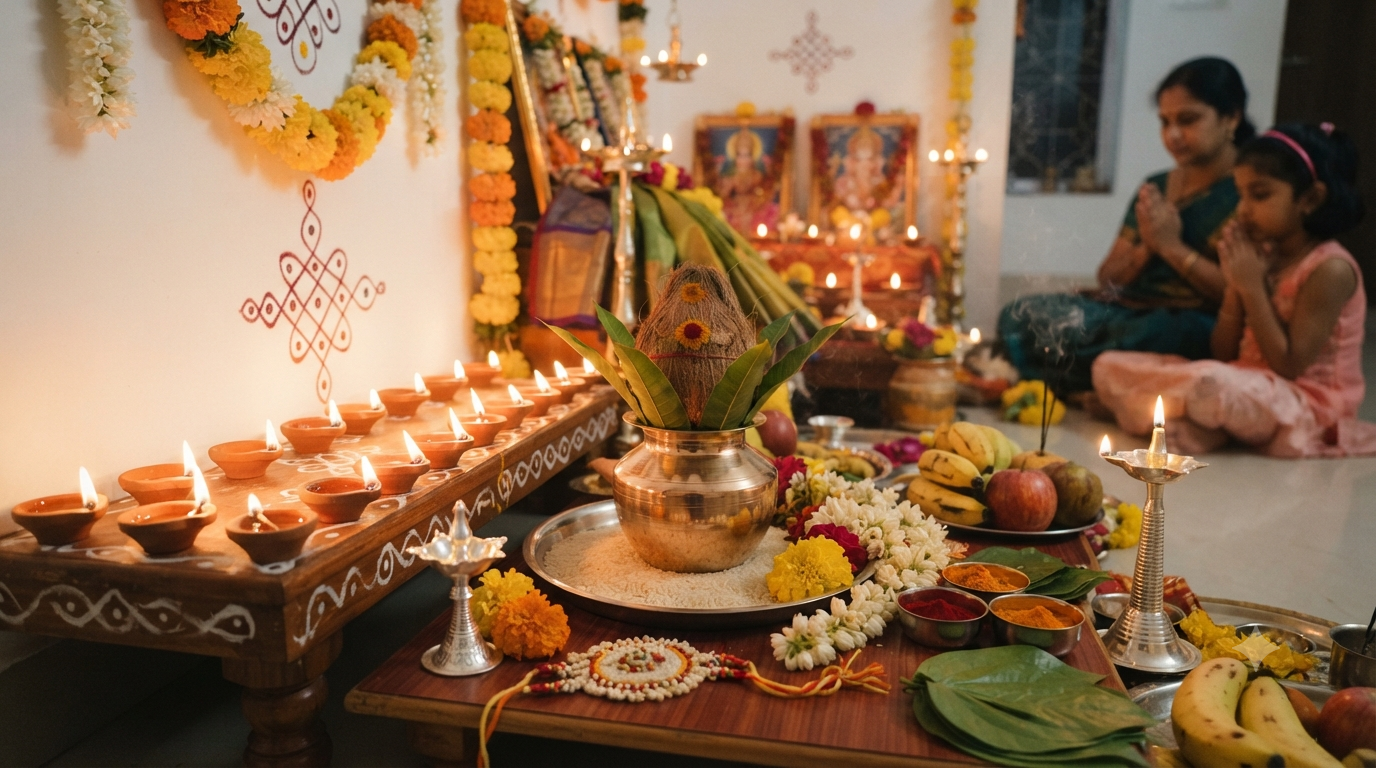
Deepavali Nomulu 2026 falls on Sunday, 8 November for families in Andhra Pradesh and Telangana who observe the Deepavali Amavasya nomu. The most important correction is timing: there is no single all-India “morning nomu” rule. Deepavali worship linked to Amavasya is commonly done in the evening, while a household Kedareswara or Kedara Gowri tradition may follow its own family procedure.
Temples Map is an independent Hindu festival and temple guide. We are not affiliated with any temple, trust or endowments department, and we do not accept pooja bookings, donations or payments. For a family vow, follow your inherited sampradaya first and confirm the local muhurtham with a trusted panchangam or priest.
Deepavali Nomulu 2026 at a Glance
- Main date: Sunday, 8 November 2026.
- Tithi: Amavasya begins around 11:27-11:28 AM on 8 November and ends around 12:31-12:32 PM on 9 November, depending on location and panchang rounding.
- Best general evening reference: Pradosh Kaal after sunset, when Amavasya is running.
- Telugu usage: “Deepavali Nomulu” can refer to a household vow, Kedareswara or Kedara Gowri worship, or another inherited family observance.
- Do not assume: every family performs the same nomu, uses the same items, or starts a 21-day vow on the same civil date.
Two established panchang sources agree that Deepavali falls on 8 November 2026. Drik Panchang gives city-based timings, while Prokerala also places Amavasya across 8-9 November. That agreement matters because lunar festival dates should never be copied from the previous year.
What Does “Deepavali Nomulu” Mean in Telugu Families?
“Nomu” is a Telugu term for a devotional vow or ritual observance. However, Deepavali Nomulu is not one standardized ceremony issued by a single temple authority. The phrase is often used loosely for family vows kept around Deepavali, especially Kedareswara or Kedara Gowri worship.
That distinction explains why relatives may give different instructions. One home may prepare a Kedareswara kalasam and sacred thread, while another focuses on Lakshmi Puja. A third family may combine both on the same evening because the observances share the Deepavali Amavasya date.
The safest rule is simple: use the panchangam to fix the date and tithi, then use your family tradition to fix the exact ritual sequence. A general website cannot replace a sampradaya that has been followed in your household for generations.
Deepavali Nomulu 2026 Date and Amavasya Timings
Deepavali Nomulu 2026 is on Sunday, 8 November 2026. Drik Panchang places Amavasya from about 11:27 AM on 8 November until 12:31 PM on 9 November for Telugu-state cities. Prokerala gives almost the same interval, about 11:28 AM to 12:32 PM.
The one-minute difference is normal because panchang sites may use different calculation settings, reference locations or rounding. It does not change the festival date. Both sources place Amavasya over the evening of 8 November, which is the key point for Deepavali worship.
| Detail | 2026 reference | What it means |
|---|---|---|
| Deepavali date | Sunday, 8 November | Main festival and Amavasya evening |
| Amavasya begins | About 11:27-11:28 AM, 8 Nov | Tithi starts before afternoon |
| Amavasya ends | About 12:31-12:32 PM, 9 Nov | Tithi continues into next day |
| General worship period | After sunset on 8 Nov | Use local Pradosh and family custom |
Do not move the nomu to 9 November merely because Amavasya continues past sunrise. Festival selection depends on the required tithi at the relevant part of the day. For Deepavali, the evening Amavasya on 8 November is the decisive factor.
Deepavali Nomulu 2026 Timings in Telugu States
There is no single clock time that fits every Telugu city. Sunset shifts by location, so Pradosh Kaal also shifts. The table below uses Drik Panchang as a practical city reference for the Deepavali evening window, not as a universal Kedara Gowri rule.
| City | Pradosh Kaal reference | Deepavali/Lakshmi Puja window |
|---|---|---|
| Hyderabad area | About 5:42 PM-8:13 PM | About 6:07 PM-8:08 PM |
| Vijayawada | 5:34 PM-8:05 PM | 6:00 PM-8:01 PM |
| Tirupati | 5:43 PM-8:12 PM | 6:09 PM-8:11 PM |
These windows are most useful when your household performs the nomu in the Deepavali evening. If your family has a separate Kedareswara sankalpa time, follow that tradition instead. Also check the city selector on Drik Panchang because even nearby towns can differ by a few minutes.
The older version of this page said the nomu would “most probably” be performed in the morning. That statement was too broad. Deepavali Lakshmi worship is tied to the evening Pradosh period, while Kedara Gowri and other household nomulu can vary by family practice.
Kedara Gowri Nomu and Deepavali: How Are They Connected?
Kedara Gowri Vratham, also called Kedareswara Vratham, concludes on Deepavali Amavasya in many South Indian traditions. Devotees worship Lord Shiva as Kedareswara along with Goddess Gowri. The observance is associated with the Ardhanareeswara tradition, which symbolizes the united form of Shiva and Shakti.
Some families keep the vrata for 21 days, while many modern households observe only the final Amavasya day. The one-day form is especially common when a family does not have an inherited 21-day routine. However, the start date and daily rules can differ by regional and family tradition.
For the full 21-day explanation, pooja items, fasting rules and thread practice, use our separate Kedara Gowri Vratham guide. Keeping the detailed vidhanam there avoids mixing two different search intents on this page.
Which Deepavali Nomu Should Your Family Follow?
If your elders use the phrase “Deepavali Nomulu,” first identify what they actually mean. That one question prevents most confusion because a general festival label may hide a very specific household ritual.
| If your family says | Likely observance | Best next step |
|---|---|---|
| Kedareswara Nomu | Kedara Gowri/Kedareswara Vratham | Follow family vrata procedure and Amavasya date |
| Deepavali Lakshmi Puja | Lakshmi-Ganesha worship | Use the local evening Pradosh window |
| 21-day Gowri nomu | Long-form Kedara Gowri vow | Confirm the start date with family priest or panchangam |
| Temple group nomu | Temple-specific programme | Check that temple’s official notice or office |
Do not copy a neighbour’s procedure just because both families call it “nomu.” The date may match, yet the sankalpa, naivedyam, thread and fasting practice can be different. Family tradition is the correct tie-breaker when several valid methods exist.
Simple Home Preparation for the Amavasya Evening
Prepare the pooja area before sunset so you do not spend the muhurtham searching for items. Clean the space, arrange the deity photo or kalasam used by your family, and keep lamps, cotton wicks, flowers, turmeric, kumkum, rice, fruit and naivedyam ready.
If your observance is Lakshmi Puja, our Dhana Lakshmi Pooja procedure covers the step-by-step sequence. If it is Kedareswara Nomu, use the separate Kedara Gowri page because the kalasam and thread customs differ.
- Confirm the ritual your family actually observes.
- Check the local sunset and Pradosh window for your city.
- Gather pooja items before evening.
- Begin with the sankalpa used in your family tradition.
- Complete the worship and naivedyam without rushing.
- Ask an elder or priest if a family-specific step is unclear.
This approach is more reliable than downloading a random “one-size-fits-all” ritual list. A nomu is a lived family practice, so context matters as much as the calendar.
Why 2022 Timings Should Not Be Reused
Lunar festivals move through the Gregorian calendar, so a 2022 article cannot simply keep its old date. Deepavali fell on 24 October in 2022, while it falls on 8 November in 2026. The tithi and sunset combination must be recalculated for each year.
This is also why screenshots from WhatsApp, old calendars and previous-year blog posts are risky. They may look convincing, yet they often carry the wrong weekday or muhurtham. Always check the current year’s panchangam before planning a vrata or family gathering.
After Deepavali, Telugu Karthika Masam begins according to the Amanta calendar. Our Karthika Masam festival list for Andhra Pradesh covers the next set of important vrata and deepam dates.
Common Mistakes With Deepavali Nomulu 2026
- Treating every nomu as the same ritual: Telugu households use the word for several vows, so identify the exact family observance first.
- Using one fixed clock time for all cities: sunset changes by location, so Hyderabad and Vijayawada do not have identical evening windows.
- Assuming the nomu must be in the morning: that is not a safe general rule for Deepavali Amavasya worship.
- Copying a previous year’s date: festival dates move with the lunar calendar and must be checked again.
- Following an online ritual over family tradition: when both are valid, your inherited sampradaya should take priority.
For Deepavali Nomulu 2026, another mistake is treating religious benefit claims as guarantees. Devotees observe Kedara Gowri and other nomulu as acts of faith, discipline and prayer. The spiritual meanings belong to tradition; they are not guaranteed outcomes or substitutes for practical decisions.
Fasting and Health: Keep the Vow Safe
Some Kedara Gowri traditions include fasting, but the exact food rules differ. If you have diabetes, are pregnant, take regular medicine or have another medical condition, speak with a doctor before attempting a long or strict fast. Do not stop prescribed medicine for a vrata.
If a strict fast is unsafe, many families still complete the pooja with a lighter dietary observance. Ask your family priest how to adapt the vrata without putting health at risk. Devotion does not require ignoring medical advice.
Before You Begin on 8 November
For Deepavali Nomulu 2026, mark Sunday, 8 November as the main date, then confirm your city timing a few days before Deepavali. Decide whether your household means Kedareswara Nomu, Kedara Gowri Vratham, Lakshmi Puja or another family vow when it says “Deepavali Nomulu.”
For most Telugu-state households doing evening Amavasya worship, the practical window begins after sunset. Keep the pooja items ready early, follow your family procedure, and use the panchang only to settle the date and local timing.
Deepavali Nomulu 2026 FAQs
What is the Deepavali Nomulu 2026 date in Andhra Pradesh and Telangana?
Deepavali Nomulu 2026 falls on Sunday, 8 November 2026 for the main Deepavali Amavasya observance. Both Drik Panchang and Prokerala place the festival on that date. Household vrata rules can differ, so confirm your family tradition before deciding the exact pooja sequence.
What time should Deepavali Nomulu be performed?
There is no single time for every nomu or city. For Deepavali evening worship, use your local Pradosh Kaal after sunset while Amavasya is active. If your family keeps a specific Kedareswara or Kedara Gowri sankalpa, follow that inherited timing instead.
When does Amavasya start and end for Deepavali 2026?
Amavasya begins around 11:27-11:28 AM on 8 November and ends around 12:31-12:32 PM on 9 November. Small differences between panchang sources are normal. The important point is that Amavasya covers the evening of 8 November.
Is Kedara Gowri Vratham the same as Deepavali Nomulu?
Kedara Gowri Vratham is one important observance that Telugu families may call a Deepavali nomu, but the terms are not perfectly interchangeable. Some homes use “Deepavali Nomulu” for other inherited vows or for Lakshmi worship. Ask which ritual your family actually follows.
Can Deepavali Nomulu be done in the morning?
Some family rites may include morning preparation or worship, but a blanket “morning only” rule is inaccurate. Deepavali Lakshmi worship is commonly performed in the evening during Pradosh Kaal. Kedara Gowri customs can vary, so family practice should guide the final choice.
Do all Telugu families observe a 21-day Kedara Gowri Vratham?
No. Some families keep the traditional multi-day vow, while others observe only the final Deepavali Amavasya day. Neither choice should be imposed on a household without knowing its tradition. If you are starting for the first time, ask a knowledgeable priest or elder.
What should I do if online panchang timings disagree?
First check whether both pages use the same city and time zone. Then compare the tithi interval and sunset rather than only the headline muhurtham. If the difference affects your ritual, follow your family panchangam or ask a local priest instead of averaging the times.
Can I book a Deepavali Nomu through Temples Map?
No. Temples Map is an independent information guide and does not arrange poojas, temple tickets, donations or payments. If a temple conducts a public programme, use that temple’s official website, notice board or office for current details.