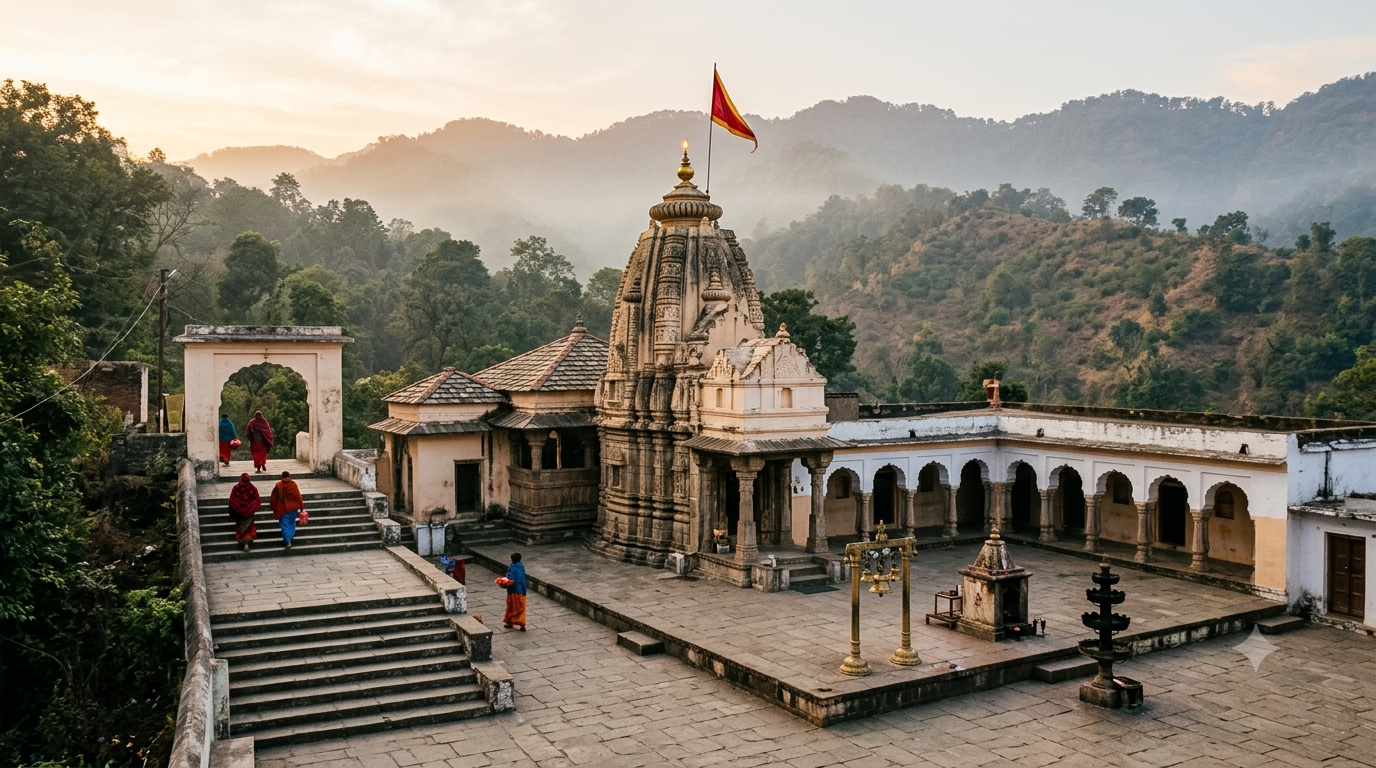
The best temples in Punjab and Haryana sit closer together than most travel lists admit, and several of those lists put famous shrines in the wrong state entirely. Both states hold Shakti Peeths, Mahabharata tirthas and royal-era shrines that see lakhs of pilgrims each Navratri. This guide covers ten of them with verified timings, real road distances and a route that actually works.
Temples Map is an independent temple directory. We are not affiliated with any temple trust, shrine board or state government, and we accept no bookings, donations or payments. Use the official portals linked below for darshan arrangements and confirmed timings.
Temples in Punjab and Haryana at a Glance
- Punjab holds one of the 51 Shakti Peeths at Jalandhar, where Sati’s right breast is believed to have fallen.
- Haryana holds another at Kurukshetra, marked by a white marble ankle inside Shri Devikoop Bhadrakali Mandir.
- Entry is free at every major shrine listed here, so no site can legitimately sell you a darshan ticket.
- Mata Mansa Devi in Panchkula runs on published seasonal hours: 4 AM to 10 PM in summer, 5 AM to 9 PM in winter.
- October to March is the comfortable window, because both states run past 42 degrees Celsius in peak summer.
Temples in Punjab and Haryana: Two Very Different Trails
The temples in Punjab and Haryana are usually bundled together, yet their sacred landscapes barely overlap. Punjab’s Hindu shrines cluster in the Majha and Doaba belt, near Amritsar and Jalandhar. Most were rebuilt or expanded between the 16th century and the 1930s under merchant families and princely patrons.
Haryana’s map is older and denser. Kurukshetra alone holds a 48-kos tirtha circuit tied directly to the Mahabharata. So a Punjab trip rewards city-based, half-day visits, while a Haryana trip rewards one long, focused day in a single district.
That distinction matters when you plan. If you want Shakti Peeth darshan plus Ramayana sites, head to Punjab. If you want Gita geography and ancient Shiva tirthas, choose Kurukshetra instead.
Famous Punjab Temples Worth the Detour
Punjab’s shrines are city temples, so you can visit two in a single morning. These five rank among the most visited temples in Punjab and Haryana combined.
Durgiana Temple, Amritsar
Durgiana Temple stands roughly 1.5 km from Amritsar Junction, rising from the middle of its own sarovar. Because its gilded dome and marble causeway echo Harmandir Sahib, visitors often call it the Silver Temple, after the carved silver doors of the deori.
The original shrine dates to the 16th century. Then Guru Harsai Mal Kapoor rebuilt it in 1921, and Pandit Madan Mohan Malaviya inaugurated the new structure. Inside the complex you will also find the Bada Hanuman Mandir and a Shitala Mata shrine.
Devi Talab Mandir, Jalandhar
Devi Talab Mandir is Punjab’s Shakti Peeth. The temple trust states that Sati’s right breast fell here, and the goddess is worshipped as Tripurmalini while Shiva is invoked as Bhishan Bhairav. The tank that gives the temple its name is over 200 years old.
The complex sits about 1 km from Jalandhar City railway station. Inside it, a walk-through model of the Amarnath cave was added in recent decades, and an older Kali shrine stands beside the main temple. Every December the temple hosts the Harivallabh Sangeet Sammelan.
Shri Ram Tirath Temple, Amritsar
The Amritsar district administration places Ram Tirath 12 km west of the city on Chogawan road. Tradition identifies it as Rishi Valmiki’s hermitage, where Sita took shelter and gave birth to Luv and Kush.
Meanwhile the 10-hectare campus holds an ancient tank, Valmiki’s hut, a stepped well and a towering gold-plated Valmiki idol. A four-day fair begins on the November full moon night, when the crowds swell dramatically.
Kali Devi Mandir, Patiala
Maharaja Bhupinder Singh commissioned this white marble temple in 1936, opposite Baradari Garden on Mall Road. He brought a six-foot Kali idol and the Paawan Jyot from Bengal, and that flame still burns today.
An older Raj Rajeshwari shrine stands within the same complex, since the site predates the 1936 rebuild. It now carries protected monument status. Devotees traditionally offer mustard oil, lentils, coconuts, bangles and chunnis here.
Mukteshwar Mahadev Temple, Pathankot
This cave shrine to Shiva sits near Pathankot on the Shahpur Kandi Dam road, in Punjab’s northern corner. Alongside the Shiva lingam, the man-made cave complex holds representations of Ganesha, Brahma, Vishnu, Hanuman and Parvati.
Since Pathankot is the rail gateway to Himachal and Jammu, this temple slots neatly into a hill journey. Most visitors need under an hour here.
Famous Haryana Temples You Should Not Skip
Haryana’s shrines carry deeper antiquity, and two of them draw the largest crowds among all temples in Punjab and Haryana. Four of the five below sit in or near Kurukshetra district.
Mata Mansa Devi Mandir, Panchkula
Mata Mansa Devi is the busiest Devi shrine in the region, spread over roughly 100 acres of Shivalik foothill at Bilaspur village. Maharaja Gopal Singh of Mani Majra built the main temple between 1811 and 1815, and the Haryana government constituted a shrine board in 1991.
The board publishes clear hours. Summer darshan runs 4 AM to 10 PM, winter darshan runs 5 AM to 9 PM, and bhog is offered daily from 11 AM to 11:15 AM. The temple lies about 10 km from the Chandigarh bus terminus and 4 km from Panchkula.
Shri Devikoop Bhadrakali Mandir, Kurukshetra
Haryana Tourism lists this Jhansa Road shrine as one of the 51 Shakti Peeths, where an ankle of Sati fell into a well. A large white marble lotus inside the temple marks the spot, which is why the shrine is also called Devikoop.
Tradition holds that the Pandavas prayed here with Krishna before the war, then donated horses after their victory. That vow survives: devotees still leave clay and metal horses by the hundred, and many families bring children here for their first tonsure.
Sthaneshwar Mahadev Temple, Thanesar
Sthaneshwar gave Thanesar its name, and Haryana Tourism records the belief that the Pandavas prayed to Shiva here before the Mahabharata war. Water from the adjoining tank is considered sacred.
The temple sits about 5 km from Kurukshetra Junction, so an auto-rickshaw reaches it in minutes. Mahashivratri is the single busiest day, when queues stretch well beyond the complex gates.
Shri Mata Sheetla Devi Mandir, Gurugram
Gurugram’s kuldevi shrine sits in Masani village, roughly 3 km from Gurugram railway station. Haryana constituted a dedicated shrine board for it under a 1991 Act, so administration is transparent and entry stays free.
Sheetla Mata is revered as a protector against fevers and childhood illness. This is a matter of faith and tradition, not medicine, so never treat a temple visit as a substitute for a doctor.
Jyotisar and Brahma Sarovar, Kurukshetra
Jyotisar is venerated as the ground where Krishna delivered the Bhagavad Gita to Arjuna during the Mahabharata. Haryana Tourism runs a daily evening light and sound show here in Hindi and English.
Brahma Sarovar, a short drive away, is among the largest ancient reservoirs in the country. During Somvati Amavasya and the Gita Mahotsav the tank draws enormous crowds, so plan those dates carefully.
Darshan Timings at Temples in Punjab and Haryana
| Temple | City | Typical opening hours | Entry |
|---|---|---|---|
| Mata Mansa Devi | Panchkula | 4 AM–10 PM summer; 5 AM–9 PM winter | Free |
| Shri Devikoop Bhadrakali | Kurukshetra | Seasonal, roughly 6 AM–8 PM | Free |
| Durgiana Temple | Amritsar | Reported 5 AM–9 PM to 6 AM–10 PM | Free |
| Devi Talab Mandir | Jalandhar | Roughly 5 AM–10 PM | Free |
| Kali Devi Mandir | Patiala | Roughly 5 AM–9 PM | Free |
Most temples in Punjab and Haryana open before sunrise and close after the evening aarti. However, only Mata Mansa Devi publishes exact hours on an official shrine board page. Everything else comes from secondary listings that disagree with each other, so treat those rows as indicative and confirm on arrival.
Four Myths About Temples in Punjab and Haryana
Competing listicles about temples in Punjab and Haryana repeat the same errors year after year. Therefore these four corrections deserve a careful read, because each one can save you a wasted drive.
Chintpurni and Naina Devi are not in Punjab. Both sit in Himachal Pradesh, in Una and Bilaspur districts. They fall close to the Punjab border, which is how the confusion started, but the yatra is a separate state trip.
Mansa Devi is two different temples. One is in Panchkula, Haryana, and another sits on Bilwa Parvat in Haridwar, Uttarakhand. Ropeway tickets and e-token guides you see online usually describe Haridwar, not Panchkula.
Harmandir Sahib is a gurdwara, not a Hindu temple. The Golden Temple is the central shrine of Sikhism. Durgiana, about 1.5 km away, is the Hindu temple that borrowed its architectural language.
No genuine site sells darshan tickets here. Entry is free at all ten shrines above. If a portal demands a processing fee for a darshan slot, close the tab, because that is a classic fake-portal pattern.
Best Time to Visit Temples in Punjab and Haryana
October to March is the clear winner for temples in Punjab and Haryana. Daytime temperatures stay pleasant, and morning darshan queues move quickly before tour groups arrive.
Chaitra Navratri in March or April and Sharadiya Navratri in September or October bring the most atmosphere. They also bring the heaviest crowds, especially at Mansa Devi and Bhadrakali, where mela arrangements run for nine days.
Avoid May and June if you can. Both states cross 42 degrees Celsius regularly, and the marble courtyards get punishing by mid-morning.
Planning a Circuit Across Temples in Punjab and Haryana
Because the two clusters lie about 250 km apart, a combined trip works best over three days. Chandigarh makes the natural hinge, since it sits between them with the region’s busiest airport.
- Day 1 — Amritsar: Durgiana Temple in the morning, then Ram Tirath, roughly 12 km west on Chogawan road.
- Day 2 — Jalandhar to Panchkula: Devi Talab Mandir early, then drive on to Mata Mansa Devi for evening aarti.
- Day 3 — Kurukshetra: Bhadrakali and Sthaneshwar before noon, then Brahma Sarovar and the Jyotisar light and sound show.
If you have only two days, drop Punjab and stay in Haryana. Kurukshetra packs more sites into a smaller radius than any other district in either state.
Insider Tips for Temples in Punjab and Haryana
These habits come from repeat visits rather than brochures. Apply them at any shrine listed above.
- Carry socks. Marble courtyards at Durgiana and Kali Devi Mandir turn scorching between 11 AM and 4 PM.
- Deposit footwear at the official counter rather than leaving it loose, since crowded melas attract pickpockets.
- Reach Mansa Devi before 7 AM on Navratri days, because the approach road jams badly after sunrise.
- Buy prasad from licensed stalls inside the complex where a shrine board runs one.
- Book Kurukshetra accommodation weeks ahead around Gita Mahotsav and Somvati Amavasya.
Dress Code and Safety at Temples in Punjab and Haryana
Modest clothing that covers shoulders and knees is expected everywhere here, and heads are often covered inside sanctums. Photography rules vary by shrine, so ask before raising a phone.
Some visits are physically demanding. Mansa Devi involves a climb, Navratri queues can mean hours on your feet, and summer heat is genuinely dangerous. Carry water and any regular medication.
If you are elderly, pregnant or managing a heart or blood pressure condition, speak to your doctor before a long fast or a strenuous climb. Ritual remedies are matters of faith, and they are not a replacement for medical treatment.
Before You Go
The temples in Punjab and Haryana reward pilgrims who plan around geography rather than reputation. Verify timings on the shrine board pages before you travel, since seasonal hours shift twice a year. Keep transactions offline or on official portals only, because entry at these shrines costs nothing.
If your time is tight, Kurukshetra delivers the densest single day in either state. For wider planning, our guides to the famous temples in Maharashtra, the famous temples in Telangana and the Kerala temple pilgrimage circuit follow the same verified format.
FAQs About Temples in Punjab and Haryana
Which Shakti Peeths are in Punjab and Haryana?
Punjab has Devi Talab Mandir in Jalandhar, worshipped as Tripurmalini Shakti Peeth. Haryana has Shri Devikoop Bhadrakali Mandir in Kurukshetra, also called Savitri Peeth. Both figure in the traditional list of 51 Shakti Peeths.
Is the Golden Temple a Hindu temple?
No. Harmandir Sahib in Amritsar is a gurdwara, so it belongs to Sikhism rather than Hinduism. The Hindu temple often confused with it is Durgiana, which sits about 1.5 km away and copies its layout and gilded dome.
What are Mata Mansa Devi darshan timings?
The Shri Mata Mansa Devi Shrine Board publishes summer hours of 4 AM to 10 PM and winter hours of 5 AM to 9 PM. Bhog runs daily from 11 AM to 11:15 AM. Aarti timings also shift by season.
Do I need to book darshan online at temples in Punjab and Haryana?
No booking is required at any temple in this guide, and entry is free. Mansa Devi offers an optional preferential darshan token through its own official website. Treat every other paid darshan offer as suspect.
Is Chintpurni temple in Punjab?
No. Chintpurni is in Una district, Himachal Pradesh, close to the Punjab border. Naina Devi, similarly misplaced by many listicles, sits in Bilaspur district of Himachal Pradesh.
How many days do I need for temples in Punjab and Haryana?
Three days covers a comfortable circuit across the temples in Punjab and Haryana: Amritsar, then Jalandhar with Panchkula, then Kurukshetra. Two days works if you concentrate on Haryana alone. One day suits Kurukshetra or Amritsar as a standalone trip.
Which airport should I fly into?
Chandigarh International Airport is the most central choice, since it serves both Panchkula and Kurukshetra well. Sri Guru Ram Das Jee International Airport in Amritsar suits a Punjab-focused itinerary better.
When is the Ram Tirath fair held?
The Amritsar district administration records a four-day fair beginning on the full moon night in November. Attendance runs into lakhs, so book rooms early and expect heavy traffic on Chogawan road.
Where can I check official information on temples in Punjab and Haryana?
Use the for Panchkula timings, Haryana Tourism for Kurukshetra sites, and the Incredible India page for Devi Talab. The Amritsar district portal covers Ram Tirath.