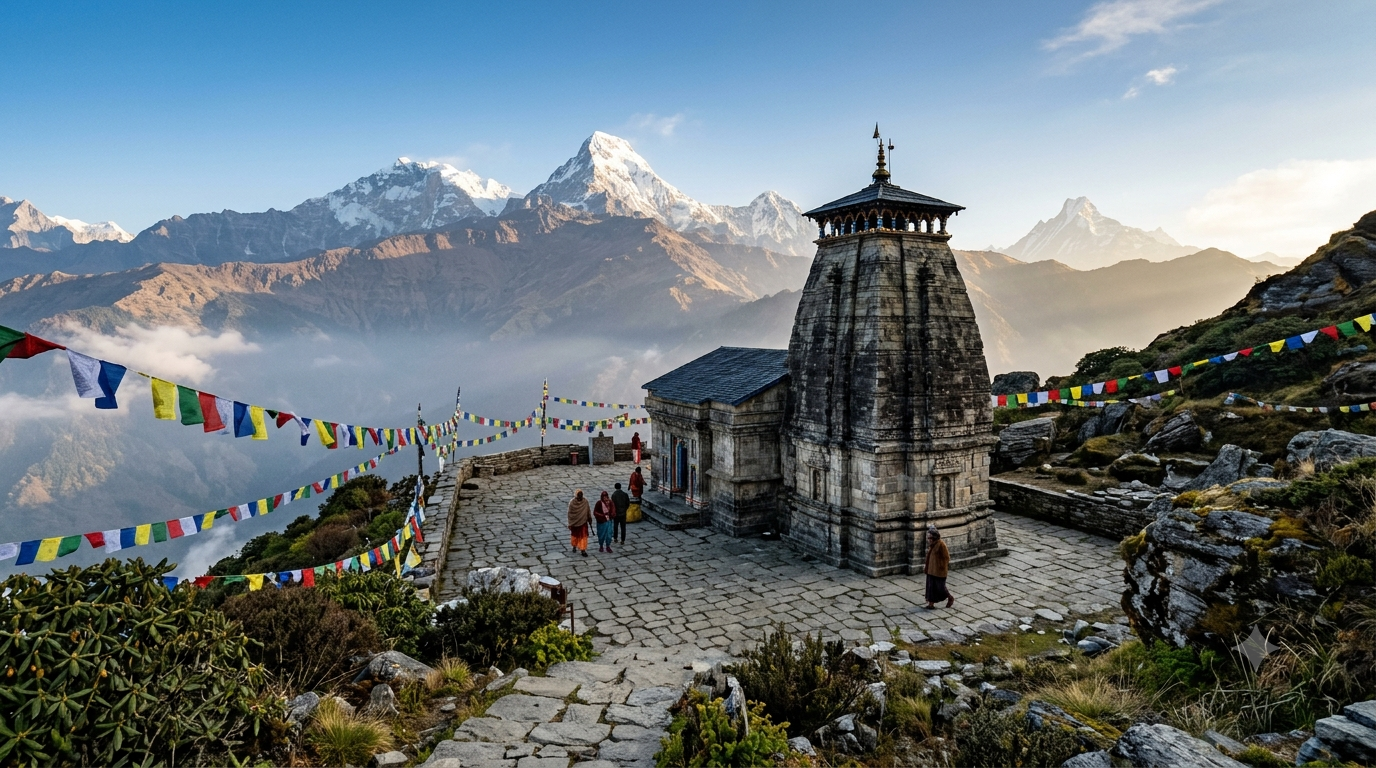
The temples in Uttarakhand sit apart from every other pilgrimage cluster in India. A single Himalayan state holds all four Char Dham shrines, the world’s highest Shiva temple, and dozens of ancient stone sanctuaries within a day or two of each other. Locals call the state Dev Bhoomi, the Land of the Gods, and the name earns itself the moment you climb toward the snowline. This guide maps the sacred landscape for you, so you can plan a route that actually works around opening dates, altitude, and your own fitness.
TemplesMap.com is an independent travel guide. We are not affiliated with, endorsed by, or the official website of any temple, trust, or the Uttarakhand government. We do not accept bookings, donations, or payments. Use the official portals linked below for registration and reservations.
Temples in Uttarakhand at a Glance
- The Char Dham: Yamunotri, Gangotri, Kedarnath, and Badrinath open only from late April to November.
- Highest Shiva temple: Tungnath, at 3,680 metres, sits higher than Kedarnath.
- Year-round shrines: Kainchi Dham, Neelkanth Mahadev, and the Haridwar temples stay open all year.
- Registration: Char Dham entry needs a free government pass, so register before you travel.
- Scam alert: Kedarnath helicopter tickets sell only through IRCTC, not through private agents.
The Char Dham: The Most Sacred Temples in Uttarakhand
The Char Dham, or Chota Char Dham, forms the spiritual backbone of the temples in Uttarakhand. Four Himalayan shrines make up the circuit, and pilgrims traditionally cover them clockwise. You start at Yamunotri, move to Gangotri, then reach Kedarnath, and finish at Badrinath. Because heavy snow seals the high passes each winter, all four gates stay shut for nearly half the year.
For the 2026 season, the schedule is confirmed. Yamunotri and Gangotri opened on 19 April, Kedarnath on 22 April, and Badrinath on 23 April. The temples close in stages through November, so plan your dates carefully against the table further down.
Yamunotri Temple
Yamunotri honours Goddess Yamuna, and it marks the first stop on the clockwise route. The shrine sits at roughly 3,290 metres in Uttarkashi district. To reach it, you drive to Janki Chatti and then trek about 5 to 6 kilometres uphill. Since the path climbs steadily, pony and palki (palanquin) services help those who cannot walk the full stretch.
Gangotri Temple
Gangotri celebrates Goddess Ganga near the river’s symbolic origin. A Gorkha commander, Amar Singh Thapa, built the white shrine in the early 18th century. Because a motorable road runs right up to the temple, Gangotri is the easiest of the four to reach. The shrine stands at about 3,100 metres, and the setting among snow peaks is unforgettable.
Kedarnath Temple
Kedarnath is the most demanding and, for many, the most rewarding of the temples in Uttarakhand. This stone shrine to Lord Shiva counts among the twelve Jyotirlingas as well as the Panch Kedar. It stands at 3,583 metres, so the air feels noticeably thin.
Pilgrims drive to Gaurikund and then trek roughly 16 to 18 kilometres to the temple, although helicopter services offer a faster option. You can read our detailed Kedarnath opening dates and travel guide before you set out.
Badrinath Temple
Badrinath, dedicated to Lord Vishnu, closes the circuit on the banks of the Alaknanda River. The brightly painted facade sits at about 3,133 metres in Chamoli district. Since a road reaches the town directly, Badrinath is far gentler on the body than Kedarnath. For live updates, see our page on Badrinath aarti and darshan today.
Char Dham 2026: Dates, Altitude, and Access
The table below sums up the four Dhams at a glance. Treat the closing dates as tentative, because priests confirm them close to the day itself.
| Temple | Deity | Altitude | 2026 Opened | Access |
|---|---|---|---|---|
| Yamunotri | Goddess Yamuna | ~3,290 m | 19 April | 5-6 km trek |
| Gangotri | Goddess Ganga | ~3,100 m | 19 April | By road |
| Kedarnath | Lord Shiva | 3,583 m | 22 April | 16-18 km trek |
| Badrinath | Lord Vishnu | ~3,133 m | 23 April | By road |
Beyond Char Dham: Other Famous Temples in Uttarakhand
The four Dhams grab the headlines, yet some of the most striking temples in Uttarakhand sit outside that circuit. Several stay open all year, so they rescue any trip planned in the winter off-season. Here are the shrines worth building into your route.
Tungnath: Tallest of the Temples in Uttarakhand
Tungnath holds a title that surprises most pilgrims. At 3,680 metres, it is the highest Shiva temple in the world, and it actually stands higher than Kedarnath. The shrine is the third of the Panch Kedar, and it is believed to be over a thousand years old. You trek about 3.5 kilometres from Chopta to reach it, while the nearby Chandrashila summit rewards the climb with sweeping Himalayan views.
Kainchi Dham
Kainchi Dham near Nainital has become a modern pilgrimage in its own right. The ashram honours Neem Karoli Baba, the saint whose devotees famously included global tech figures. Because it sits at a low altitude beside the Kosi River, the site stays open through the year. The busiest day falls on 15 June, when the annual bhandara draws huge crowds.
Jageshwar Dham
Jageshwar, near Almora, is a cluster of more than a hundred ancient stone temples. Craftsmen raised most of these shrines between the 9th and 12th centuries, largely under the Katyuri kings. Dedicated mainly to Lord Shiva, the group sits inside a quiet deodar cedar forest. The carvings and the setting make Jageshwar one of the finest heritage temples in Uttarakhand.
Neelkanth Mahadev, Naina Devi, and the Haridwar Shrines
Neelkanth Mahadev, above Rishikesh, marks the spot where Shiva is said to have swallowed the ocean’s poison during the Samudra Manthan. Naina Devi overlooks the Naini Lake at Nainital and counts among the Shakti Peeths. In Haridwar, the hilltop shrines of Mansa Devi and Chandi Devi draw steady crowds, and a cable car eases the climb for both. Since all of these sit at lower elevations, they welcome visitors in every season.
Char Dham Registration and the Helicopter Scam Warning
Every Char Dham pilgrim must register before travelling, and this rule is strictly enforced at check posts. Registration is free, so never pay a “processing fee” to a private website. Use only the official Uttarakhand government portal at registrationandtouristcare.uk.gov.in, or the wider Uttarakhand Tourism site. You upload an ID, pick your dates, and download a QR-coded pass.
The helicopter route to Kedarnath attracts the most fraud. Official heli tickets sell only through IRCTC, so book them at the government portal and nowhere else. Fake agents advertise “confirmed” seats, take your money, and vanish before the season starts. If a seller demands cash upfront or contacts you on WhatsApp, treat it as a red flag and walk away.
Best Time to Visit Temples in Uttarakhand
Timing shapes your entire trip, because the high shrines follow a strict seasonal calendar. For the Char Dham and Tungnath, the best windows are May to mid-June and again September to October. The monsoon months of July and August bring landslides, so many pilgrims avoid the hills then. The Panch Kedar circuit follows a similar rhythm, and you can plan it using our complete Panch Kedar Yatra guide.
Lower shrines behave very differently. Kainchi Dham, Neelkanth Mahadev, and the Haridwar temples stay open all year, although winter mornings turn sharply cold. If you travel between November and April, focus on these accessible temples in Uttarakhand rather than the snowbound Dhams.
How to Reach the Temples in Uttarakhand
Most journeys begin at three gateways. Jolly Grant Airport near Dehradun is the nearest airport for the Char Dham, while Pantnagar serves the Kumaon temples such as Kainchi Dham. Rishikesh and Haridwar are the main railheads, and buses and taxis fan out from both.
From these hubs, the terrain decides your pace. Gangotri and Badrinath sit at the end of motorable roads, so a car takes you almost to the gate. Kedarnath and Yamunotri need a trek or a pony, while Tungnath asks for a short but steep hike. Because mountain roads close without warning after rain, always keep a buffer day in your plan.
Health and Safety at the Temples in Uttarakhand
High-altitude pilgrimage is beautiful, yet it makes real demands on the body. The 2026 yatra rules require a medical check-up for pilgrims over 55 or with existing conditions, so carry your reports. If you have heart, lung, or blood-pressure issues, consult your doctor before attempting the Kedarnath or Tungnath climb. Altitude sickness is common above 3,000 metres, and it does not care how fit you feel at home.
Pack for cold even in summer, since temperatures near the shrines drop fast after sunset. Carry warm layers, a raincoat, sturdy shoes, and any regular medication. Drink water often and climb slowly to help your body adjust. These are practical travel precautions, not medical advice, so treat your own health as the priority over any schedule.
Temples in Uttarakhand: What Guides Won’t Tell You
A few hard-won lessons save real trouble on the ground. First, start every trek before dawn, because afternoon weather in the high Himalayas turns quickly and queues grow long. Second, phones are now banned inside several temple premises, so do not rely on a mobile darshan photo. Third, book accommodation in the base towns rather than at the shrine itself, where rooms are scarce and basic.
One more point catches many first-timers. People assume Kedarnath is the highest temple in the state, yet Tungnath quietly claims that record. Knowing which temples in Uttarakhand demand a serious trek, and which sit beside a road, lets you match the route to your group’s stamina instead of guessing.
Before You Go
The temples in Uttarakhand reward planning more than almost any pilgrimage in India. Lock your dates around the confirmed 2026 openings, register free on the official portal, and book any helicopter seat only through IRCTC. Balance the demanding Dhams with gentler shrines like Kainchi Dham or Jageshwar, so your trip suits everyone travelling with you. Above all, respect the altitude and the weather, because the mountains set the final schedule, not your itinerary.
Frequently Asked Questions
How many famous temples in Uttarakhand are there?
Uttarakhand has dozens of renowned temples. The headline group is the Char Dham (Yamunotri, Gangotri, Kedarnath, Badrinath), joined by Tungnath, Kainchi Dham, Jageshwar, Neelkanth Mahadev, Naina Devi, and the Haridwar shrines. Together they cover both Garhwal and Kumaon.
Which is the highest Shiva temple in Uttarakhand?
Tungnath is the highest Shiva temple in the world at 3,680 metres. It stands higher than Kedarnath, which sits at 3,583 metres. Tungnath is also the third shrine of the Panch Kedar circuit.
Do I need to register for the Char Dham Yatra?
Yes, registration is mandatory and free for every Char Dham pilgrim. Complete it on the official Uttarakhand government portal before you travel. Officials check your QR-coded pass at entry points along the route.
Are Kedarnath helicopter tickets sold by private agents?
No. Official Kedarnath helicopter tickets are sold only through IRCTC. Any private agent claiming to offer confirmed seats is a common scam, so book only at the government portal and avoid upfront cash payments.
Which temples in Uttarakhand stay open in winter?
Kainchi Dham, Neelkanth Mahadev, Naina Devi, and the Haridwar temples of Mansa Devi and Chandi Devi remain open all year. The high Char Dham shrines and Tungnath close from around November to April due to heavy snow.
What is the best time to visit the Char Dham?
The best months are May to mid-June and September to October. These windows offer clearer weather and safer roads. Avoid July and August, when monsoon landslides frequently block routes.
Is Kainchi Dham a temple or an ashram?
Kainchi Dham is both, and it honours the saint Neem Karoli Baba near Nainital. The site draws seekers throughout the year. Its annual bhandara on 15 June is the busiest day.
How difficult is the Kedarnath trek?
The Kedarnath trek runs about 16 to 18 kilometres from Gaurikund and is fairly strenuous. Ponies, palki, and helicopter options exist for those who cannot walk it. Because it climbs above 3,500 metres, pace yourself and stay hydrated.