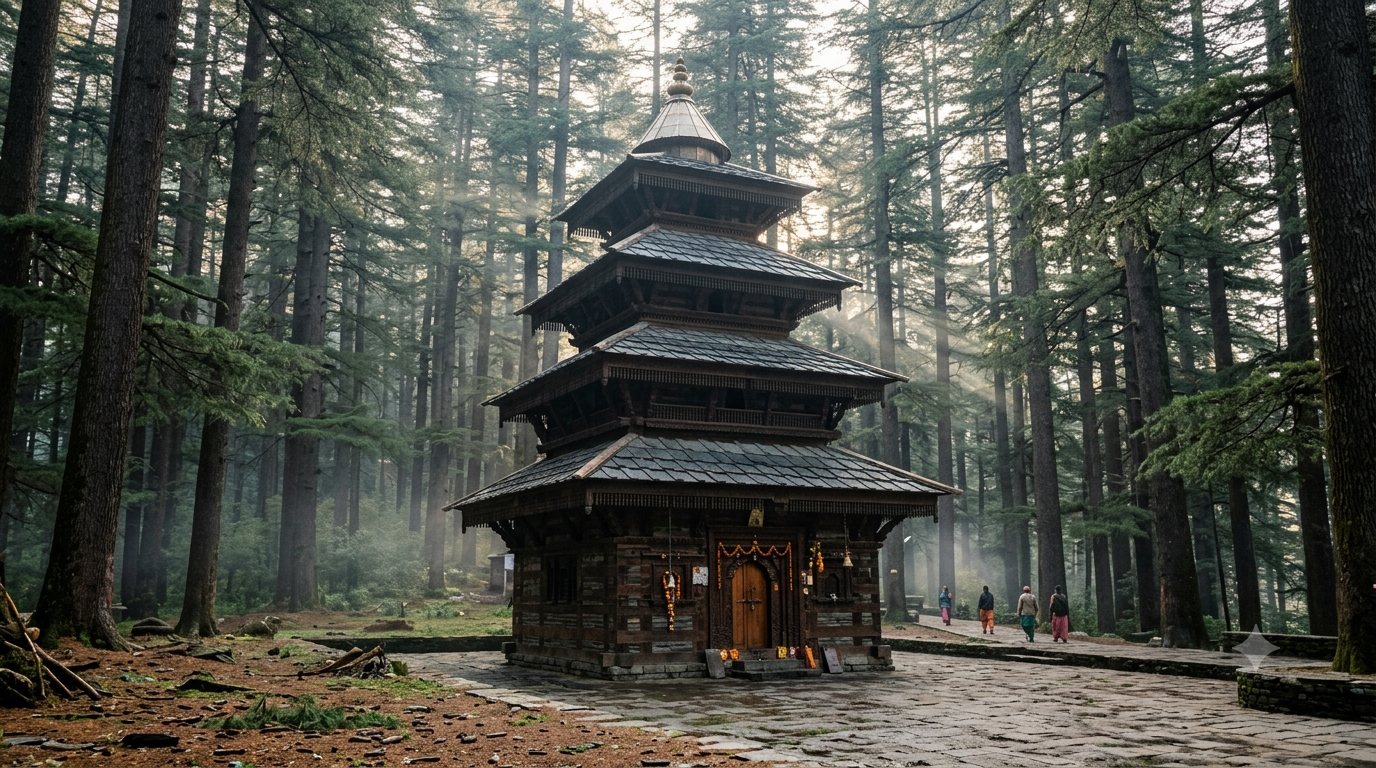
The temples in Himachal Pradesh are not simply places of worship, and that is exactly why pilgrims keep climbing these hills year after year. Locals call this state Dev Bhoomi, the Land of Gods, because gods here live on ridge-tops, inside cedar forests and beside roaring rivers. You will find eternal flames that burn with no fuel, a Shiva lingam that lightning shatters, and wooden pagodas that have stood for nearly five centuries. This guide gathers the most sacred shrines, their real timings, honest travel routes and the mistakes most websites repeat, so you can plan one clean trip.
Temples Map is an independent temple guide. We are not affiliated with, endorsed by, or the official website of any temple trust or the Himachal Pradesh government. We do not take bookings, donations or payments. Please use the official portals linked below for darshan passes and current information.
Temples in Himachal Pradesh at a Glance
- Five Shakti Peeths: Naina Devi, Jwala Ji, Bajreshwari Devi, Chamunda Devi and Chintpurni all sit in this one state.
- Oldest wooden marvel: the Hidimba Devi Temple in Manali was built in 1553 CE and still stands 24 metres tall.
- Strangest wonder: Bijli Mahadev near Kullu, where lightning is believed to break the lingam, which priests then rejoin with butter.
- Rock-cut heritage: the 8th-century Masroor temples in Kangra are carved from a single sandstone ridge.
- Best seasons: March to June and September to November, though timings and fees can change, so confirm on official sources.
Why the Temples in Himachal Pradesh Feel Different
Most North Indian shrines are stone and marble. Here, faith took a mountain form instead. Because timber and slate were what the hills offered, builders developed the kath-kuni style, stacking wood and stone in alternating layers. This design flexes during earthquakes rather than cracking, so many shrines have survived for centuries.
The deities feel local too. Village gods travel in palanquins during festivals, and whole valleys still gather for fairs that predate any temple trust. When you visit, you are stepping into a living tradition, not a monument. Where the grand Kerala temples dazzle with towering gopurams, Himachal charms with wood, slate and mountain silence.
That mix of Himalayan setting, ancient wood craft and daily ritual is what sets the temples in Himachal Pradesh apart from the plains.
The Five Shakti Peeth Temples in Himachal Pradesh
Himachal holds five of India’s revered Shakti Peeths, the sacred spots where parts of Goddess Sati are believed to have fallen. Four of them cluster around Kangra and Una, so devotees often cover them together. Below is what each one actually offers, along with timings you should still verify before you travel.
Jwala Ji: The Eternal Flame
The Jwalamukhi temple in Kangra district shelters a natural flame that emerges from a rock fissure, with no lamp and no fuel. Devotees worship the goddess Jwala Devi here as pure fire.
Historians note the site was famous by the 14th century, when Firuz Shah Tughlaq visited during a Kangra campaign. The temple usually opens around 5 AM and closes by about 9 PM, although seasonal changes are common. Gaggal near Dharamshala is the nearest airport.
Naina Devi: The Hilltop Shakti Peeth
This is the Himachal confusion point, so read carefully. The Shakti Peeth Shri Naina Devi Ji sits in Bilaspur district, not in Nainital, Uttarakhand, which is a completely different temple.
You reach the Bilaspur shrine by climbing roughly 250 to 300 steps or by taking the ropeway. Chandigarh lies about 100 km away, while Anandpur Sahib is the closest railhead. Darshan is free, and the Shravan Ashtami fair draws lakhs of pilgrims every year.
Chintpurni: The Wish-Fulfilling Goddess
Chintpurni, meaning the remover of worries, honours Chhinnamastika Devi in the Una district. The deity is worshipped as a Pindi, a rounded sacred stone rather than a carved idol. Because crowds swell during Navratri and the August Sawan Ashtami mela, the trust runs a paid Sugam Darshan queue alongside free entry. Timings shift with the season, roughly opening between 4 and 5 AM and closing near 10 PM, so confirm the current hours on the official portal.
Chamunda and Bajreshwari Devi
Chamunda Devi, near Dharamshala, sits on the banks of the Baner river and also houses a Shiva lingam. Fit trekkers can climb 16 km further to the older Aadi Himani Chamunda on a high ridge. Meanwhile, Bajreshwari Devi in Kangra town, once called Nagarkot, honours Durga in her thunderbolt form. Invaders plundered its legendary wealth many times, yet devotion here never faded.
Ancient Shiva and Rock-Cut Temples in Himachal Pradesh
Beyond the goddess shrines lie some of the oldest Shiva temples in Himachal Pradesh, and a few genuine architectural wonders. These sites reward travellers who care about history as much as darshan.
Baijnath: The Jyotirlinga Myth, Corrected
The Baijnath temple near Palampur is a stunning early 13th-century shrine, built around 1204 CE in the Nagara style. It honours Shiva as Vaidyanath, the Lord of Physicians, and a life-size stone Nandi guards the entrance. Now for the correction many sites get wrong: Baijnath is often called one of the twelve Jyotirlingas, but it is not on the traditional list of twelve, several of which sit among the famous temples in Maharashtra. Devotees revere it deeply, so enjoy it for what it truly is, an ancient healing shrine of rare beauty.
Bijli Mahadev: The Lightning Lord
Perched around 2,460 metres above the Kullu valley, Bijli Mahadev rewards a moderate 3 km trek with sweeping views of the Beas and Parvati rivers. A tall staff rises beside the temple, and legend says lightning periodically strikes the Shiva lingam and shatters it. Priests then rejoin the pieces using butter and sattu, a ritual locals read as rebirth. The Himachal government itself documents this unusual phenomenon.
Masroor: The Himalayan Rock-Cut Wonder
About 15 km from Kangra, the Masroor temples were carved from a single sandstone ridge in the 8th century. Craftsmen cut the shrines from living rock, much like Ellora, which is why some call this the Himalayan Ellora. Though an earthquake damaged the complex long ago, the surviving carvings still astonish visitors. This is one heritage stop serious travellers should not skip.
Hidimba Devi and the Mountain Temples in Himachal Pradesh
Some shrines here are loved as much for their setting as their sanctity. The temples in Himachal Pradesh listed below sit amid deodar forests and Himalayan peaks, and they draw families, trekkers and photographers alike.
Hidimba Devi Temple, Manali
Hidden in the Dhungiri cedar forest, the Hidimba Devi Temple was built in 1553 CE by Maharaja Bahadur Singh. It honours Hidimbi, wife of the Pandava Bhima and mother of Ghatotkacha.
The four-tiered pagoda rises 24 metres, and the sanctum wraps around a natural rock rather than an idol. It lies barely 2 km from Mall Road, so nearly every Manali visitor drops by. Photography is not allowed inside the sanctum, though the forest around it is a photographer’s dream.
Bhimakali Temple, Sarahan
At about 2,165 metres in Sarahan, Bhimakali was the seat of the Bushahr royal family. Its Pahari towers alternate wood and stone, a quake-resistant design that has held for centuries. Two temples share the complex, one old and one newer, and elaborate rituals still run daily. Since Sarahan sits roughly 180 km from Shimla, plan an overnight rather than a rushed day trip.
Jakhoo Temple, Shimla
Crowning Shimla’s highest hill at around 2,455 metres, Jakhoo temple honours Hanuman and is tied to a Ramayana legend. A towering Hanuman statue is visible across the town. The short but steep climb rewards you with cool air and pine-framed views, so carry water and watch for the resident monkeys.
Temples in Himachal Pradesh: Districts and Timings
Timings below are indicative and change by season and festival. Always confirm current hours and any darshan fees on the official temple or tourism portal before you set out.
| Temple | District | Main Deity | Indicative Timing |
|---|---|---|---|
| Jwala Ji | Kangra | Jwala Devi (flame) | ~5 AM to 9 PM |
| Naina Devi | Bilaspur | Naina Devi | ~5 AM to 10 PM |
| Chintpurni | Una | Chhinnamastika | ~4 AM to 10 PM |
| Hidimba Devi | Kullu | Hidimbi Devi | ~8 AM to 6 PM |
| Bijli Mahadev | Kullu | Shiva | Daylight hours |
Best Time to Visit Temples in Himachal Pradesh
For most travellers, March to June brings pleasant weather and clear valley views, which suits the hill shrines well. September to November is equally lovely, since the monsoon has washed the slopes green and crowds thin out. Winter turns magical but harsh, so higher sites like Bhimakali and Bijli Mahadev can get snowbound.
Festivals change the mood entirely. Navratri fills the Shakti Peeths with lakhs of devotees, while Kullu Dussehra transforms the whole valley. If you prefer calm darshan, avoid these peaks. If you want spectacle, plan around them, but book stays early because rooms vanish fast.
How to Plan Your Temple Circuit
Grouping shrines by region saves days of backtracking on winding mountain roads. Two circuits work especially well for a first visit.
- Kangra circuit: pair Jwala Ji, Bajreshwari Devi and Chamunda Devi, then add Baijnath and Masroor nearby. Gaggal airport and Kangra rail serve this belt.
- Kullu-Manali circuit: combine Hidimba Devi with a Bijli Mahadev trek. Bhuntar airport is closest, and Manali makes a comfortable base.
- Bilaspur and Una: tackle Naina Devi and Chintpurni together, since both sit near the Chandigarh approach road.
For state transport and destination details, the official Himachal Tourism site is the most reliable starting point. If you plan to head further into the mountains afterwards, our Kedarnath temple guide maps out that Himalayan pilgrimage.
Trek and Altitude Safety for Pilgrims
Several of these shrines demand real physical effort, so treat the journey seriously. Bijli Mahadev involves a 3 km uphill trek, while Naina Devi and Jakhoo mean hundreds of steps. Because altitude and cold add strain, carry water, warm layers and any regular medication.
Elderly pilgrims, pregnant travellers and anyone with heart or breathing conditions should pace slowly and rest often. If a climb feels risky, use the ropeway where available, or simply admire the shrine from below. Faith rewards care, not recklessness, so consult a doctor before a strenuous climb if you are at risk.
What Most Guides Get Wrong
Three myths trip up first-time visitors again and again. First, the Naina Devi Shakti Peeth is in Bilaspur, Himachal, not the Nainital temple in Uttarakhand, though the two are constantly confused. Second, Baijnath is a magnificent Shiva shrine, yet it is not one of the twelve Jyotirlingas, despite what many pages claim.
Third, and most important, watch for fake booking websites. No middleman controls darshan at these temples, and genuine passes come only through official trust or government portals. If a site asks for an upfront fee to guarantee entry, treat it as a scam. When in doubt, route every payment through the official channel and nowhere else.
Before You Go
The temples in Himachal Pradesh reward slow, thoughtful travel far more than a checklist dash. Pick one circuit, confirm current timings on official sources, and leave room to simply sit on a ridge and breathe. Dress modestly, respect sanctum photography rules, and carry cash for small offerings. Do that, and these Himalayan shrines will give you exactly what pilgrims have sought here for centuries, a little stillness and a lot of wonder.
Frequently Asked Questions
How many Shakti Peeths are among the temples in Himachal Pradesh?
Himachal Pradesh holds five Shakti Peeths: Naina Devi in Bilaspur, Jwala Ji and Bajreshwari Devi and Chamunda Devi in Kangra, and Chintpurni in Una. Four of them lie close together, so many pilgrims cover them on a single Kangra and Una trip.
Which is the oldest famous temple in Himachal Pradesh?
Among the well-known shrines, the Hidimba Devi Temple in Manali dates to 1553 CE, while the Baijnath temple goes back to around 1204 CE. The Masroor rock-cut complex is older still, carved in the 8th century, making it one of the region’s most ancient sites.
Is the Naina Devi temple in Himachal or Uttarakhand?
Both states have a Naina Devi temple, which causes endless confusion. The famous Shakti Peeth is Shri Naina Devi Ji in Bilaspur district, Himachal Pradesh. The separate Naina Devi temple in Nainital, Uttarakhand, is a different shrine entirely.
Do I need to book darshan online for these temples?
Most shrines offer free general darshan with no advance booking needed. Some, like Chintpurni, run a paid priority queue during rush periods. Always arrange passes through the official trust or Himachal government portal, never through a private middleman site.
What is special about Bijli Mahadev temple?
Bijli Mahadev, above Kullu, is famous for a lightning legend. Devotees believe lightning periodically strikes and breaks the Shiva lingam, which priests then rejoin using butter and sattu. Reaching it needs a moderate 3 km trek that rewards you with stunning valley views.
When is the best time to visit temples in Himachal Pradesh?
March to June and September to November are ideal, offering pleasant weather and clear mountain views. Avoid deep winter for high-altitude shrines, and expect heavy crowds during Navratri and other major fairs.
Are the hill temples suitable for elderly pilgrims?
Many are accessible, and several like Naina Devi offer a ropeway to ease the climb. However, trek-based shrines such as Bijli Mahadev demand fitness. Elderly or unwell pilgrims should pace themselves, carry medication, and skip strenuous climbs when needed.