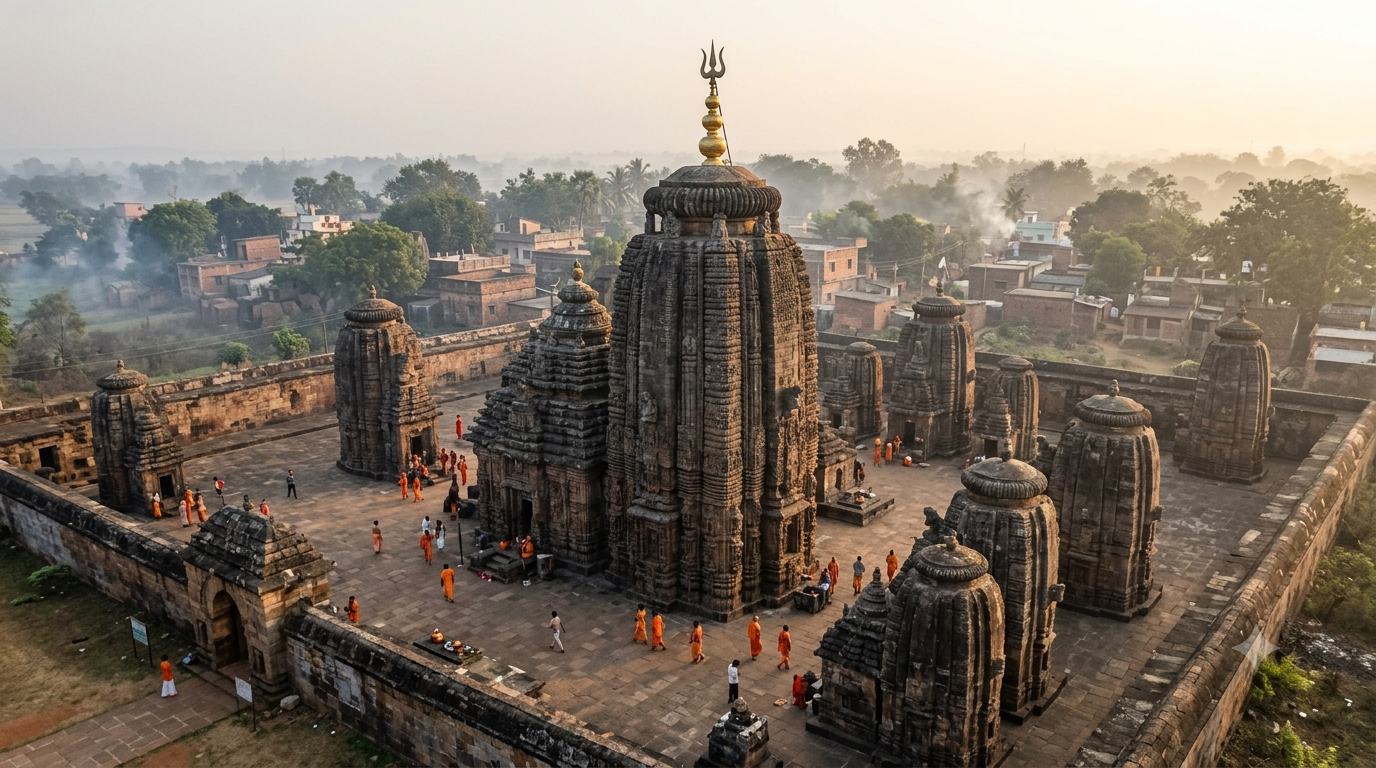
The temples in Bihar and Jharkhand sit far closer together than most travel guides admit. That single fact changes how you should plan the trip. Deoghar, Gaya, Patna and Rajrappa look scattered on a map, yet a well-sequenced week covers a Jyotirlinga, a UNESCO World Heritage site, a temple that historians call one of India’s oldest working shrines, and a village of 72 terracotta temples almost nobody photographs.
Temples Map is an independent temple guide. We are not affiliated with, endorsed by, or the official website of any temple trust, shrine board or state tourism department. We accept no bookings, donations or payments. Use the official portals linked in this article for darshan passes, puja bookings and current timings.
Temples in Bihar and Jharkhand at a Glance
- One Jyotirlinga: Baba Baidyanath Dham stands in Deoghar, Jharkhand, and it is also revered as a Shakti Peeth.
- One World Heritage site: UNESCO inscribed the Mahabodhi Temple Complex at Bodh Gaya in 2002.
- Peak seasons: Shravan (July–August) for Deoghar, Chhath (October–November) for the sun temples, and Pitru Paksha for Gaya.
- Best travel window: October to March, because summers on the Kaimur and Chota Nagpur plateaus turn brutal.
- Entry cost: darshan itself is free at every temple listed here, though paid fast-track and puja options exist at some.
Jharkhand separated from Bihar in November 2000. Before that, both regions formed one administrative unit, and pilgrim routes were built accordingly. Many temples in Bihar and Jharkhand still share priests, patrons and pilgrim traffic.
The kanwar tradition shows this clearly. Devotees fill their pots at Sultanganj in Bihar, then walk roughly 105 km east to Deoghar in Jharkhand. So the border exists on paper while the pilgrimage ignores it completely.
Rail geography reinforces the link. Jasidih Junction, the station for Deoghar, sits on the Howrah–Delhi main line that also serves Patna and Gaya. Because of that alignment, a single circuit is genuinely practical.
The Biggest Myth About Temples in Bihar and Jharkhand
Older listicles still place Baba Baidyanath in Bihar. That was true before 2000, but it is wrong today. Deoghar lies in the Santhal Parganas division of Jharkhand, and the district administration at deoghar.nic.in confirms it.
A second confusion is worth clearing before you book tickets. Three shrines claim the Baidyanath Jyotirlinga: Deoghar in Jharkhand, Parli Vaijnath in Maharashtra, and Baijnath in Himachal Pradesh. Deoghar draws by far the largest pilgrim numbers, yet devotees of the other two hold their claims sincerely.
Check the state name on your ticket before you travel. Pilgrims have landed in the wrong state after booking on the strength of a blog headline. This is the single most repeated error in listicles about temples in Bihar and Jharkhand.
Famous Bihar Shrines Worth Planning Around
Bihar concentrates its best-known shrines along the Patna–Gaya corridor. So a first trip through the temples in Bihar and Jharkhand usually starts here, then moves east.
Mahavir Mandir, Patna
This Hanuman temple stands directly opposite Patna Junction, which makes it the easiest major shrine in either state to reach. Doors open around 5 am and stay open until roughly 10 pm, though hours stretch on Tuesdays and during Ram Navami.
The prasad has its own reputation. Bihar Tourism notes that the temple’s Naivedyam laddu is prepared by experts brought in from Tirupati. Revenue from the trust funds the Mahavir Cancer Sansthan and several other hospitals, so buying prasad here has a direct civic dimension.
Vishnupad Temple, Gaya
Vishnupad enshrines a 40 cm footprint attributed to Lord Vishnu, set in a silver-plated basin. Rani Ahilyabai Holkar of Indore rebuilt the present structure in 1787, using dark stone and an octagonal plan.
Darshan generally runs from about 6:30 am to 7:30 pm, and entry is free. During Pitru Paksha, usually falling across September and October, Gaya fills with families performing pind daan for ancestors. Book accommodation weeks ahead if your visit overlaps that fortnight.
Mahabodhi Temple, Bodh Gaya
Many “temples in Bihar and Jharkhand” lists quietly file Mahabodhi under Hindu shrines. It is a Buddhist site, and treating it accurately matters. The Ministry of Culture records that Emperor Ashoka founded the site in the third century BCE, while the standing brick structure dates to the Gupta period of the fifth and sixth centuries CE.
UNESCO calls it the only living Buddhist site on India’s World Heritage list. The Bodhgaya Temple Management Committee, constituted under the Bodh Gaya Temple Act of 1949, manages it under the Government of Bihar.
One practical warning: at the time of writing, the committee’s own website was offline and showing a suspended-account page. Use the Bihar Tourism portal for planning instead, and treat any other site claiming to be the “official” Bodh Gaya portal with suspicion.
Mundeshwari Temple, Kaimur
The octagonal Mundeshwari shrine sits on a hill roughly 185 m above the Kaimur plateau. An Archaeological Survey of India plaque dates the site to 108 CE, and Bihar Tourism repeats that figure while describing it as the oldest functional temple in the world.
Art historians read the evidence more cautiously. Inscriptions found here belong to the seventh century, and the surviving stonework is generally dated between the sixth and seventh centuries. Either way, worship has continued without a recorded break, which is the genuinely remarkable part.
The sanctum holds a chaturmukh linga with four carved faces, while the goddess stands in a wall niche as Mahishasuramardini. Ram Navami and Shivratri draw the biggest crowds.
Deo Sun Temple, Aurangabad
Bihar’s Chhath heartland has its own architectural surprise. The Deo Surya Mandir faces west, towards the setting sun, while almost every other solar shrine in India faces east.
Bihar Tourism’s own catalogue records this reversal, and lists Vishnu, Surya and Avalokiteshvara among the sanctum images. Lakhs of devotees converge here during Kartik Chhath in October or November, when vehicles cannot approach the temple and the last stretch is walked.
Three More Bihar Shrines Regulars Rate Highly
- Badi Patan Devi, Patna: a long-venerated goddess shrine in the old city, busiest through Navratri.
- Thawe Durga, Gopalganj: a forest-set Shakti temple with a strong local following.
- Harihar Nath, Sonepur: a Shiva–Vishnu shrine beside the historic Sonepur cattle fair grounds.
Famous Jharkhand Shrines Worth the Detour
Baba Baidyanath Dham, Deoghar
Baidyanath is the anchor of any circuit covering temples in Bihar and Jharkhand. The complex holds the Jyotirlinga plus 21 further shrines, and devotees also revere it as the Hriday Peeth where Sati’s heart is believed to have fallen.
Widely published timings run from about 4 am to 3:30 pm, then again from roughly 6 pm to 9 pm. Hours change during Shravan and Mahashivratri, so confirm on babadham.org or with the district administration before you set out.
Shravani Mela transforms the town for a month. Kanwariyas walk from Sultanganj in saffron, and the Jharkhand government has in past years suspended VIP darshan during the mela. The 2026 mela runs through late July and August; check deoghar.nic.in for the notified dates and traffic plan.
Basukinath Temple, Dumka
Tradition holds that a Baidyanath pilgrimage stays incomplete until you also offer water at Basukinath, roughly 45 km further east. Many kanwariyas therefore continue straight there after Deoghar.
The shrine is far smaller and far less organised for crowds than other temples in Bihar and Jharkhand. Go early, keep your group together, and confirm current hours locally rather than relying on aggregator listings.
Rajrappa Chhinnamasta Temple, Ramgarh
Rajrappa stands where the Bhairavi meets the Damodar, about 28 km from Ramgarh town and around 100 km from Ranchi. The presiding deity is Chhinnamasta, one of the ten Mahavidyas, shown in her severed-head form.
Jharkhand Tourism notes the architectural resemblance to Assam’s Kamakhya temple. Ritual animal offerings still take place here on certain days, which some families prefer to avoid, so plan the visit knowing that.
Maluti Terracotta Temples, Dumka
Maluti is the finest thing in either state that almost no itinerary includes. The village lies about 55 km from Dumka and once held 108 temples; 72 survive today.
Kings of the Baj Basanta line built them from Chila river clay, and the Global Heritage Fund has flagged the cluster among the world’s most endangered heritage sites. Go with a local guide, since the panels reward slow looking, and carry water because there is little shade.
Ranchi: Jagannath Temple and Pahari Mandir
Ranchi gives you two contrasting shrines in one afternoon. The seventeenth-century Jagannath Temple on Jagannathpur hill runs its own Rath Yatra, modelled on Puri, and it draws large crowds each summer.
Pahari Mandir, a Shiva shrine on a rocky outcrop, demands a climb of several hundred steps. The city view from the top is the reward, though the ascent is not suitable for everyone.
Timings and Access for Key Temples in Bihar and Jharkhand
| Temple | District, State | Indicative hours | Nearest railhead |
|---|---|---|---|
| Mahavir Mandir | Patna, Bihar | Approx. 5 am to 10 pm | Patna Junction, adjacent |
| Vishnupad Temple | Gaya, Bihar | Approx. 6:30 am to 7:30 pm | Gaya Junction, about 4 km |
| Mahabodhi Temple | Bodh Gaya, Bihar | Daily, dawn to evening | Gaya Junction, about 15 km |
| Mundeshwari Temple | Kaimur, Bihar | Approx. 6 am to 7 pm | Bhabua Road, about 30 km |
| Deo Sun Temple | Aurangabad, Bihar | Daylight hours; confirm locally | Gaya Junction, road onward |
| Baba Baidyanath Dham | Deoghar, Jharkhand | Approx. 4 am to 3:30 pm, 6 pm to 9 pm | Jasidih Junction, about 7 km |
| Basukinath | Dumka, Jharkhand | Confirm locally before travel | Jasidih Junction, about 45 km |
| Rajrappa Chhinnamasta | Ramgarh, Jharkhand | Confirm locally before travel | Ranchi, about 100 km |
Treat every figure above as indicative. Hours at temples in Bihar and Jharkhand shift with festivals, renovation work and crowd-control orders. Verify on the official portal or with the district administration close to your travel date.
When Should You Visit Temples in Bihar and Jharkhand?
October to March is the comfortable window. Days stay mild, the plateau nights turn pleasant, and walking between shrines does not exhaust you. Summer is punishing across both states, while the monsoon makes hill approaches slippery.
Festival timing matters more than weather, though. Shravan fills Deoghar with millions of walkers, and darshan queues stretch for hours. Chhath, in Kartik, turns Deo and the Patna ghats into a sea of devotees.
Pitru Paksha in Gaya is a third peak. If your purpose is pind daan, go then. If it is sightseeing, avoid that fortnight entirely, because the temples in Bihar and Jharkhand nearest Gaya absorb the overflow.
A Five-Day Route Through the Temples in Bihar and Jharkhand
- Day 1 — Patna: Mahavir Mandir at dawn, then Badi Patan Devi and the Patna Museum.
- Day 2 — Gaya: Vishnupad in the morning, Bodh Gaya after lunch, overnight in Bodh Gaya.
- Day 3 — Deoghar: overnight train or road transfer via Jasidih, evening aarti at Baidyanath.
- Day 4 — Dumka: Basukinath early, then Maluti village with a local guide.
- Day 5 — Ranchi: Rajrappa en route, then Pahari Mandir and Jagannath Temple.
Add a sixth day if you want Mundeshwari, since Kaimur sits west of Patna and pulls against this eastward flow. This sequence covers the major temples in Bihar and Jharkhand without doubling back. Deoghar now has a domestic airport, which helps if you would rather fly one leg than ride the whole loop.
Booking Scams and Safety at Temples in Bihar and Jharkhand
Scam portals are the biggest practical risk when you plan visits to temples in Bihar and Jharkhand. Sites that mimic temple trusts advertise “VIP darshan booking” and collect payments for passes that either cost nothing or can only be bought at the counter. Before paying anyone, confirm the channel on the temple’s own domain or the district website.
Physical demand deserves equal thought. Pahari Mandir and Mundeshwari both involve long stair climbs, and Shravan crowds at Deoghar mean hours on your feet in heat and humidity. Carry water, carry your regular medication, and if you are elderly, pregnant or managing a heart or joint condition, speak to your doctor before attempting a strenuous climb or a full-day fast.
Ritual and astrological remedies belong to faith and tradition. They are not a substitute for medical treatment, and no responsible priest will tell you otherwise.
What First-Time Visitors to Temples in Bihar and Jharkhand Get Wrong
Most trips through the temples in Bihar and Jharkhand fail on sequencing rather than information. Below are the errors that regulars see repeated season after season.
- Treating Deoghar as a day trip. Queue time alone can consume a morning, so give it a night.
- Booking Bodh Gaya stays during Shravan. Deoghar is the crowded town then, not Gaya; the two peaks are separate.
- Skipping Maluti to “save time”. It is 90 minutes from Basukinath and the single most distinctive stop on the route.
- Assuming photography is allowed. Several sanctums prohibit phones and cameras, and enforcement is strict at Baidyanath.
- Wearing shorts. Modest dress avoids friction at every shrine listed here.
Before You Go
The temples in Bihar and Jharkhand reward pilgrims who plan around the calendar rather than the map. Anchor the trip on Baidyanath and Gaya, then add Maluti and Rajrappa as the stops that make it memorable. Pick the October–March window unless a specific festival is the whole point of the journey.
Verify hours on official portals shortly before you leave. Never pay a third party for a darshan pass you have not confirmed exists. For deeper planning on Deoghar itself, our guide to Baidyanath temple stays and darshan goes further into logistics.
Frequently Asked Questions
Which Jyotirlinga is in Bihar or Jharkhand?
Baba Baidyanath Dham in Deoghar is the Jyotirlinga, and it lies in Jharkhand, not Bihar. Bihar has no Jyotirlinga of its own. The confusion persists because Deoghar was part of undivided Bihar until Jharkhand was created in 2000.
What is the oldest temple in Bihar?
Mundeshwari Temple in Kaimur is widely described as the oldest, and an Archaeological Survey of India plaque dates the site to 108 CE. It has been a protected monument since 1915. Scholars date the surviving structure later, to around the sixth or seventh century.
Is Mahabodhi Temple a Hindu temple?
No. Mahabodhi at Bodh Gaya is a Buddhist temple marking the spot where the Buddha attained enlightenment. UNESCO inscribed it as a World Heritage Site in 2002. Visitors of every faith are welcome, but the rituals and management are Buddhist.
How far is Deoghar from Patna?
Deoghar is roughly 280 km from Patna by road, and the drive typically takes six to seven hours. Many pilgrims prefer the train to Jasidih Junction, about 7 km from the temple. Deoghar also has a domestic airport.
Do I need to book darshan online at Baidyanath?
General darshan does not require an online booking, and standing in the common queue is free. Paid fast-track options have existed at the temple office, and availability changes with the season. Check babadham.org or the Deoghar district website rather than any third-party seller.
When is Shravani Mela held at Deoghar?
Shravani Mela runs through the lunar month of Shravan, which falls in July and August. The 2026 edition covers late July into August. Exact dates and traffic arrangements are notified each year by the Deoghar district administration.
Which temples in Bihar and Jharkhand suit a short weekend?
Pair Patna and Gaya for a two-day Bihar trip, because most routes through the temples in Bihar and Jharkhand begin in that corridor. Mahavir Mandir, Vishnupad and Bodh Gaya sit close together. For Jharkhand, Deoghar plus Basukinath works as a compact weekend. Combining both states properly needs four days minimum.
Are temples in Bihar and Jharkhand free to enter?
Yes. Darshan costs nothing at every shrine covered here, including Baidyanath, Vishnupad and Mahabodhi. Some temples sell optional fast-track or puja tickets at their own counters. Treat any website charging an entry fee on a temple’s behalf as suspect.
How many days do you need for temples in Bihar and Jharkhand?
Five days covers the core circuit from Patna to Ranchi at a comfortable pace. Four works if you drop Maluti or Mundeshwari. Two days suits one state only, and Shravan crowds at Deoghar can add half a day to any plan.
Are the Maluti temples worth visiting?
Yes, if terracotta art or medieval architecture interests you. Seventy-two temples survive from an original 108, decorated with panels illustrating the Ramayana and Mahabharata. Conservation groups list the cluster as endangered, so its condition varies from shrine to shrine.
Planning other states next? Our companion guides cover famous temples in Maharashtra and famous temples in Telangana. Official planning sources for this circuit include Bihar Tourism, Jharkhand Tourism and the Deoghar district administration.