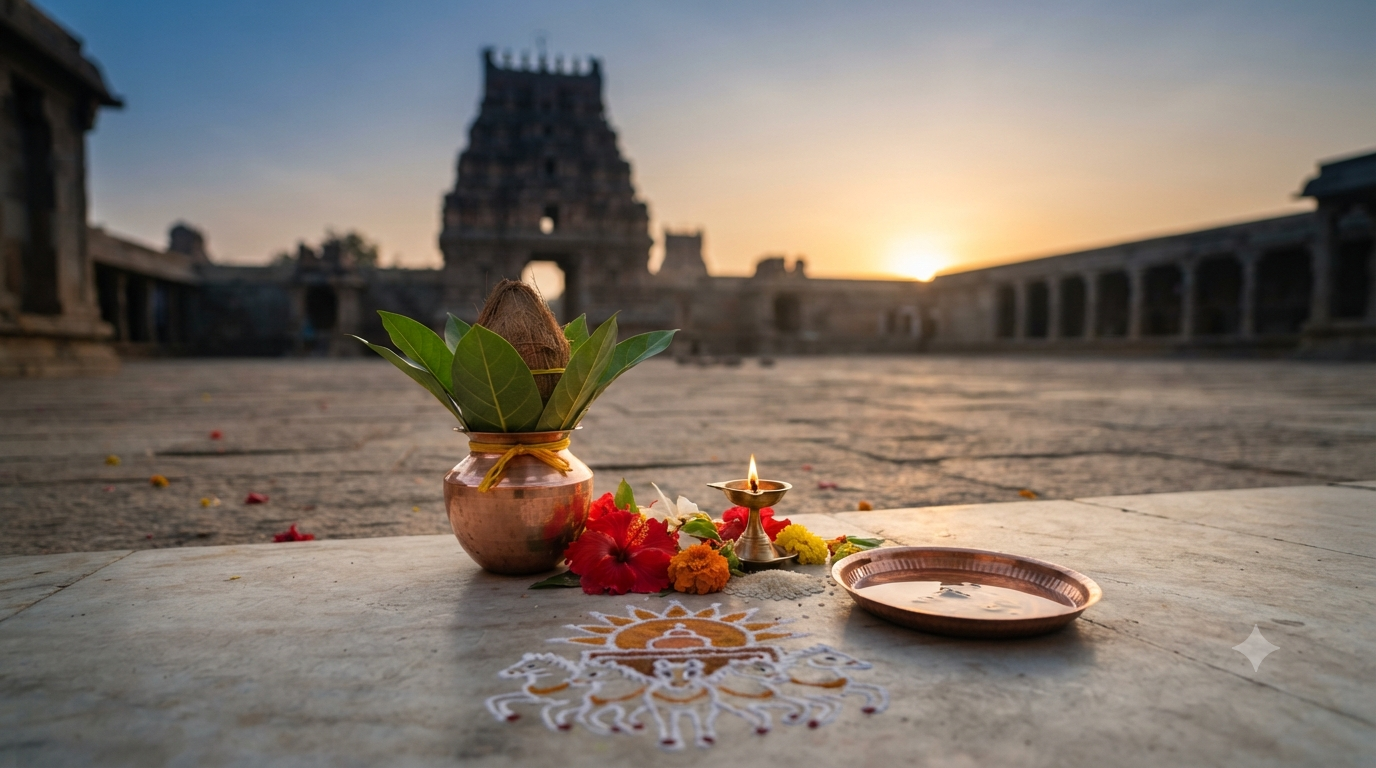
Ratha Saptami 2027 falls on Saturday, 13 February 2027, on Magha Shukla Saptami. The most important observance happens around dawn, when devotees traditionally bathe and offer arghya to Surya. This refresh also explains why older 2023 timings should not be reused.
For a Tirumala reference, Saptami begins at about 2:59 AM on 13 February and ends at about 2:06 AM on 14 February. Drik Panchang gives the Arunodaya bath window as about 4:58 AM to 6:37 AM for Tirumala. Since sunrise changes by location, check a city-specific panchang before fixing your exact morning time.
Temples Map is an independent temple and festival guide. We are not affiliated with any temple, trust, devasthanam or panchang publisher, and we do not accept bookings, donations or payments.
Ratha Saptami 2027 at a Glance
Ratha Saptami is a Surya festival observed on the seventh lunar day of the bright fortnight in Magha. Families follow different regional customs, yet the common pattern centres on a pre-sunrise bath, Surya arghya, prayer and charity. Some devotees also keep a fast, although fasting is not compulsory for everyone.
- Date in India: Saturday, 13 February 2027.
- Tithi: Magha Shukla Saptami.
- Other names: Surya Jayanti, Magha Saptami, Achala Saptami and Arogya Saptami.
- Main morning practice: bath during Arunodaya, followed by arghya at sunrise.
- Tirumala reference sunrise: about 6:37 AM.
- Important caution: exact dawn timings vary by city, so do not copy one location’s muhurta everywhere.
The 13 February date agrees across multiple 2027 panchang listings. Drik Panchang lists the same day for Tirumala, while an independent annual panchang listing also places the festival on Saturday, 13 February. That agreement matters because lunar festival dates should never be carried forward from the previous year. Ratha Saptami 2027 therefore needs its own calendar check, not a recycled 2023 entry.
Ratha Saptami 2027 Date and Tithi Timings
The date for India is Saturday, 13 February 2027, but the clock timings below use Tirumala as a practical Andhra Pradesh reference. Panchang calculations depend on location, so sunrise and Arunodaya shift by minutes across India. The tithi boundary also needs a city-aware calendar when you are outside India.
| Item | Tirumala reference | What to do |
|---|---|---|
| Ratha Saptami | 13 February 2027, Saturday | Observe the vratam and Surya puja on this day |
| Saptami begins | About 2:59 AM, 13 February | The Saptami tithi is active before sunrise |
| Arunodaya Snan | About 4:58 AM to 6:37 AM | Traditional bath window before sunrise |
| Sunrise | About 6:37 AM | Offer Surya arghya around sunrise |
| Saptami ends | About 2:06 AM, 14 February | Ashtami follows after this time |
You can verify the Tirumala calculation on Drik Panchang’s Ratha Saptami page. PanchangTime also lists 13 February 2027, which gives an independent date cross-check. Use the date confidently, yet use your own city for minute-level sunrise.
Why the festival moves later in 2027
Ratha Saptami fell on 25 January in 2026, but it moves to 13 February in 2027. The shift looks surprising because Hindu lunar festivals often move earlier against the Gregorian calendar. However, the 2026 lunar year included an Adhika Jyeshtha, or extra lunar month, from mid-May to mid-June.
That intercalary month moved later festivals forward by roughly one lunar month. Therefore, simply subtracting eleven days from the 2026 date would produce a wrong result. This is exactly why every dated festival needs a fresh panchang check rather than a copied calendar pattern.
Why one city’s Snan muhurta should not be copied nationwide
Arunodaya depends on local sunrise, so Tirumala, Delhi, Mumbai and Kolkata do not share the same clock window. A panchang page may show the right festival date but still show the wrong local minute for you. Before the observance, set the location to the city where you will actually perform the puja.
If you live abroad, this check becomes even more important because the local calendar day can differ around tithi boundaries. Follow a reliable location-based panchang rather than converting Indian timings manually. That avoids errors caused by time zones and daylight-saving changes.
What Is Ratha Saptami and Why Is It Observed?
Ratha Saptami marks Magha Shukla Saptami and centres on the worship of Surya, the Sun deity in Hindu tradition. Devotional texts and family traditions describe the day as Surya Jayanti, while the symbolic chariot represents the Sun’s life-giving movement. The seven horses commonly linked with Surya’s chariot carry several traditional interpretations.
Some families connect the seven horses with the seven days of the week, while others relate them to colours or metres. These are religious interpretations rather than scientific claims. The festival’s practical rhythm remains simple: begin before sunrise, offer water to Surya, pray with attention, and give according to your means.
What does the name Ratha Saptami mean?
“Ratha” means chariot, while “Saptami” means the seventh lunar day. The name therefore links Surya’s chariot imagery with Shukla Paksha Saptami in Magha. Devotees often see the day as a reminder of light, discipline, gratitude and the sustaining role of the Sun.
The day also carries the names Magha Saptami and Achala Saptami in different traditions. Arogya Saptami is another familiar name because devotional custom associates Surya worship with wellbeing. However, spiritual practice should never be presented as a medical cure or a replacement for treatment.
Ratha Saptami 2027 Pooja Procedure at Home
The home pooja can stay simple because the core observance is devotion, cleanliness and Surya arghya. You do not need an elaborate setup, paid ritual or special booking. If your family follows a specific sampradaya, keep that inherited method because regional customs can differ.
- Wake before sunrise. Bathe and wear clean clothes before the local sunrise time.
- Use arka leaves only if your tradition does. Some South Indian families place arka or jilledu leaves during the ceremonial bath.
- Prepare a clean puja space. Place a Surya image or keep the worship area facing the morning light.
- Offer arghya at sunrise. Stand safely facing the rising Sun and pour clean water slowly from a small vessel.
- Light a lamp. Offer a simple deepam, flowers and incense if these are part of your home practice.
- Chant a Surya prayer. Families may recite Aditya Hridayam, Surya Ashtottaram, Gayatri or a short “Om Suryaya Namah” japa.
- Offer naivedyam. Use a simple vegetarian food that suits your family custom, then share it as prasadam.
- Give charity if possible. Food, clothing or other useful support can form part of the day’s dana tradition.
For home worship, Ratha Saptami 2027 does not require an elaborate setup. Do not worry if you cannot perform every step. A short bath, sincere arghya and prayer can form a complete personal observance. Tradition should guide the ritual, while health, age and practical limits should guide how strict you make it.
How to offer Surya arghya safely
Use a small lota or cup, then pour the water in a thin stream while facing the morning Sun. Keep the floor dry enough to prevent slipping, especially on terraces and balconies. If direct sun exposure is uncomfortable or medically unsuitable, offer the prayer from a safe shaded place instead.
Many devotees watch the sunlight through the falling water, yet there is no need to stare at the Sun. Eye safety matters more than copying a visual ritual literally. Children and older adults should have help when the floor becomes wet.
What can you offer as naivedyam?
Food traditions vary by region, so there is no single compulsory menu. Families commonly prepare a simple satvik offering and avoid onion, garlic or non-vegetarian food if their vratam tradition requires it. Follow your household practice rather than treating an internet list as a fixed rule.
If you are visiting a temple, temple naivedyam and seva schedules may follow a different tradition. Check the temple’s own notice because festival-day routines can replace normal daily services. Never assume a home puja timetable matches a large temple programme.
Fasting Rules, Food and a Health Note
Some devotees fast until the morning puja ends, while others take fruit, milk or a light satvik meal. A nirjala fast without water is not a universal requirement. Since customs differ, follow your family tradition only when it is safe for your health.
Children, pregnant people, older adults and anyone with diabetes or another medical condition should not force a strict fast. Take prescribed medicines as directed, and ask a qualified clinician when fasting could affect your treatment. Religious observance should support wellbeing, not create avoidable medical risk.
Is fasting compulsory on Ratha Saptami?
No single fasting pattern applies to every Hindu family. Some keep a full fast, some take fruit, and others simply eat a clean vegetarian meal after worship. If fasting makes you unwell, choose a lighter observance and keep the prayer without guilt.
The old version of this page said the ritual bath could cure diseases. That wording is not medically sound, so this refresh removes it. Traditional texts may associate the day with health, but medical conditions still need proper diagnosis and treatment.
Ratha Saptami 2027 at Tirumala
Ratha Saptami has special importance at Tirumala, where Tirumala Tirupati Devasthanams (TTD) conducts a one-day sequence of vahana sevas. TTD’s 2026 programme carried Sri Malayappa Swamy on seven vahanams across the day and described the event as Mini Brahmotsavams. Large crowds gathered around the four Mada streets.
For Ratha Saptami 2027, do not copy the 2026 clock schedule into your travel plan. TTD normally publishes the official programme closer to the festival, and operational timings can change. Check TTD News for the latest official festival notice before travelling.
What happened at Tirumala in 2026?
TTD scheduled Surya Prabha Vahanam first, followed by Chinna Sesha, Garuda, Hanumantha, Kalpavriksha, Sarvabhoopala and Chandra Prabha Vahanams. Chakra Snanam also formed part of the day. TTD cancelled several arjitha sevas during that festival, so a normal-day booking plan did not apply.
This recent official pattern helps pilgrims understand the scale of the day, but it is not a published 2027 schedule. Treat any website already advertising exact 2027 Tirumala vahana times as provisional unless TTD itself confirms them. For another solar-themed Andhra Pradesh temple visit, see our Vedanarayana Temple Nagalapuram guide.
Common Mistakes to Avoid
The biggest mistake with Ratha Saptami 2027 is using an old festival page as if only the year changed. Ratha Saptami depends on a lunar tithi, so both the Gregorian date and morning window must be recalculated. The 2027 shift after the 2026 Adhika Masa shows why copying dates can fail badly.
- Do not reuse 2023 timings. The old page’s 28 January 2023 date is historical, not a current planning date.
- Do not treat one city’s sunrise as India’s sunrise. Use a city-specific panchang for Arunodaya.
- Do not promise medical cures. Health benefits belong to the language of faith, not clinical fact.
- Do not force a strict fast. Modify or skip fasting when health, age or medicines make it unsafe.
- Do not assume temple schedules are universal. Each temple issues its own festival programme.
- Do not treat private websites as official temple schedules. Confirm festival operations with the temple or trust itself.
What if you miss the Arunodaya bath?
You can still offer Surya arghya and pray later in the morning. The traditional Arunodaya bath is preferred in many calendars, but missing it does not require a risky rush or unsafe travel. Continue the observance calmly and follow your family’s guidance.
If you planned a temple visit and the crowd becomes unmanageable, check the official temple updates before changing routes. A festival darshan is never guaranteed because queues, crowd controls and seva cancellations can change on the day. Keep a flexible plan rather than relying on unofficial promises.
Related Festival Planning on Temples Map
Ratha Saptami sits within a busy late-winter festival period, so families often plan several observances close together. Our refreshed Maha Shivaratri date and time guide explains the next major Shiva festival and its night puja window. The Masa Shivaratri date and time list covers the monthly vratam calendar.
These pages use the same rule that matters here: verify each lunar festival for the specific year. Do not calculate future dates by adding or subtracting a fixed number of days. Panchang tithis, leap months and location-based sunrise can all change the practical answer.
Before You Observe Ratha Saptami
Mark Saturday, 13 February 2027 for the next Ratha Saptami in India. Then check your own city’s sunrise and Arunodaya window a day or two before the festival. Keep the home ritual simple, safe and consistent with your family tradition.
If you plan Tirumala or another major temple, wait for the official festival notice before relying on seva timings. Ratha Saptami 2027 should be planned from current panchang data, not recycled 2023 information. That one habit prevents most date and timing errors.
Frequently Asked Questions
When is Ratha Saptami 2027 in India?
Ratha Saptami 2027 falls on Saturday, 13 February 2027 in India. It occurs on Magha Shukla Saptami. Because the festival follows a lunar tithi, always verify the date afresh rather than carrying forward the previous year’s calendar.
What time does Saptami tithi begin and end in 2027?
For Tirumala, Saptami begins at about 2:59 AM on 13 February and ends at about 2:06 AM on 14 February. The date remains 13 February across India, while local sunrise-related observance times vary. Use a location-specific panchang for your city.
What is the best time for the Ratha Saptami bath?
Tradition prefers the Arunodaya period before sunrise. For Tirumala, Drik Panchang lists roughly 4:58 AM to 6:37 AM. Your city may differ by several minutes, so set the panchang location correctly before following an exact clock time.
How do I perform Ratha Saptami pooja at home?
Bathe before sunrise, prepare a clean puja space, offer water to Surya at sunrise, light a lamp and recite a Surya prayer. You can then offer simple naivedyam and charity. Keep family customs where they differ because no single household procedure covers every tradition.
Are arka or jilledu leaves compulsory?
No, they are part of a traditional bathing custom followed in some regions and families. If your household does not use them, you can still observe the festival with a normal bath, Surya arghya and prayer. Do not treat one regional practice as a universal rule.
Is Ratha Saptami the same as Surya Jayanti?
Yes, many Hindu calendars and devotional traditions use Surya Jayanti as another name for Ratha Saptami. The festival honours Surya on Magha Shukla Saptami. Magha Saptami, Achala Saptami and Arogya Saptami are other names you may see.
Is fasting required for Ratha Saptami?
Fasting varies by family and regional tradition, so it is not one fixed rule for everyone. Some devotees fast fully, while others take fruit or a light satvik meal. Choose a safe form, especially if you are pregnant, older, diabetic or taking regular medicines.
Will Tirumala have seven vahana sevas for Ratha Saptami 2027?
TTD has followed the seven-vahana format in recent Ratha Saptami celebrations, including 2026. However, the exact 2027 programme should come from TTD’s official notice closer to the festival. Do not rely on copied timings until the official schedule appears.
Why is Ratha Saptami later in 2027 than in 2026?
The 2026 lunar year included an Adhika, or extra, lunar month. That insertion shifted later lunar festivals forward, so Ratha Saptami moved from 25 January 2026 to 13 February 2027. This leap-month effect is why fixed day-count shortcuts fail.