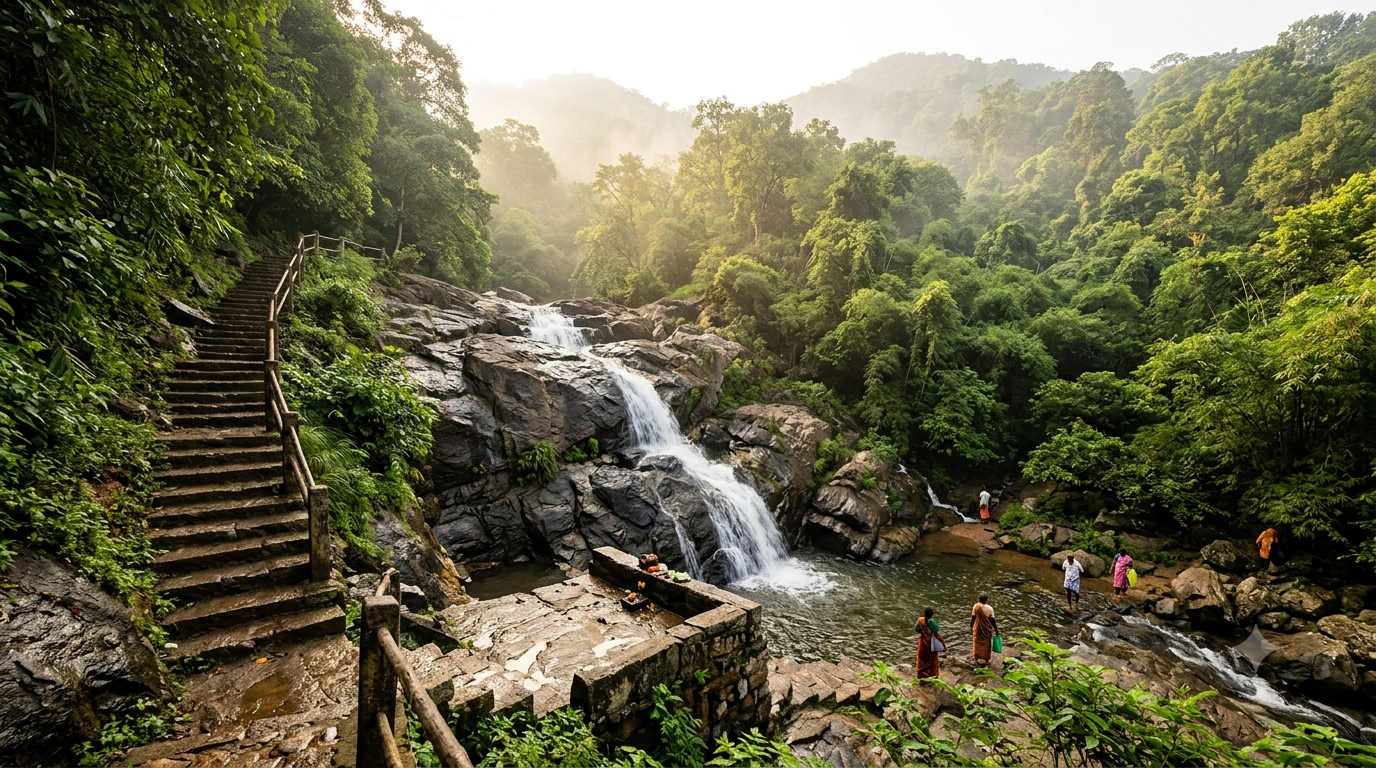
Planning a visit to Akasa Ganga Tirumala is easier once you know the real timings, the free bus route, and one rule most guides get wrong. This sacred waterfall sits in the forested Seshachalam hills, just a short ride from the main Sri Venkateswara Swamy temple. Devotees come here to collect its holy water, soak in the greenery, and pause before the main darshan. Below you get verified distances, honest bathing guidance, a safety note for the steps, and answers to the questions pilgrims actually ask.
Temples Map is an independent pilgrim guide. We are not affiliated with, endorsed by, or the official website of Tirumala Tirupati Devasthanams (TTD). We do not accept bookings, donations, or payments. For official darshan, seva, and accommodation, always use the TTD portal linked below.
Akasa Ganga Tirumala at a Glance
Here are the quick facts before you plan the trip. Because timings and frequencies can change, treat these as a guide and confirm on the ground.
- What it is: a perennial sacred waterfall and theertham in the Tirumala hills.
- Distance: roughly 3 km from Tirumala bus station and about 5 km from the main temple.
- Timings: generally open to pilgrims around 9 AM to 6 PM daily (confirm locally).
- Entry fee: none; visiting the theertham is free.
- How to reach: free TTD bus, shared jeep, taxi, or a short walk with steps.
- Best time: the post-monsoon months, when the water flow is full.
What Is Akasa Ganga and Why It Matters
Akasa Ganga means “Ganga from the sky.” According to temple tradition, Lord Venkateswara created this stream so his devotee would not have to carry water across the forest. The waterfall feeds the daily rituals of the main shrine. For centuries, priests carried its water on foot for the Lord’s abhishekam every morning.
When TTD took over the temple’s upkeep, it laid pipelines to move the water directly. Even so, the tradition survives on special occasions, when the water is still carried by hand. The Tirumala Nambi family holds the customary right to bring the holy water to the sanctum. Because of this daily connection to the deity, devotees treat the waterfall as one of Tirumala’s most sacred spots.
Akasa Ganga Tirumala Darshan Timings
Akasa Ganga Tirumala is generally open to pilgrims from about 9 AM to 6 PM every day, though TTD can adjust access with weather or crowds. Mornings are the calmest, so an early start beats the afternoon rush. There is no entry fee and no ticket to book. Since the site lies in a forest zone, gates may close earlier during heavy rain for safety.
One correction worth noting: some pages copy a “Papavinasanam 9 AM to 6 PM” line onto this waterfall, which mixes up two different theerthams. Papavinasanam is a separate dam-and-theertham a few kilometres further along the same route. If you want that one, plan it as a second stop rather than assuming the same gate.
Distance and How to Reach Akasa Ganga Tirumala
Akasa Ganga Tirumala lies about 3 km from the Tirumala bus station and roughly 5 km from the Sri Venkateswara Swamy temple. Sources vary between 2 and 5 km because they measure from different points, so allow a short ride either way. The final stretch involves a flight of steps down to the water, which we cover in the safety note below.
Free TTD bus, jeep, or taxi
TTD runs free local buses that serve the theertham route from the Tirumala bus stand, and APSRTC buses also cover this stretch. Pilgrims often board a Papavinasanam-bound bus and get down at Akasa Ganga, because both sit on the same road. Buses run through the day at short intervals, so waits are usually brief. Confirm the current frequency at the bus station, since it shifts with the season and crowd.
If you prefer flexibility, shared jeeps and private taxis wait near the temple and cost little. A cab reaches the falls within roughly ten minutes when traffic is light. Some fit pilgrims also walk, although the forest road and steps make that a slower option.
| Option | Cost | Best for |
|---|---|---|
| Free TTD / APSRTC bus | Free | Budget trips, families |
| Shared jeep | Low, per seat | Faster group travel |
| Private taxi | Higher, per trip | Elderly or tight schedules |
| Walking | Free | Fit trekkers with time |
Is Bathing Allowed at Akasa Ganga Tirumala?
At Akasa Ganga Tirumala, full bathing under the falls is restricted, and this is the point most guides get wrong. TTD has built a platform where the running water is diverted, so devotees can collect it in their hands and sprinkle it over the head. By tradition, only the Tirumala Nambi family takes a ritual dip in the source. Most pilgrims therefore wash their hands and feet and carry a little holy water rather than bathing fully.
Practice on the ground can differ, and you may see visitors stepping under the water. Because the rules change with water levels and safety concerns, follow the posted signage and any instruction from TTD staff on the day. When in doubt, sprinkling the water respectfully is both safe and traditional.
Best Time to Visit Akasa Ganga Tirumala
The best time to see Akasa Ganga Tirumala at its fullest is the post-monsoon window, roughly October to February. Rain feeds the springs, so the cascade runs strong and the forest turns lush. Summer months can leave the flow thin, since the stream depends on hill springs. Early mornings suit any season, because the light is soft and the crowd is smaller.
Many pilgrims pair the theertham with their main darshan on the same trip. A common plan is a theertham visit in the morning, followed by temple darshan later in the day. That order lets you enjoy the falls while the air is cool and the steps are less crowded.
Nearby Places to Combine With Your Visit
Akasa Ganga sits on a cluster of forest attractions, so you can chain several in a few hours. Right beside the falls stands a small temple to Sri Anjana Devi and Sri Bala Anjaneya Swami, worth a quick darshan. The same road leads onward to other sacred spots, which makes a half-day loop easy to plan.
- Papavinasanam: a dam and theertham a few kilometres ahead on the same route. See our Papavinasanam Tirumala guide for its timings.
- Japali Hanuman Temple: a forest shrine on the way, reached by a short trek. Our Japali Hanuman route guide has the details.
- Silathoranam and Chakra Theertham: a natural rock arch and another sacred pool within the same hill zone.
- More around Tirupati: browse other temples near Tirupati if you have extra days.
How to Fit Akasa Ganga Tirumala Into One Day
Most pilgrims see Akasa Ganga Tirumala as part of a wider hill circuit rather than a standalone trip. Because the theerthams share one forest road, a little planning covers three or four spots in a single morning. Start early from the bus stand, so you finish the outdoor stops before the midday sun.
A simple loop works well. Board a theertham bus, get down at the waterfall first, then continue to Papavinasanam and Japali on the same route. Keep the main temple darshan for the afternoon or evening, when the queue often settles. This order suits families, since the cooler morning air makes the steps and short treks far easier on children and elders.
If your schedule is tight, treat the waterfall as the one must-see and skip the farther stops. It is the closest and most accessible of the theerthams, so it fits even a half-day gap between darshan slots. Either way, carry water, plan return transport, and leave a buffer for the walk back up the steps.
Health and Safety Note for the Steps
Reaching the water means walking down a flight of stone steps that turn slippery when wet. Hold the railing, wear grippy footwear, and take the descent slowly, especially in the monsoon. Elderly pilgrims, pregnant visitors, and anyone with knee or heart trouble should judge the climb honestly before starting. Carry drinking water, since the forest air and the walk back up can tire you.
Treat the holy water as a matter of faith and tradition rather than a medical cure. Devotees speak of it washing away sins and bringing peace, and that belief is part of the pilgrimage. It is not a substitute for treatment, so keep any regular medication with you and consult a doctor for health concerns.
Insider Tips Most Guides Miss
A few practical habits make the trip smoother. These come from what regular Tirumala pilgrims tend to learn only after a visit or two.
- Go early: arrive soon after opening, so you beat both the heat and the tour crowds.
- Carry a small bottle: many devotees collect a little theertham water to take home.
- Combine stops: board a Papavinasanam bus and cover two or three theerthams in one loop.
- Mind the monsoon: the falls look best after rain, yet the steps are riskiest then, so tread carefully.
- Keep it clean: the zone is protected forest, so carry your litter back out with you.
Booking, Stay, and Official Information
You do not book anything to visit Akasa Ganga, because entry is free and open. For your wider trip, though, darshan slots, sevas, and rooms do need the official channel. Book only through the TTD portal or its counters, and avoid any third-party site or agent that asks for payment to “arrange” a theertham visit. No such fee exists for the waterfall itself.
For verified timings, dress code, and how to reach the hill, check the official TTD website and its how to reach Tirumala page. These are the primary sources for anything that can change, from bus arrangements to darshan rules.
Before You Go
Akasa Ganga rewards an early, unhurried visit more than a rushed one. Aim for a post-monsoon morning, take the free bus, and give yourself time on the steps. Collect the holy water, enjoy the forest quiet, and treat the site with the care a protected sacred space deserves. Confirm live timings on the day, then fold the falls into a wider theertham loop for the fullest experience.
Frequently Asked Questions
What are the Akasa Ganga Tirumala timings?
Akasa Ganga is generally open to pilgrims from about 9 AM to 6 PM every day. TTD can shorten access during heavy rain or crowds, so confirm on the day. Mornings are the quietest time to visit.
How far is Akasa Ganga from the Tirumala bus station?
It lies roughly 3 km from the Tirumala bus station and about 5 km from the main temple. Estimates vary because sources measure from different points. A bus or cab covers it in around ten minutes.
Is there a free bus to Akasa Ganga?
Yes. TTD runs free local buses on the theertham route from the Tirumala bus stand, and APSRTC buses also serve it. Many pilgrims take a Papavinasanam-bound bus and get down at Akasa Ganga. Check the current frequency at the station.
Can devotees take a bath at Akasa Ganga?
Full bathing under the falls is restricted. TTD provides a platform where the water is diverted, so devotees collect it by hand and sprinkle it. Traditionally, only the Tirumala Nambi family takes a ritual dip. Follow the posted signage on site.
Is there an entry fee for Akasa Ganga?
No. Visiting the theertham is free, and no ticket is needed. Be cautious of any agent or website that charges a fee to “book” a waterfall visit, as none is required.
What is the best time to visit Akasa Ganga Tirumala?
The post-monsoon months, roughly October to February, show the fullest water flow and greenest surroundings. Early mornings are ideal in any season. Summer can leave the cascade thin.
Is the walk to Akasa Ganga difficult?
A flight of stone steps leads down to the water, and it can be slippery when wet. Fit pilgrims manage it easily, but elderly or unwell visitors should take care. Hold the railing and wear proper footwear.