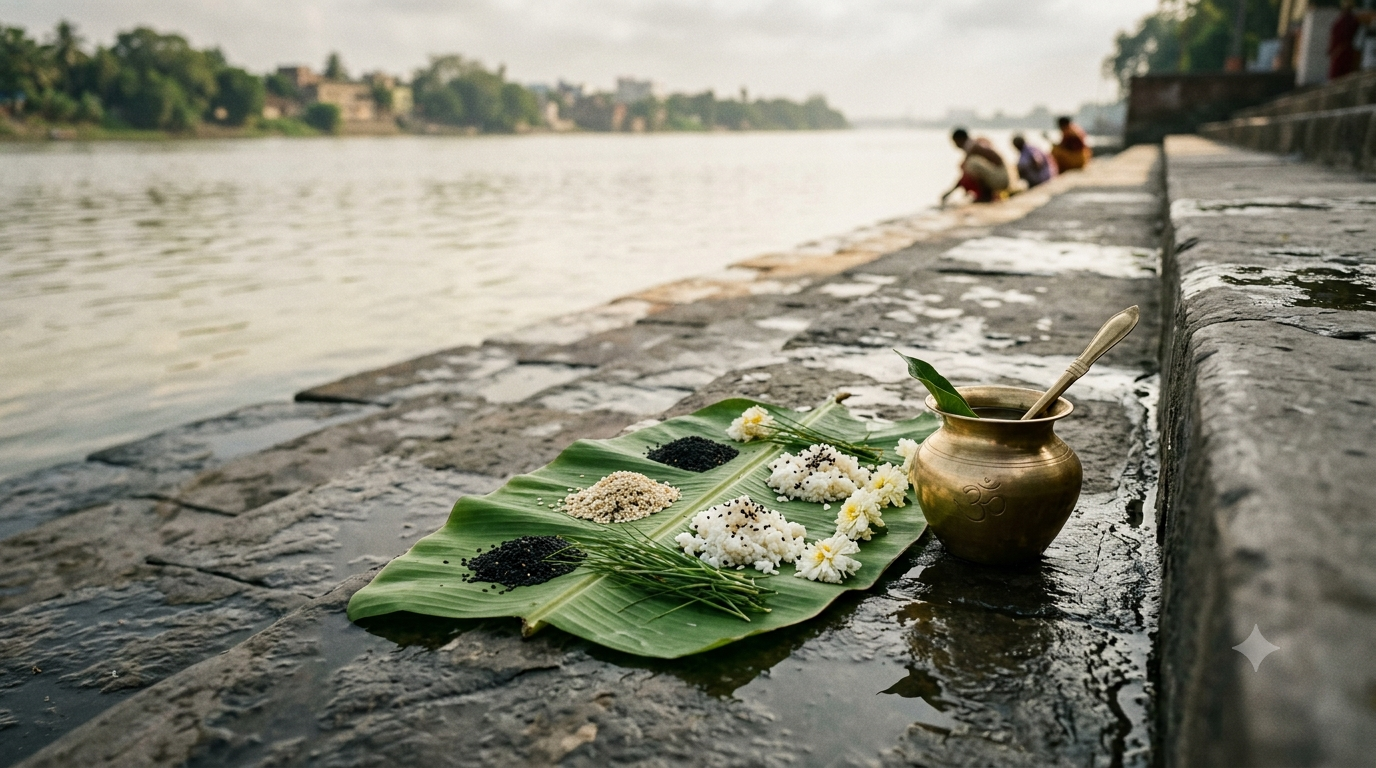
Maha Bharani Shraddha 2026 falls on Tuesday, 29 September 2026, and the rite belongs to the afternoon rather than the morning. That one detail trips up more families than any other. Because Bharani nakshatra has to be running during aparahna kala, the star fixes the day, not the tithi. So this year the observance lands on Tritiya, which is exactly why a few calendars print a different date.
Temples Map is an independent temple-information guide. We are not affiliated with any temple, trust, math, or priest service, and we take no bookings, donations, or payments. Always confirm the final timing with your family purohit or your regional panchangam before you begin.
Maha Bharani Shraddha 2026 at a Glance
- Date: Tuesday, 29 September 2026
- Tithi: Krishna Tritiya (Chaturthi begins later the same evening)
- Nakshatra: Bharani, running through the afternoon
- Ritual window: aparahna kala, roughly 1:15 PM to 3:45 PM in most Indian cities
- Falls within: Pitru Paksha 2026, which runs 26 September to 10 October 2026
- Presiding deity: Yama, lord of Bharani nakshatra
When Is Maha Bharani Shraddha 2026?
Maha Bharani Shraddha 2026 is on Tuesday, 29 September 2026. Bharani nakshatra begins that morning and stays active right through the afternoon ritual window. The tithi that day is Krishna Tritiya until early evening. Families therefore perform tarpanam and pinda daan between roughly 1:15 PM and 3:45 PM, once the aparahna period opens.
The rule itself is simple, although it confuses people every year. Bharani Shraddha happens on whichever day of Pitru Paksha carries Bharani nakshatra during aparahna kala. Nothing else decides it.
Muhurat windows on 29 September 2026
These three windows follow the standard Parvana Shraddha sequence. Exact clock times shift by city, because they depend on local sunrise and sunset.
| Window | Approximate time (IST) | Use |
|---|---|---|
| Kutup Muhurat | 11:40 AM – 12:35 PM | Considered the most meritorious slot to begin |
| Rohina Muhurat | 12:35 PM – 1:20 PM | Next best window if Kutup is missed |
| Aparahna Kala | 1:20 PM – 3:45 PM | Full prescribed period for the ceremony |
Treat these as indicative. A family in Chennai and a family in Amritsar will get times that differ by close to half an hour, so check a panchangam for your own town.
Why the 2026 Date Is Tritiya, Not Chaturthi
Most articles online repeat one line: Maha Bharani always falls on Chaturthi or Panchami. That is a generalisation, and in 2026 it is simply wrong. Drik Panchang states the point plainly, noting that Bharani nakshatra can also prevail on Tritiya, so Bharani Shraddha is not tied to any tithi at all.
In 2026 that exception applies. Bharani runs across the afternoon of 29 September, while the tithi that day is Tritiya. Names like Chauth Bharani and Bharani Panchami describe common years, not a rule. If your calendar insists on Chaturthi, it has followed the pattern instead of checking the nakshatra.
Why Pitru Paksha 2026 Arrives Almost Three Weeks Later
In 2025, Maha Bharani fell on 11 September. In 2026 it falls on 29 September, a full 18 days later. That jump is not an error in anyone’s calendar.
The reason is Adhika Masa. The Hindu lunisolar calendar inserts an extra month roughly every 32 months, since a lunar year runs about 11 days short of a solar year. In 2026 that extra month was Adhika Jyeshtha, from 17 May to 15 June 2026, giving the year a rare double Jyeshtha. Every lunar observance after it shifted forward by nearly a month.
This matters practically. If you copied last year’s dates into a family calendar, you are almost three weeks off. Never carry a Pitru Paksha date forward from one year to the next.
The 30 September Confusion, Cleared Up
A handful of pages list Maha Bharani on 30 September 2026 and describe it as Panchami Shraddha. Nakshatra timings settle the question. Bharani nakshatra ends on the morning of 30 September, well before the afternoon ritual window opens.
Since Bharani must be present during aparahna kala, 30 September does not qualify. Panchangam sources that publish day-by-day nakshatra data, along with regional Telugu and North Indian calendars, all mark Maha Bharani on 29 September 2026. Where a source disagrees, ask which nakshatra it shows during aparahna on each day, because that single check resolves it.
What Maha Bharani Shraddha 2026 Means
Maha Bharani Shraddha 2026 is the day of Pitru Paksha when ancestral rites carry Bharani nakshatra, whose presiding deity is Yama. In tradition, that combination lifts an ordinary shraddha to exceptional standing. Texts such as the Matsya Purana, Agni Purana and Garuda Purana all discuss Bharani Shraddha at length.
Classical sources describe its merit as equal to shraddha performed at Gaya. The Dharmasindhu, a widely used compendium of rites, also permits the observance annually rather than only once after a death. These are matters of faith and Vedic tradition, not verified outcomes, and honest guides should present them that way.
The old belief that neglecting pitru karya ruins a family for generations deserves the same framing. It is a traditional teaching meant to encourage remembrance. Treat it as devotion rather than as a prediction about your marriage or your children.
Who Should Perform the Rite
Bharani Shraddha is traditionally offered for ancestors who died during Bharani nakshatra. Many families extend it to all forebears, because Yama governs the ancestral realm.
The eldest son usually leads the ceremony. When he cannot, a younger son, a grandson, a brother, or in several traditions a daughter or son-in-law may perform it instead. Practice varies by community, so follow what your family purohit advises rather than a generic checklist online.
How Families Perform It
- Prepare in the morning. Bathe, wear fresh unstitched or simple cotton clothing, and keep the space clean.
- Take the sankalpa. State the intention, naming the ancestors and the purpose, while facing south.
- Offer tarpanam. Pour water mixed with black sesame and darbha grass, repeating each ancestor’s name.
- Prepare the pindas. Shape rice balls with ghee, honey, milk and sesame, then place them on a leaf.
- Offer the pindas. Present them during aparahna kala, since offerings after sunset are not considered proper.
- Feed others. Serve a sattvic meal to invited brahmanas or to anyone in need, and set aside food for a crow, a cow and a dog.
- Close with charity. Anna daana and vastra daana traditionally complete the day.
Nothing about Maha Bharani Shraddha 2026 demands elaborate arrangements, so keep the sequence simple. Many households keep the meal free of onion, garlic and non-vegetarian items. Some also avoid steel vessels and use banana leaf or a bronze plate instead.
Where People Go for the Ceremony
You can perform shraddha at home, and tradition treats a home ritual as fully valid when the intent and the method are correct. Still, tirtha kshetras draw large crowds during Pitru Paksha.
Gaya in Bihar remains the foremost site for pinda daan. Kashi, Prayagraj, Haridwar, Trimbakeshwar and Kurukshetra follow closely. In the south, Rameswaram in Tamil Nadu, Gokarna and Srirangapatna in Karnataka, and the Kaveri ghats at Trichy and Kumbakonam host heavy footfall on Bharani day. Because 29 September 2026 is a weekday, queues at these centres will still build early.
One caution matters around Maha Bharani Shraddha 2026. Several websites now advertise paid online pinda daan packages and quote fixed rates. Verify any such offer directly with the temple or the state endowments department before you pay, and never share personal documents with an unverified operator.
What to Do If You Miss Maha Bharani Shraddha 2026
Missing the day is common, and it is not the disaster the internet suggests. Since Maha Bharani is nakshatra-linked, the window genuinely closes when Bharani ends on 30 September morning. There is no way to shift it.
You still have workable options, ranked by how tradition regards them:
- Sarva Pitru Amavasya, 10 October 2026. The last day of Pitru Paksha covers every ancestor, including those whose death tithi nobody remembers.
- Your ancestor’s own tithi. Perform the shraddha on the matching tithi within the fortnight instead.
- A monthly Amavasya tarpanam. Many families continue the practice on each new-moon day through the year.
- Next year’s Bharani day. Dharmasindhu permits an annual observance, so the rite can simply resume in 2027.
If travel to Gaya or Rameswaram falls through, a simple tarpanam at home with water and sesame is far better than skipping the day entirely.
Mistakes Families Make on Maha Bharani Shraddha 2026
A few errors repeat every single year, and each one is easy to avoid.
- Performing it in the morning. Deities receive morning worship, whereas pitrus receive afternoon offerings.
- Copying last year’s date. The Adhika Masa shift makes that especially costly in 2026.
- Trusting a national timing table. Muhurat windows move with local sunrise, so a Delhi table misleads a Coimbatore family.
- Assuming Chaturthi. Check the nakshatra during aparahna, never the tithi alone.
- Letting the ritual run past sunset. Finish inside aparahna kala.
Fasting and Health on the Day
The person leading the rite traditionally fasts until the offerings finish, which can mean no food from dawn until mid-afternoon. That is a long stretch, particularly on a warm September day.
If you are elderly, pregnant, diabetic, or on regular medication, speak with your doctor before fasting. Carry water, take prescribed medicines on schedule, and sit down if you feel faint. Ritual observance is not a substitute for medical care, and no shraddha, remedy or astrological measure should replace treatment a doctor has advised.
Key Pitru Paksha 2026 Dates Worth Marking
| Observance | Date (2026) | Who it is for |
|---|---|---|
| Purnima Shraddha (Pitru Paksha begins) | Sat, 26 September | Those who died on Purnima |
| Maha Bharani Shraddha | Tue, 29 September | Bharani-nakshatra ancestors and all forebears |
| Matru Navami | Sun, 4 October | Mothers and married women of the family |
| Ghata Chaturdashi | Fri, 9 October | Deaths by accident or other unnatural causes |
| Sarva Pitru Amavasya | Sat, 10 October | All ancestors, tithi known or unknown |
Navaratri begins the day after Mahalaya Amavasya, so the mourning fortnight gives way immediately to the festival season. Our guide to Mahalaya Pitru Paksha dates and rituals covers the full fortnight, while the Mahalaya Amavasya guide explains the closing day in detail.
Before You Go
Mark Tuesday, 29 September 2026 and plan the afternoon around the rite. Confirm your local Kutup and aparahna timings with a regional panchangam, because a generic table will be off by twenty minutes or more. Keep the offerings simple and the intent sincere, since tradition weighs both above scale.
Maha Bharani Shraddha 2026 rewards planning more than expense. If the day slips past you, Sarva Pitru Amavasya on 10 October 2026 remains fully open. You can cross-check every date against Drik Panchang’s Pitru Paksha calendar or, for temple-specific arrangements in Tamil Nadu, the Tamil Nadu HR and CE department. For the month itself, see our Bhadrapada Masam calendar.
Frequently Asked Questions
What is the exact Maha Bharani Shraddha 2026 date?
Maha Bharani Shraddha 2026 falls on Tuesday, 29 September 2026. Bharani nakshatra prevails through the aparahna period that afternoon, which is what fixes the day. The tithi is Krishna Tritiya until early evening.
Why do some websites show 30 September 2026 instead?
Those pages assume Maha Bharani always coincides with Panchami. Bharani nakshatra actually ends on the morning of 30 September, before the ritual window opens. Since the nakshatra must run during aparahna kala, 29 September is the correct day.
What time should the ritual start?
Begin in Kutup Muhurat, roughly 11:40 AM, and finish within aparahna kala, which closes around 3:45 PM in most Indian cities. Times vary with local sunrise, so check a panchangam for your town. Offerings after sunset are not considered proper.
Is Maha Bharani Shraddha only for ancestors who died in Bharani nakshatra?
Traditionally yes, although many families offer it for all ancestors because Yama presides over Bharani. Both practices are accepted. Your family purohit can confirm what your community follows.
Can Maha Bharani Shraddha be performed at home?
Yes. Tradition treats a home shraddha as fully valid when the procedure and intent are correct. Tirtha sites such as Gaya, Kashi and Rameswaram carry added significance, yet they are not a requirement.
Can women perform the shraddha?
Several traditions permit it, particularly when no son is available, and a daughter or daughter-in-law then leads the rite. Practice differs sharply by community and region. Follow your family’s guidance here rather than a general rule.
What happens if I miss the day?
Perform the shraddha on Sarva Pitru Amavasya, which falls on 10 October 2026 and covers all ancestors. Alternatively, use your ancestor’s own tithi within Pitru Paksha. The observance can also resume the following year.
Why is Pitru Paksha 2026 so much later than in 2025?
An extra lunar month, Adhika Jyeshtha, ran from 17 May to 15 June 2026. That intercalary month pushed later lunar observances forward by roughly four weeks. Maha Bharani therefore moved from 11 September in 2025 to 29 September in 2026.
Should I pay a website for online pinda daan?
Verify any paid offer directly with the temple or the relevant state endowments department first. Genuine arrangements are confirmed through official temple channels, whereas unverified operators quote fixed packages and request personal documents. Temples Map takes no bookings and recommends checking official sources before paying anyone.