
Jagannath Temple Digha is an established place of worship in the seaside town of Digha, West Bengal. It opened on 30 April 2025, but opening-day announcements no longer tell you how to plan a visit. This guide explains seven useful facts, the later change in visiting hours, and what visitors should check before travelling.
Independent guide: TemplesMap.com is not the temple’s official website and is not affiliated with its management. We do not accept darshan bookings, donations, payments, or visitor details. Confirm services through notices issued by the temple administration.
Jagannath Temple Digha: Seven Facts at a Glance
The temple honours Lord Jagannath alongside Balabhadra and Subhadra. Its design draws on the Kalinga temple tradition associated with Puri, but the two shrines are distinct. For travellers, the most important distinction is between the historic inauguration and today’s entry arrangements.
| Visitor question | What to know |
|---|---|
| Where is it? | Digha, Purba Medinipur, West Bengal |
| When did it open? | 30 April 2025 |
| Whom does it honour? | Jagannath, Balabhadra and Subhadra |
| What is its design? | Inspired by Puri’s Kalinga temple architecture |
| What hours were last reported? | 6 AM–1 PM and 4 PM–8 PM, from 22 June 2026 |
| Can you book online here? | No verified temple-authorised online procedure is provided in this guide |
Important: The hours above come from reports of a temple-management notice, not a live gate-status feed. A festival, ritual, security measure, or new notice may change entry on your visit date.
Fact 1: The Inauguration Was a Dated Event, Not a Permanent Visitor Schedule
The inauguration of Jagannath Temple Digha took place on 30 April 2025. A Government of West Bengal district notice announced a mahayajna, or sacred fire ritual, for 29 April. It separately listed the consecration ceremony for 30 April.
West Bengal Chief Minister Mamata Banerjee attended the opening. The Thai Ministry of Foreign Affairs also recorded the attendance of Thailand’s consul-general in Kolkata. These are useful historical records, not evidence of today’s queues, tickets, or opening hours.
Older articles often say the temple is “about to open” or “newly inaugurated”. That language made sense during the launch period. Now it makes travel advice look stale. Treat the opening date as history and check newer visitor notices for practical arrangements.
Fact 2: The Temple Takes Inspiration from Puri Without Replacing It
Jagannath Temple Digha draws on the architectural tradition of the Jagannath Temple in Puri, Odisha. That influence explains its tall temple tower and associated shrine structures. However, an architectural resemblance does not make the two temples the same institution.
Puri has its own long religious history, worship customs, festival administration, and visitor rules. Digha is a separate shrine in West Bengal. Therefore, do not copy Puri’s darshan rules, entry arrangements, or ritual schedule into a Digha travel plan.
The distinction also helps visitors understand the name. People may call the Digha complex “Jagannath Dham”, especially in reports from its opening. The phrase does not establish that a website using it can sell authorised tickets or represent temple management.
Fact 3: The Main Deities Connect Digha to a Wider Jagannath Tradition
Jagannath Temple Digha centres on Lord Jagannath, with Balabhadra and Subhadra. Worship of these three deities also defines the familiar Jagannath tradition of eastern India. For many devotees, that shared tradition is the main reason to include Digha in a pilgrimage.
Rath Yatra, the chariot festival, has particular importance in Jagannath worship. Still, the exact processions, access routes, and ritual timings belong to each temple’s own arrangements. Never assume a festival programme at Digha matches the one in Puri.
If a particular ceremony matters to your family, look for a dated temple-management notice before making the journey. On arrival, ask authorised staff about the day’s sequence. General festival descriptions cannot confirm whether a specific ritual, special entry, or prasadam distribution will take place.
Fact 4: Kalinga-Inspired Design Is a Safer Claim Than Unverified Material Lists
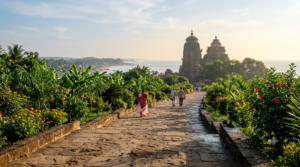
The clearest architectural connection at Jagannath Temple Digha is stylistic. Digha’s stone temple form recalls the Kalinga tradition of Odisha, with a prominent tower and smaller structures around it. Published photographs show the complex more reliably than speculative building descriptions do.
Earlier travel articles made very specific claims about where the stone came from or where flooring materials originated. Such claims need construction records or direct documentation. They are not required to appreciate the design, so this guide does not repeat them.
Look at the overall silhouette, the carved surfaces, and the way the main shrine relates to the surrounding complex. That is a more useful approach than treating the word “replica” as proof that every material, proportion, or ritual detail matches Puri.
Fact 5: Jagannath Temple Digha Visiting Hours Changed After the Opening
Reports published in June 2026 described a revised daily visitor schedule effective 22 June. Morning entry ran from 6 AM to 1 PM. The temple then closed for a midday break before reopening from 4 PM to 8 PM.
The key change was the afternoon restart. It moved from 3 PM to 4 PM, according to Ei Samay’s report and Bartaman Patrika’s account of notices at the gates. Neither report guarantees that every future day will follow the same schedule.
That difference matters if your train arrives in the afternoon. A plan based on the older 3 PM reopening could leave you waiting outside. Therefore, build your visit around the reported sessions, and confirm any newer instruction on-site.
Fact 6: Opening-Day Crowds Do Not Establish Today’s Visitor Numbers
Large crowds attended the Jagannath Temple Digha inauguration and drew press attention. However, an estimate made before a ceremony is not an audited count of people who entered the shrine. It also says little about the time needed for darshan on an ordinary weekday.
Visitor totals in older blog posts often lack a clear source, time period, or counting method. Rather than repeat those numbers, this guide focuses on conditions that visitors can act on. Expect possible queues on weekends, public holidays, and festival days, but do not assume a fixed waiting time.
Travel demand can also benefit nearby shops, food sellers, transport workers, and hotels. Yet that does not prove a specific increase in local employment or revenue. The sensible planning lesson is simpler: allow a flexible return journey, especially when Digha is busy.
Fact 7: The Coastal Location Makes a Temple-and-Beach Trip Possible
Digha is already a coastal destination, so Jagannath Temple Digha adds a pilgrimage stop to an established leisure trip. Visitors can set aside time for worship and spend a separate part of the day at the beach. This combination helps when travelling with relatives who have different interests.
Keep the plans distinct. Beach conditions do not determine temple opening hours, while temple entry does not imply that swimming is safe. Follow local beach warnings and avoid the sea during rough weather. The Government of West Bengal’s Digha tourism page is a useful starting point for destination information.
During summer, the town’s heat and humidity can make outdoor waiting tiring. Carry drinking water, use sun protection, and plan rest breaks. During severe weather, follow district advisories and the India Meteorological Department rather than assuming the temple or beach facilities will operate normally.
Jagannath Temple Digha Darshan Timings and Entry Questions
The last schedule we could corroborate through dated local reporting runs from 6 AM to 1 PM and 4 PM to 8 PM. It took effect on 22 June 2026. These are reported gate hours, not a guaranteed live timetable. Special worship, festivals, maintenance, or fresh orders can alter access.
Do you need an online darshan booking?
No temple-authorised online booking procedure was independently confirmed for this guide. That does not prove every service must be free or walk-in. It means visitors should not treat an unrelated site’s payment link, coupon offer, or promised priority entry as official evidence.
Ask for the latest arrangement at the temple’s authorised information point. If a particular service requires a ticket, request the management’s published rules and official channel before paying. TemplesMap.com does not provide tickets or arrange access.
Can you rely on free entry or a fixed waiting time?
Neither a permanent fee policy nor a fixed queue duration has been verified here. Inauguration articles cannot establish these details for future visits. When cost or accessibility is critical, confirm the current arrangements through a genuine temple-management notice before leaving home.
In particular, do not send payment screenshots, identity documents, or booking details to private numbers advertised under a temple-style domain. A convincing name or photograph is not proof of authorisation.
How to Reach Jagannath Temple Digha
Digha lies in Purba Medinipur district on the West Bengal coast. Train and road travel are the main practical approaches. The final journey from your arrival point to the temple depends on where you stay and the local transport available that day.
| Route | Useful approach | What to check |
|---|---|---|
| Train | Travel to Digha railway station, including services from Howrah | Live train times and return-seat availability |
| Road | Travel towards Digha, then use local directions for the temple | Traffic, weather and parking arrangements |
| Already in Digha | Use a local licensed vehicle or suitable local transport | Journey time, accessibility and agreed fare |
The Indian Railways passenger enquiry lets you check train options for your actual date. Do not rely on an old timetable when planning a same-day return.
If travelling by car, identify a legitimate parking area before approaching the complex. Since holiday crowds can affect access roads, leave extra travel time. Avoid assuming that a roadside attendant represents the temple or can secure special darshan for a fee.
A Practical Half-Day Plan for Visiting the Temple
The simplest approach is to reserve one of the reported darshan sessions for worship and keep sightseeing flexible. Morning also suits visitors who prefer to finish the temple visit before the stronger afternoon heat. An evening visit may fit a beach day, but you still need to account for the reported 8 PM closing time.
- Before departure: Check for a current temple notice, severe-weather warning, and any local access restrictions.
- On reaching Digha: Confirm the route to the temple and ask about authorised parking or drop-off points.
- Before joining a queue: Read displayed opening hours, entry rules, and instructions for footwear or bags.
- After darshan: Leave room for food, rest, or a beach stop without relying on a fixed waiting time.
- For the return: Keep enough margin to reach the railway station or bus departure point.
This schedule is a planning method, not a promise of entry. During major events, management may change gate access or visitor flow. If you have limited mobility, ask at the entrance about the current assistance arrangements rather than assuming a particular facility exists.
What Many First-Time Visitors Get Wrong
The first mistake is treating the 2025 inauguration timetable as today’s operating schedule. Those announcements documented a ceremony. They were never a permanent visitor handbook. Likewise, a travel blog’s old caption can remain online long after gate hours change.
A second mistake is assuming that a site with “Jagannath” or “Dham” in its name belongs to temple management. Check the provenance of any booking or payment instruction. Avoid private payment requests unless the temple administration directly confirms the channel.
Finally, resist building a tight itinerary around an estimated crowd figure. Actual waiting time depends on the day and the entry system. Keep a flexible plan, particularly with older relatives or children. Carry essential medication and water, and take breaks during hot or humid weather.
If Your Temple Visit Does Not Go to Plan
Darshan cannot be guaranteed for a chosen time merely because a past article lists opening hours. You may arrive during a midday closure, face a restricted gate, or encounter special arrangements for a festival. In those situations, look for the latest notice at the complex.
If entry is temporarily paused, ask authorised staff whether it will resume later that day. If no reopening information is available, avoid paying anyone who promises to bypass the queue. Rework the day around another activity, then return only when management confirms access.
For a traveller combining temples across the state, the site’s West Bengal temple guide covers other destinations and the differences in their visiting arrangements. It can help you plan a broader trip without assuming every temple follows Digha’s timetable.
Before You Go
Jagannath Temple Digha combines the Jagannath devotional tradition with the setting of a coastal West Bengal town. Its 2025 inauguration is well documented. However, the visitor information that matters today comes from newer instructions, including the reported June 2026 change to afternoon hours.
Before leaving, plan around the latest confirmed temple notice, not old visitor totals or unsupported ticket predictions. Then give yourself enough time to enjoy the visit without rushing a train connection or ignoring a weather warning.
Jagannath Temple Digha: Frequently Asked Questions
When was the Digha Jagannath Temple inaugurated?
The temple was inaugurated on 30 April 2025. A West Bengal government district notice listed a mahayajna on 29 April and consecration on 30 April. Those dates describe the opening ceremonies, not the current daily darshan schedule.
What are the reported Digha Jagannath Temple darshan timings?
Local reports described hours of 6 AM–1 PM and 4 PM–8 PM from 22 June 2026. The temple also has a reported midday break from 1 PM to 4 PM. Check for a newer management notice before travelling.
Is online darshan booking available at the Digha temple?
This guide could not independently verify an authorised online booking procedure. Do not assume that a third-party payment page can sell official access. Confirm any ticket or special-entry rule directly through temple-management notices.
Is Digha’s Jagannath Temple the same as the temple in Puri?
No. Digha’s temple draws on the religious and architectural tradition associated with Puri, but it is a separate shrine in West Bengal. Its own management controls entry and daily arrangements. Puri’s published procedures should not be copied across.
Which deities can visitors worship?
The principal deities are Lord Jagannath, Balabhadra and Subhadra. This familiar grouping connects the shrine to the broader Jagannath tradition. Specific rituals and access arrangements should still be checked locally.
Can you combine the temple visit with Digha beach?
Yes, the two stops can form part of a visit to the seaside town. Keep the temple session separate from your beach plans, since entry times and coastal conditions can both change. Follow local safety warnings at the shore.
Is there a confirmed special-darshan ticket price?
No current special-darshan fee has been independently verified for this guide. Avoid relying on old price lists or unofficial coupon sellers. Ask temple management for the applicable rule and approved payment channel, if any.
How do you reach Digha by train?
Use Digha railway station as the rail destination and check services from Howrah or your starting station. Confirm departure times and seat availability through Indian Railways for the actual travel date. Allow time for local transport to the shrine.