
The temples in West Bengal tell the story of Bengal in brick, terracotta and devotion. From Kolkata’s Kali shrines to Mayapur’s Vaishnava worship and Bishnupur’s heritage temples, each stop calls for a different plan. The key is to check temple hours, ritual times and paid monument tickets separately.
Independent guide: TemplesMap.com is not affiliated with any temple, trust, ISKCON, the Ramakrishna Mission or the West Bengal government. We accept no bookings, donations or payments. Use each institution’s official information or ticket channel.
Temples in West Bengal at a Glance
Most well-known temples in West Bengal welcome general visitors without an admission ticket. However, an entry-free temple may charge for an optional ritual, while a protected heritage monument may require a ticket. Hours also differ across the state, so the table separates published schedules from times that need local confirmation.
| Place | Visiting hours or advice | Admission guidance |
|---|---|---|
| Kalighat Kali Temple, Kolkata | Morning and evening sessions; check current bhog break | General darshan usually free; verify any service fee |
| Dakshineswar Kali Temple, Kolkata | Morning and evening; midday closure varies | General darshan usually free |
| Belur Math, Howrah | 6:30–11:30 AM; seasonal afternoon hours below | Campus visits generally free |
| Tarapith Temple, Birbhum | Check the daily ritual schedule locally | Ask the authorised counter about special pujas |
| ISKCON Mayapur, Nadia | 7 AM–1 PM; 4 PM–8:30 PM; early arati at 4:30 AM | Regular temple entry generally free |
| Jagannath Temple, Digha | Confirm current opening and midday breaks | Confirm official entry and ritual arrangements |
| Bishnupur temple monuments, Bankura | Check ASI visiting hours before arrival | Three named ASI monuments are ticketed |
Important: A listed arati time is not the same as continuous visitor access. Festival notices, security arrangements and local closures can override ordinary schedules. Therefore, confirm the specific site before a long journey.
Most Famous Temples in West Bengal You Should Visit
The list below covers major temples in West Bengal for devotees and travellers. It keeps the original article’s Kolkata, Birbhum, Nadia, Digha and Bankura focus, while identifying where timing claims need care.
Kalighat Kali Temple, Kolkata
Kalighat is the spiritual heart of Kolkata. Devotees revere it as a Shakti Peetha and associate the shrine with Goddess Kali. The city’s name is also traditionally linked to Kalighat, although historians debate the precise origin.
General darshan is commonly free, but the temple follows ritual breaks during the day. Older guides list fixed opening and bhog hours. Since those schedules can change, confirm the current sessions before travelling, especially on Tuesdays, Saturdays and major festivals.
Ignore anyone offering a guaranteed shortcut for cash. If you want an optional puja, ask about the authorised procedure and cost at the temple itself. Afterwards, you can visit Dakshineswar for a different chapter of Bengal’s Kali tradition.
Dakshineswar Kali Temple, Kolkata
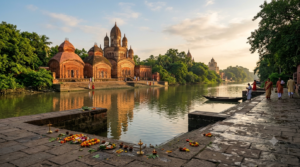
Dakshineswar sits on the eastern bank of the Hooghly River. It is famous as the shrine where Sri Ramakrishna served as priest. The presiding goddess is Bhavatarini, a form of Kali, while the complex also holds twelve Shiva shrines along the riverbank.
Its nine-spired Navaratna architecture makes it one of Bengal’s most photographed temples. The shrine has morning and afternoon visiting periods, with a midday break. Check current notice-board hours rather than treating an arati time as an entrance time.
The Kolkata Metro reaches Dakshineswar, which makes a northbound visit practical. A ferry connection to the Belur area should not be assumed, since its current scheduled operation could not be independently confirmed. Check with authorised operators at the ghat if you want to travel by river; otherwise, take a road transfer.
For more background, see our Dakshineswar Kali Temple ritual guide. Check its historical timings against current on-site notices.
Belur Math, Howrah
Belur Math is the headquarters of the Ramakrishna Math and Ramakrishna Mission. Swami Vivekananda founded Ramakrishna Mission on 1 May 1897 and acquired the Belur Math land in early 1898.
The main Sri Ramakrishna Temple was consecrated in 1938. Its architecture brings several religious traditions into one calm riverside setting. Belur Math’s institutional history confirms the foundation and land dates.
Belur Math visiting hours: the official opening-hours page lists 6:30–11:30 AM throughout the year. From April to September, afternoon campus hours are 4–9 PM. From October to March, they are 3:30–8:30 PM. The temples close at 11:30 AM for the midday break.
Belur Math evening arati: Sandhya Arati has its own changing timetable, not the campus closing time. The official schedule shifts the bell and prayer with the season. After the evening aratrikam bell, visitors may sit only in the Sri Ramakrishna Temple, according to Belur Math’s guidance.
If attending arati matters to you, check the official Sandhya Arati timetable on the day of your visit. Also read the official campus opening-hours page. The museum has shorter hours and closes on Mondays and certain holidays, so do not treat campus entry as museum access.
Tarapith Temple, Birbhum
Tarapith is one of Bengal’s best-known centres of Goddess Tara worship. The red-brick temple stands near a cremation ground, or mahasmashan. This setting is central to local tantric traditions and the story of the saint Bamakhepa.
Devotees sometimes describe Tarapith as a Shakti Peetha, but traditions differ over the precise list of Peethas and their associated body parts. Ritual schedules can be busy and change around special worship. Instead of relying on an unsourced 6 AM–9 PM window, ask for the current darshan and bhog breaks at the temple.
Rampurhat is the practical railway hub for the area. From there, check local road transport to Tarapith. If you plan to add Kankalitala or Nalateswari, allow a separate day rather than counting on every shrine staying open throughout the afternoon.
ISKCON Mayapur, Nadia
Mayapur is associated with the birth and life of Sri Chaitanya Mahaprabhu. It is also a major centre of the International Society for Krishna Consciousness (ISKCON). Pilgrims come for worship of Radha Madhava, the Pancha Tattva, kirtan and the growing Mayapur campus.
Mayapur’s main temple schedule: the official Mayapur website lists Mangala Arati at 4:30 AM, Darshan Arati at 7 AM, closing at 1 PM and reopening with Dhoop Arati at 4 PM. Sandhya Arati is at 6:30 PM, Shayan Arati at 8:15 PM, and the temple closes at 8:30 PM.
These timings resolve the common 8 PM versus 8:30 PM confusion. Early Mangala Arati is a separate ritual; it does not mean ordinary daytime darshan runs continuously from 4:30 AM. Another Mayapur temple-information page gives slightly different times for individual rituals, so check the daily notice for the exact ceremony you want.
Mayapur’s official visitor guide places it roughly 129 km from Kolkata and describes travel via Nabadwip Dham railway station or by road. The last leg may require local transport, so allow extra time after your train arrives. Confirm details through the official Mayapur temple-information page and travel guide.
Jagannath Temple, Digha
The Jagannath Temple at Digha is a pilgrimage stop in the coastal town. Its design draws on Odisha’s Kalinga temple tradition, so the building appeals to both devotees and architecture enthusiasts. Check current official or on-site notices before making a special trip.
Some websites publish an exact closing hour, construction cost or special-darshan procedure without citing an operating authority. Those claims should not determine your travel budget. Check local temple notices for visiting sessions, midday closures, special rituals and whether any fee applies.
Be especially cautious of websites offering paid priority entry, donations or room packages under official-looking names. A site using a temple photograph or emblem is not proof of authorisation. Never send money or identity documents to an unverified operator.
Bishnupur Terracotta Temples, Bankura
Bishnupur is a living museum of Bengal temple art. The Malla kings built much of the surviving temple landscape during the 17th and 18th centuries. Rasmancha, Jor Bangla and Shyam Rai are highlights, while Madan Mohan adds another striking chapter.
Their terracotta panels retell the Ramayana, Mahabharata and Krishna Lila in fired clay. The Archaeological Survey of India (ASI), Kolkata Circle, identifies Rasmancha, Jore-Bungla and Shyam Rai as its three ticketed monuments in the Bishnupur group.
That is more precise than saying every temple requires one shared ticket. The official monument pages confirm ticketed access but do not clearly establish the current fee or whether one purchase admits you to all three. Check the ASI Kolkata ticketed-monument list and the ticket’s stated coverage before paying.
Allow time for walking between sites and studying the panels. For the wider context, our Indian temple architecture guide explains Bengal’s terracotta and curved-roof forms.
Entry Fees and Tickets for Temples in West Bengal
Entry to many active temples in West Bengal is generally free, but that does not make every service free. A paid ritual, special facility or museum visit has different rules from general darshan. Heritage sites form another category because ASI manages monument admission separately.
- Ordinary shrine visits: do not buy an online darshan ticket just because an advertisement claims one exists.
- Special pujas: ask the responsible temple authority or authorised counter about availability, fees and receipts.
- Belur Math: campus visiting hours and any separate museum access should be checked independently.
- Bishnupur: verify the current ASI fee, eligibility, ticket validity and included monuments on the official channel.
- Digha: do not assume a private booking page is authorised merely because it uses the temple’s name.
No fee or special darshan is guaranteed to remain unchanged. Therefore, keep payment decisions tied to a current official notice, not a copied price table.
Planning a Trip Around the Temples in West Bengal
Temples in West Bengal cluster neatly, so you can group them into short circuits instead of criss-crossing the state. This saves time and avoids needless travel costs. However, Mayapur, Bishnupur and Digha lie in different directions and should not be squeezed into one day.
The Kolkata circuit: Kalighat, Dakshineswar and Belur Math
Start with Kalighat, then travel north to Dakshineswar. Kolkata Metro’s Blue Line serves both the Kalighat area and Dakshineswar, but check the current train service and station access. Allow for a queue at each temple before deciding whether Belur Math fits the same day.
A current scheduled ferry service between Dakshineswar and Belur Math could not be independently confirmed for this guide. If you prefer a river crossing, first verify a same-day sailing, fare and safety conditions with an authorised operator at the ghat. Otherwise, use a road transfer and leave enough time for evening arati.
Belur Math’s afternoon session is useful after a midday transfer. Still, the evening arati starts much earlier than campus closing. Check its official timetable before fixing your return journey.
The Birbhum circuit: Tarapith and nearby shrines
Tarapith pairs well with the nearby Shakti sites of Kankalitala and Nalateswari, while Santiniketan adds a cultural break. Rampurhat works as a rail starting point for Tarapith. Since local connections vary, consider an overnight stay instead of a rushed day trip.
Rural road conditions and festival crowds can add delays. If one shrine closes for a ritual, reorder your stops and confirm the next site’s access before travelling. A flexible route matters more than reaching every location before lunch.
Mayapur, Bishnupur and Digha as separate trips
Mayapur suits a Nadia visit focused on the morning and evening worship schedule. Bishnupur is better as a heritage day with time for terracotta details. Digha works as a separate beach-and-temple journey because the coastal route takes you away from the other clusters.
Use West Bengal Tourism for destination context and IRCTC for official train-booking services. Check the actual train’s running status, rather than treating an example route or old fare as a live timetable.
Best Time to Visit Temples in West Bengal
The most comfortable window for many temples in West Bengal is October to March. Cooler weather helps during long queues and outdoor heritage visits. However, major festivals can fill roads, stations and temple grounds even in the pleasant season.
Durga Puja and Kali Puja bring enormous activity around Kolkata’s goddess shrines. Gaura Purnima is especially important to Mayapur, while other Vaishnava festivals affect its daily rhythm. If quiet darshan is your priority, check the local festival calendar and avoid the busiest days.
Summer heat and monsoon showers require more care. On a humid day, leave time for breaks between visits. Rain may disrupt local transport, so check conditions before heading to the river.
Dress Code, Rules and Safety
Most temples in West Bengal expect modest dress, so cover shoulders and knees and remove footwear where required. Photography inside a sanctum may be restricted, while some heritage exteriors allow it. Follow the signs at each site instead of assuming one rule applies everywhere.
Mayapur’s temple guidance has stricter restrictions on electronics inside worship areas. Check its latest visitor rules before carrying cameras or large bags. At Belur Math, keep quiet during prayer and respect areas that close after the evening bell.
Carry drinking water for travel and queues, but observe any site-specific restrictions before taking it indoors. Crowds, heat and slippery river steps are real risks, especially for children and older visitors. Anyone managing a health condition should plan rest stops and medication.
Faith practices and astrological remedies at these temples are matters of tradition and belief. They are not substitutes for medical care.
What Visitors Often Get Wrong
- Confusing Mayapur’s 4:30 AM arati with ordinary daytime opening. The 7 AM darshan arati and 1 PM–4 PM break are separate details.
- Treating Belur Math’s 8:30 or 9 PM closing as its arati time. The prayer follows a distinct sunset-linked schedule.
- Assuming every Bishnupur monument has the same ticket. Verify the named site and conditions before paying.
- Depending on an unconfirmed ferry service. Plan for a road transfer unless an authorised operator confirms a sailing for your travel day.
- Buying online ‘VIP darshan’ from an unknown portal. Use only an authenticated official channel where a service actually exists.
Bengal Beyond the Big Names
Several smaller temples in West Bengal reward a detour. Tarakeswar in Hooghly is an important Shiva pilgrimage centre and draws devotees during Shravan. Kankalitala near Bolpur is linked to Shakti worship, while Bakreshwar is known for its sacred landscape and hot springs.
The Hangseshwari temple at Bansberia stands out for its unusual tower design. These places add depth once you have covered the headline route. However, smaller temples may have limited afternoon access, so check locally before taking a long detour.
The Bottom Line
Bengal rewards the pilgrim who plans by cluster and checks each site’s real schedule. Start with Kalighat, Dakshineswar and Belur Math, then add Tarapith for a Birbhum trip. Mayapur, Bishnupur and Digha are better planned as separate journeys.
When visiting temples in West Bengal, check arati and visiting hours separately. Never assume a ticket covers more than its official terms. A little timetable flexibility makes these temples in West Bengal far easier to enjoy.
Frequently Asked Questions
Which is the most famous temple in West Bengal?
Kalighat Kali Temple and Dakshineswar Kali Temple are among the state’s best-known shrines. Kalighat is a major centre of Shakti devotion, while Dakshineswar has close links to Sri Ramakrishna. Both attract larger crowds on festival days.
Are temples in West Bengal free to enter?
General entry to many temples in West Bengal is usually free, although optional rituals may cost money. By contrast, the ASI identifies Rasmancha, Jore-Bungla and Shyam Rai in Bishnupur as ticketed monuments. Check current terms before paying.
What are the correct ISKCON Mayapur temple timings?
The official main-temple schedule gives 7 AM darshan arati, a 1 PM closure, 4 PM reopening and an 8:30 PM closing. Mangala Arati begins at 4:30 AM, while other rituals have separate times. Always confirm festival changes.
Is Belur Math arati at the campus closing time?
No. Belur Math publishes a separate Sandhya Arati timetable that changes through the year. The campus closes at 8:30 PM in October–March and 9 PM in April–September, but arati starts earlier. Check the official schedule for your date.
Does one Bishnupur ticket cover every temple?
Do not assume it does. ASI’s Kolkata Circle identifies three ticketed monuments within its Bishnupur group: Rasmancha, Jore-Bungla and Shyam Rai. Confirm the current ticket’s coverage, price and validity through ASI before entering.
Is the Dakshineswar–Belur Math ferry guaranteed?
No. This guide could not independently confirm a current scheduled ferry service for that route. Ask an authorised operator at the ghat before making plans. Use a road transfer if no service is confirmed.
Do I need an online ticket for the Digha Jagannath Temple?
Do not assume an advance ticket or paid priority entry is required. Current admission and special-darshan arrangements could not be independently confirmed for this guide. Check an official or on-site notice before travelling, and avoid unverified booking websites.
How many days do I need to see the main temples?
Allow a full day for the Kolkata trio if queues and transport work in your favour. Add separate days for Tarapith, Mayapur or Bishnupur. Digha deserves its own coastal trip. Festival crowds can extend any itinerary.
Can I book darshan online for Bengal temples?
Do not assume an online ticket exists. Many temples in West Bengal permit general visits without booking, while special pujas and ASI tickets follow their own rules. Only use a verified official channel and avoid private priority-darshan offers.
Which temples in West Bengal are Shakti Peethas?
Kalighat and Kankalitala appear in widely followed Shakti Peetha traditions. Devotees also revere Tarapith, Nalateswari and Bakreshwar as important Shakti sites. Since traditional lists and the body-part associations differ, avoid treating one version as universally accepted.
What is the best time to visit temples in West Bengal?
October to March usually offers more comfortable weather for temple visits and heritage walks. However, festival days can create heavy crowds even in winter. Choose a weekday if you prefer a quieter visit, and check the temple’s daily opening notice.
Is photography allowed inside Bengal temples?
Do not assume that photography is permitted in sanctums or prayer halls. Many temples restrict cameras or phones, while heritage-monument rules may differ. Check the current signs and follow directions from authorised staff before taking pictures.