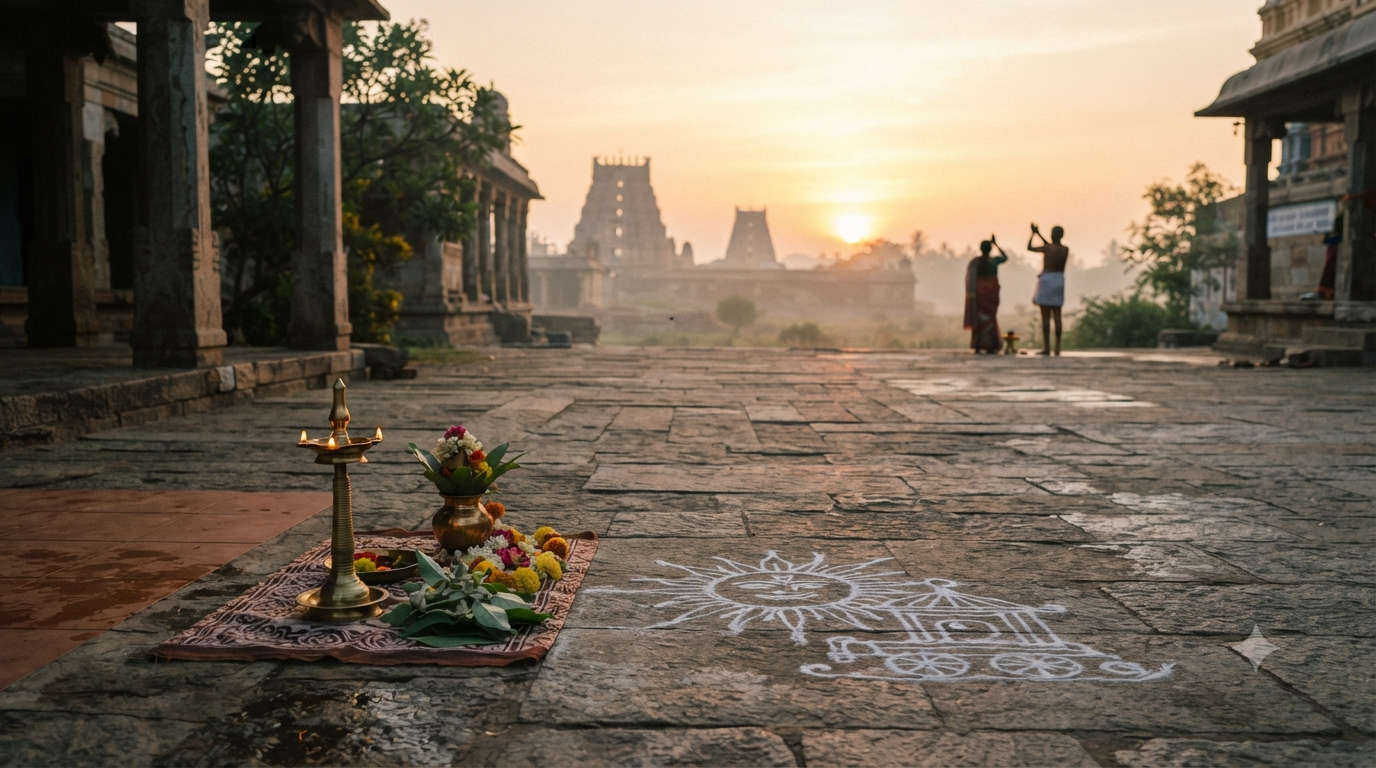
Ratha Saptami 2027 Dates falls on Saturday, 13 February 2027, during Magha Shukla Saptami. For Tirupati, Drik Panchang lists the pre-sunrise snan window from 4:58 AM to 6:36 AM, with sunrise at 6:36 AM. The key correction for this old page is simple: the 2023 date is no longer useful, so devotees should check Ratha Saptami timings for their own city.

Temples Map is an independent temple and festival guide. We are not affiliated with any temple, trust, panchang publisher, or government body, and we do not accept bookings, donations, or ritual payments.
Ratha Saptami 2027 Dates at a Glance
- Date: Saturday, 13 February 2027
- Lunar day: Magha Shukla Saptami
- Also called: Surya Jayanti, Magha Saptami, Achala Saptami and, in some traditions, Arogya Saptami
- Tirupati snan window: 4:58 AM to 6:36 AM
- Tirupati sunrise: 6:36 AM
- Saptami begins: 2:59 AM on 13 February 2027
- Saptami ends: about 2:06 AM on 14 February 2027
- Main home observances: pre-sunrise bath, Surya arghya at sunrise, prayer, naivedyam and charity according to family custom
Independent panchang calculations from Drik Panchang for Tirupati and PanchangTime support 13 February as the festival date. Exact dawn and sunrise minutes vary by city, so use a location-specific panchang for the final ritual clock time.
Ratha Saptami 2027 Dates and Muhurat
Devotees observe Ratha Saptami 2027 on 13 February because Magha Shukla Saptami prevails through sunrise and the daytime observance. For Tirupati, the Saptami tithi runs from 2:59 AM on 13 February until about 2:06 AM on 14 February. The preferred bathing period comes before sunrise, not at a fixed national clock time.
| 2027 reference | Tirupati timing | Practical meaning |
|---|---|---|
| Ratha Saptami date | 13 February, Saturday | Main observance day |
| Saptami begins | 2:59 AM, 13 February | Magha Shukla Saptami starts |
| Snan muhurat | 4:58 AM-6:36 AM | Pre-sunrise bathing window |
| Sunrise | 6:36 AM | Time for Surya arghya |
| Saptami ends | 2:06 AM, 14 February | Ashtami follows after this |
Do not copy the Tirupati snan window into a Mumbai, Delhi, London, or US calendar. Sunrise changes by location, while the panchang day follows local astronomical conditions. Therefore, the date may agree across India even when the dawn ritual window differs.
Why “puja muhurat” is often misunderstood
Many old pages present one generic “Ratha Saptami puja muhurat,” but the central observance follows the dawn period. Traditional guides emphasise bathing during Arunodaya and offering water to Surya around sunrise. So the useful timing is your local pre-sunrise and sunrise period rather than an all-day auspicious slot.
This distinction matters because readers often save a timing from another city. A difference of 20 or 30 minutes can move the bath outside the intended dawn period. When in doubt, set the panchang to your current city before the festival morning.
What Ratha Saptami Means
Ratha Saptami is a Hindu festival dedicated to Surya, the Sun deity, on the seventh lunar day of Magha’s bright fortnight. It is widely known as Surya Jayanti and Magha Saptami. The festival’s chariot symbolism presents Surya travelling with seven horses, a familiar image in Hindu religious tradition.
The Government of Andhra Pradesh’s Srikakulam district page calls Ratha Saptami the most important festival at the Arasavalli Sri Suryanarayana Swamy Temple. It also identifies the observance as Surya Jayanti. These descriptions belong to religious tradition and should not be read as scientific or medical claims.
For a temple example, Tirumala Tirupati Devasthanams celebrates Ratha Saptami with multiple vahana processions in a single day. Readers planning that specific pilgrimage should use the site’s separate Tirumala Ratha Saptami guide, because temple operations and crowd controls are different from a home puja.
Ratha Saptami 2027 Dates Puja Vidhi at Home
Families can observe Ratha Saptami 2027 at home with a simple dawn practice. Customs vary by region and family, so treat this as a practical outline rather than a universal priestly procedure. If your household follows a specific sampradaya, keep that tradition.
- Prepare before dawn. Keep the bathing area and prayer space clean. Set out a small vessel for arghya, flowers if used, a lamp, and your usual naivedyam.
- Take the pre-sunrise bath. Many South Indian households place arka or ekka leaves on the head or body during the bath. The exact number and placement vary, so follow family custom rather than an internet rule.
- Face the rising sun safely. Move to a clean open area with a clear eastern view. Avoid slippery rooftops, river edges, traffic areas, or any place where standing with water is unsafe.
- Offer arghya. At sunrise, slowly pour clean water from a small vessel while facing the sun. Keep the act simple and devotional, and make sure the water drains where it will not create a slipping hazard.
- Offer prayer. Devotees may recite a familiar Surya prayer, Aditya Hridayam, Gayatri, or a family mantra. Use the text your tradition already follows.
- Offer naivedyam. Families may offer fruit, cooked food, kheer, pongal, or another simple dish according to regional custom. Avoid presenting one menu as compulsory.
- Complete with charity or service. Some families give food, clothing, or another useful donation. This is a devotional choice, not a guaranteed way to obtain a material or health outcome.
Arka leaves: tradition, not a medical treatment
Arka leaves are closely associated with Surya worship in many Ratha Saptami customs. However, religious use does not make the plant a medical treatment. People with skin sensitivity should avoid direct contact if it causes irritation, and adults should supervise children.
Do not ingest leaves or plant preparations because a festival guide mentions them. If your family uses arka in the bath, use only the external ritual method you already know. Medical symptoms need medical care rather than a ritual substitute.
Ratha Saptami 2027 Dates Snan and Arghya: Practical Timing
For Ratha Saptami 2027 in Tirupati, the listed snan window is 4:58 AM to 6:36 AM, followed by sunrise at 6:36 AM. This makes the practical sequence straightforward: bathe before sunrise, then offer arghya as the sun rises. Devotees elsewhere should replace these times with their local values.
Drik Panchang describes Arunodaya as the dawn period before sunrise and places the Ratha Saptami bath there. PanchangTime independently agrees on 13 February as the 2027 festival date. Together, those sources are more reliable than copying a 2023 timing from an old article.
What if you miss the pre-sunrise bath?
Missing the ideal bath window does not justify unsafe rushing. If you wake late, keep the observance simple and follow your family’s practice for prayer or arghya. A home festival guide should not invent a “make-up muhurat” that no source supports.
If a formal vow or priest-guided ritual depends on timing, ask the person who guides your household practice. For an ordinary home observance, safety and sincerity matter more than racing to a riverbank or rooftop before dawn.
Why the 2027 Date Is So Different from 2026
TTD observed Ratha Saptami on 25 January in 2026, while the 2027 festival moves to 13 February. That large jump is not a typo. The Hindu lunar calendar inserted an Adhika Jyeshtha month in 2026, so later lunar festivals shifted against the Gregorian calendar.
This is exactly why editors must recalculate a year-stamped festival page rather than add 354 or 365 days. The old version of this page correctly listed 28 January for 2023, yet that date has no planning value for 2027. Each event year needs its own panchang check.
Regional and Temple Observances
Ratha Saptami appears across India, but local customs are not identical. At Arasavalli in Srikakulam, the district administration describes it as the temple’s major Surya festival. At Tirumala, Tirumala Tirupati Devasthanams marks the day with seven vahana processions and major crowd arrangements.
Home practice can be much simpler. Families may focus on the dawn bath, arghya, prayer, rangoli, naivedyam, or charity. Therefore, a reader should not assume that a temple procession schedule is the required home ritual.
If you are combining the festival with a pilgrimage in Andhra Pradesh, the site’s Andhra Pradesh temple pilgrimage guide can help with route ideas. For the following day’s observance, see the updated Bhishma Ashtami 2027 guide.
Common Ratha Saptami Mistakes to Avoid
- Using a 2023 date in 2027. The festival follows a lunar tithi, so its Gregorian date changes.
- Copying one city’s dawn timing. Snan and sunrise times are location-specific.
- Treating one ritual list as universal. Arka leaves, naivedyam, mantras, and fasting customs vary.
- Turning faith claims into health claims. Traditional descriptions of “Arogya Saptami” do not replace medical advice or treatment.
- Taking physical risks for a bath. Do not enter unsafe water, climb slippery steps, or use an exposed rooftop in darkness.
- Treating temple programmes as confirmed too early. Panchang calculations can establish the date months ahead, while a temple may publish its operational notice later.
- Paying unofficial intermediaries. Use the genuine temple or trust portal for any ticket, seva, donation, or booking.
Fasting and Safety on Ratha Saptami 2027 Dates
Some devotees fast on Ratha Saptami 2027, while others eat fruit or a simple sattvic meal. There is no need to present one fasting pattern as mandatory for every family. Follow your tradition and your health needs.
Pregnant people, children, older adults, and anyone managing diabetes or another medical condition should avoid a strict fast unless a qualified clinician says it is appropriate. Keep prescribed medicines on schedule. Religious observance should never require dehydration, missed medication, or unsafe exertion.
The same care applies to pre-dawn bathing. Use warm or comfortable water when needed, especially in cold weather. If you visit a river or temple tank, use designated access points and stay out of deep or fast-moving water.
Before You Observe Ratha Saptami 2027 Dates
Save Saturday, 13 February 2027 as the main festival date, then check your city-specific sunrise before the day. For Tirupati, the reference snan window is 4:58 AM to 6:36 AM. The tithi continues until the early hours of 14 February.
The most useful correction is to separate the calendar rule from the ritual clock. The date comes from Magha Shukla Saptami, while the bath and arghya depend on local dawn and sunrise. That distinction prevents most timing errors found in older festival pages.
Frequently Asked Questions
When is Ratha Saptami 2027 Dates?
Ratha Saptami 2027 falls on Saturday, 13 February 2027. Independent panchang sources agree on the date for India. The observance follows Magha Shukla Saptami, so the Gregorian date changes every year.
What are the Ratha Saptami 2027 Dates tithi timings?
For the Tirupati reference, Saptami begins at 2:59 AM on 13 February and ends at about 2:06 AM on 14 February. Because Indian cities share IST, the tithi clock time is broadly consistent across the country, while sunrise-based ritual windows still vary by location.
What is the Ratha Saptami 2027 snan muhurat in Tirupati?
Drik Panchang lists the Tirupati snan muhurat from 4:58 AM to 6:36 AM on 13 February 2027. Sunrise is at 6:36 AM. Use your own city in the panchang if you are not in Tirupati.
Is Ratha Saptami the same as Surya Jayanti?
Yes, Ratha Saptami is widely known as Surya Jayanti in Hindu tradition. It is also called Magha Saptami and Achala Saptami. Names and household customs can vary by region.
Is a special puja muhurat required for Ratha Saptami?
The main observances centre on dawn rather than one universal all-day puja muhurat. Traditional guides place the bath before sunrise and arghya around sunrise. Therefore, your local sunrise is more useful than a generic national timing.
How is Ratha Saptami observed at home?
A simple home observance can include a pre-sunrise bath, Surya arghya at sunrise, prayer, a lamp, naivedyam, and charity. Some traditions use arka leaves. Follow your family practice for the exact mantra, food, and ritual sequence.
Is fasting compulsory on Ratha Saptami?
No single fasting rule applies to every Hindu household. Some devotees keep a fast, while others eat fruit or simple food. Health needs come first, especially for children, older adults, pregnant people, and those taking regular medicines.
Why does the Ratha Saptami date change every year?
Ratha Saptami follows Magha Shukla Saptami in the Hindu lunar calendar, not a fixed Gregorian date. Lunar months and occasional Adhika Maas adjustments move the festival against the solar calendar. That is why every year’s date needs a fresh panchang check.