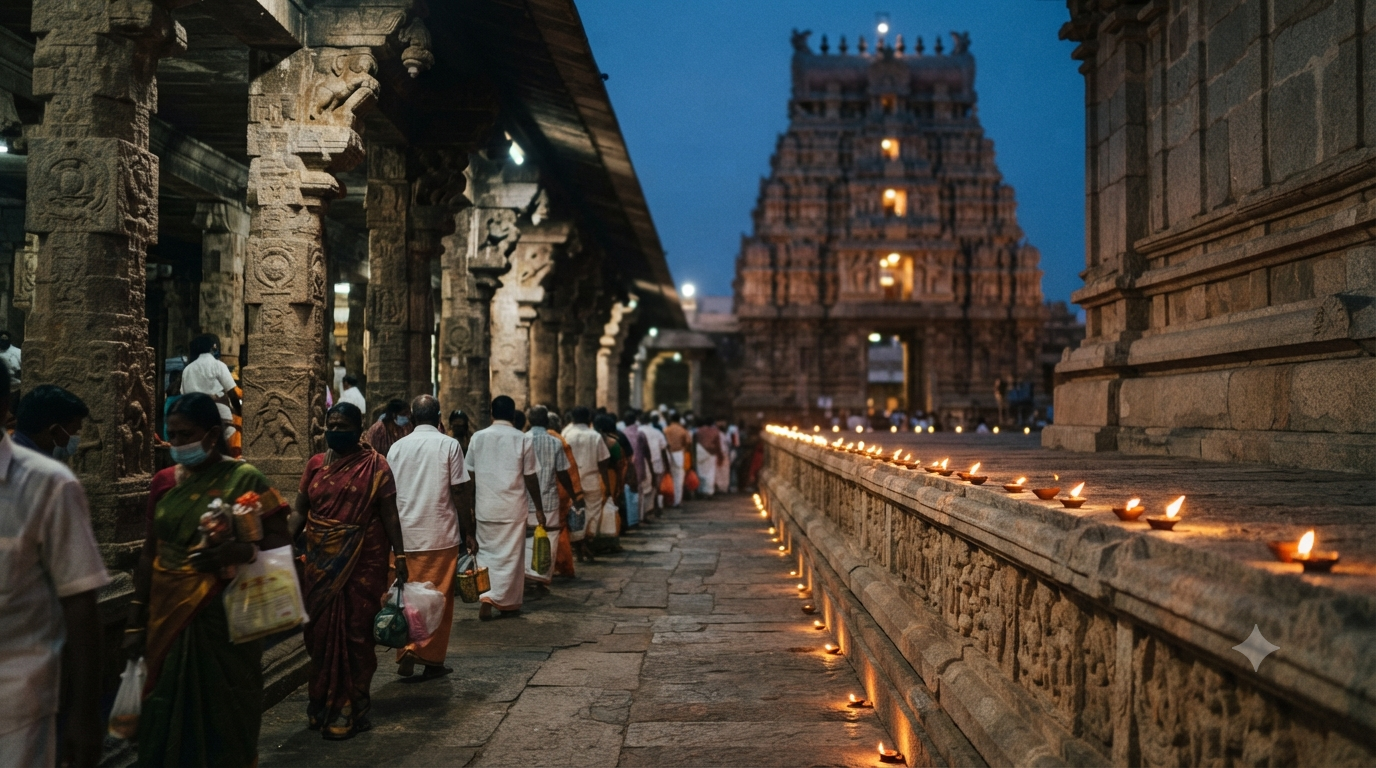
The Draksharamam Temple festivals run on a lunar calendar, so every date shifts from one year to the next. That single fact catches out most first-time visitors. Dozens of pages still repeat a fixed festival list copied from an old post, and the dates on them quietly go wrong. This guide sets out what the temple actually observes, when the next cycle falls, and how the crowds behave.
Temples Map is an independent pilgrimage guide. We are not affiliated with the Sri Bhimeswara Swamy Temple or the Andhra Pradesh Endowments Department, and this is not their official website. We do not accept bookings, sevas, donations, or payments. Use the official portal linked below for any reservation.
Draksharamam Temple Festivals at a Glance
- Temple: Sri Manikyamba Sametha Sri Bhimeswara Swamy Temple, Draksharamam, Konaseema district, Andhra Pradesh.
- Managed by: an Executive Officer under the Andhra Pradesh Endowments Department.
- Biggest festival: Maha Shivaratri, in Magha masam, so February or March.
- Longest stretch: Karthika Masam, roughly a full lunar month across November and December.
- Signature ritual: Sri Swamy Vari Kalyanam on Bhishma Ekadasi.
- Goddess festival: Sarannavaratri for Manikyamba Devi, the 12th Shakti Peetham.
- Usual darshan hours: about 6:00 AM to 12:00 noon, then 3:00 PM to 8:00 PM.
- Festival days: the midday break usually disappears and hours extend.
The Official Draksharamam Temple Festivals List
The Andhra Pradesh government’s district portal names the temple’s important observances directly. According to that page, the main ones are Devi Navaratrulu, Karthika Masam, Dhanurmasam, the birthday of Sri Bhimeswara Swamy, Subrahmanya Shashti, Maha Shivaratri and the Kalyanam.
That list matters because this is a state-administered shrine, not a private trust. The Endowments Department and the temple’s own panchangam fix its ritual calendar. So a festival list that does not match this set is usually someone’s guess.
| Festival | Telugu month / tithi | Usual English month |
|---|---|---|
| Sarannavaratri (Devi Navaratrulu) | Asviyuja Suddha Padyami to Dwadasi | September–October |
| Karthika Masam and Jwalatoranam | Karthika masam, Mondays and Pournami | November–December |
| Sri Swamy Vari Janmadinam | Margasira Suddha Chaturdasi | December |
| Subrahmanya Shashti | Margasira Suddha Shashti | December |
| Dhanurmasam | Sun in Dhanu rasi | December–January |
| Sri Swamy Vari Kalyanam | Bhishma Ekadasi, Magha masam | January–February |
| Maha Shivaratri | Magha Bahula Chaturdasi | February–March |
Everything below expands that official skeleton into what a visitor actually experiences on each day.
Maha Shivaratri: the Biggest of the Draksharamam Temple Festivals
Maha Shivaratri is the temple’s grandest day. It also draws the heaviest crowd of the entire year. The shrine stays open right through the day and the night, so the usual midday closure disappears.
Abhishekams, Rudra recitation and night-long Shiva worship run in sequence. Meanwhile the queue stretches well outside the outer prakaram, often for hours.
Devotees worship Bhimeswara Swamy here as a towering lingam. Because it rises through two storeys, priests carry out abhishekam from the upper gallery. Arrive very early if you want to see that, since the upper level fills fast.
If you can make only one visit a year, this day gives you the most atmosphere and the least comfort.
Sri Swamy Vari Kalyanam on Bhishma Ekadasi
Priests conduct the celestial marriage of Bhimeswara Swamy and Manikyamba Devi on Bhishma Ekadasi in Magha masam. In Andhra Pradesh the same tithi is also called Jaya Ekadasi, so panchangams may list it under either name. It falls a few weeks before Maha Shivaratri.
Many devotees prefer the Kalyanam to Shivaratri, and the reason is practical. The ritual has a clear start time. The crowd is large but manageable. Families can therefore watch the whole ceremony from beginning to end.
Of all the Draksharamam Temple festivals, this is the one that rewards patience least and planning most.
Draksharamam counts among the eighteen Ashtadasa Shakti Peethas. So the autumn Navaratri becomes a major event for the Devi shrine inside the complex. Adi Shankaracharya’s Shakti Peetha stotram invokes her as “Manikye Daksha Vatika”. That line is why Shakta pilgrims treat this temple as a Devi kshetram as much as a Shiva one.
One detail almost every other page misses. The temple observes the festival from Asviyuja Suddha Padyami through Dwadasi, which runs slightly longer than the standard nine nights. Alankarams change daily, and Kumkumarchana bookings at the counter rise sharply through the week.
Karthika Masam, Jwalatoranam and the Somavarams
Karthika Masam is the temple’s busiest sustained season. Every Monday in the month brings a fresh wave of Shiva devotees. Lamps burn across the prakarams each evening, and the Karthika Deepam tradition turns the complex into a field of flames after sunset.
The district portal specifically names Jwalatoranam as a Karthika observance here. It is the lighting of a large flame arch. Among the Draksharamam Temple festivals it is one of the few rituals distinctive enough that visitors plan a trip around it.
Karthika Somavaram crowd pattern
The four Mondays inside Karthika Masam behave differently from each other. The first Monday is heavy, while the middle two stay steady. The Monday closest to Karthika Pournami is the most crowded of all.
Nagula Chavithi and Karthika Pournami then add two more spikes on top of that pattern.
Winter Observances: Janmadinam, Shashti and Dhanurmasam
Sri Swamy Vari Janmadinam falls on Margasira Suddha Chaturdasi. The temple marks it with special abhishekams and alankaram. Subrahmanya Shashti follows in the same bright fortnight, drawing devotees who observe Sarpa dosha remedies as a matter of tradition.
Dhanurmasam then covers the period when the Sun transits Dhanu rasi, roughly mid-December to mid-January. Priests conduct pujas before sunrise throughout the month. Crowds stay modest, so this is the calmest of the named seasons.
Weekly and Monthly Rituals Between the Big Festivals
The temple observes Masa Shivaratri every lunar month. On that day it stays open through the midday break, just as it does on Maha Shivaratri. Mondays also carry extra abhishekams year-round, because the presiding deity is Shiva.
On every Ekadasi, priests conduct Ekantha Seva for both Bhimeswara Swamy and Manikyamba Devi. These smaller observances are worth planning around. You get the ritual without the festival crush.
Upcoming Draksharamam Temple Festivals Calendar
The dates below come from panchangam cross-checks for the coming cycle. Lunar dates shift each year, so treat this as a planning aid. Confirm on the temple noticeboard before you travel.
| Occasion | Date | Note |
|---|---|---|
| Sarannavaratri begins | Sunday, 11 October 2026 | Runs through Dwadasi |
| Vijayadashami | Tuesday, 20 October 2026 | Peak Devi crowd |
| Karthika Masam begins | Tuesday, 10 November 2026 | Telugu Amanta reckoning |
| Karthika Somavarams | 16, 23, 30 November and 7 December 2026 | All Mondays |
| Karthika Pournami | Tuesday, 24 November 2026 | Heaviest Karthika day |
| Karthika Masam ends | Tuesday, 8 December 2026 | Karthika Amavasya |
| Subrahmanya Shashti | Tuesday, 15 December 2026 | Margasira Suddha Shashti |
| Dhanurmasam begins | Wednesday, 16 December 2026 | Dhanu Sankranti |
| Sri Swamy Vari Kalyanam | Wednesday, 17 February 2027 | Bhishma / Jaya Ekadasi |
| Maha Shivaratri | Saturday, 6 March 2027 | Largest crowd of the year |
Two entries need a caveat. Sri Swamy Vari Janmadinam falls on Margasira Suddha Chaturdasi, which lands around 22 December 2026. The temple panchangam remains the deciding authority on that one.
Karthika Masam dates also differ by calendar system. The Telugu Amanta reckoning is used above. North Indian Purnimanta calendars place the same month roughly two weeks earlier, which is why online dates for the Draksharamam Temple festivals often disagree.
What Other Pages Get Wrong About Draksharamam Temple Festivals
This is where a lot of published information falls apart, so it is worth being blunt.
Wrong district. Most guides still place the temple in East Godavari district. Draksharamam moved into Konaseema district when Andhra Pradesh reorganised its districts in 2022. Old postal addresses still work, yet the district name on many pages is simply out of date.
Invented timings. Published opening hours for this temple range from 5:00 AM to 6:00 AM, and closing times from 7:30 PM to 8:00 PM. The most commonly reported schedule is 6:00 AM to 12:00 noon, then 3:00 PM to 8:00 PM, with a shorter Wednesday morning. Festival days override that anyway, so confirm locally.
Guaranteed online seva booking. Several sites publish step-by-step booking instructions and exact seva rates. The Endowments Department does run an official portal at aptemples.ap.gov.in. However, it rolled out online pre-booking temple by temple, and Draksharamam was not in the initial batch.
So treat counter booking as the default, then check the portal for your specific date.
Private phone numbers. Some pages list mobile numbers for “room booking” at the temple. Those are not official Endowments channels. Never send money to a number you found on a blog.
Crowd and Safety Reality on Festival Days
Festival darshan at Draksharamam is not guaranteed within any fixed time. Queues on Maha Shivaratri and Karthika Pournami can run for hours. The narrow inner prakarams slow movement further.
Crowd safety at Andhra Pradesh temples came under fresh scrutiny in November 2025. A fatal stampede occurred at a privately run temple in Srikakulam district during Karthika Masam. The state government then ordered districts to compile footfall data for major festival days. It also directed the Endowments Department to prepare crowd-management procedures.
Draksharamam is a department-managed temple with formal queue arrangements. Even so, the underlying lesson holds for any large gathering.
A short safety note is worth stating plainly. Long standing queues, midday heat and Karthika fasting make a demanding combination. That applies especially to elderly pilgrims, pregnant women, and anyone with a heart, blood-pressure or diabetic condition.
So carry water and medication, and speak to a doctor before a night vigil or a strict fast. Ritual observances are matters of faith and Vedic tradition, and they do not replace medical treatment.
If the queue defeats you
You still have options, and none of them require an agent. Return for the evening session after 3:00 PM, once the first wave has cleared. Alternatively, shift your visit to the day before or after the peak tithi, since abhishekams continue on both. If a seva counter has closed, the next Masa Shivaratri offers the same ritual with far fewer people.
Choosing Between the Draksharamam Temple Festivals
Different occasions suit very different visits. Match the festival to whoever is travelling with you.
- First visit, want the spectacle: Maha Shivaratri, if you accept a long wait.
- Travelling with elderly parents: a Karthika weekday, never a Somavaram.
- Want a complete ceremony you can watch: Sri Swamy Vari Kalyanam.
- Devi-focused pilgrimage: the middle days of Sarannavaratri.
- Photography and quiet: any Dhanurmasam morning.
- Combining Pancharama temples: a non-festival weekday, because traffic will cost you a stop.
That last point matters for a Pancharama circuit. Draksharamam sits about 28 km from Kakinada, 50 km from Rajahmundry and 25 km from Amalapuram. A festival-day visit here will therefore eat most of your driving window.
What First-Time Visitors Usually Get Wrong
The commonest mistake is arriving at midday. The shrine closes between roughly 12:00 noon and 3:00 PM on ordinary days. Travellers who plan around a fixed lunch stop lose the whole afternoon.
The second is treating a printed festival list as fixed. Because the calendar is lunar, last year’s date can be a full month off once the calendar adds a leap month. Always recheck the current year.
Third, many visitors skip the Manikyamba Devi shrine in the inner prakaram. During Sarannavaratri that shrine is the whole point of the visit.
Fourth, staff enforce the dress code more strictly on festival days than on quiet ones. Traditional attire saves an argument at the gate.
Finally, plan the road leg before you plan the darshan. Our guide on how to reach Draksharamam temple covers the rail and bus options. The daily darshan timings page is the one to check on a non-festival day.
Before You Travel
Draksharamam rewards a planned visit far more than a spontaneous one, because its calendar is genuinely dense. Pick the occasion that fits your group. Confirm the tithi for the current year against a panchangam such as Drik Panchang. Then cross-check the temple’s own list on the Andhra Pradesh district portal.
If you want the fullest experience with the least stress, the Kalyanam on Bhishma Ekadasi is the smart pick of the Draksharamam Temple festivals. If you want the temple at its most alive, accept the Maha Shivaratri queue and go anyway. And if you are building a longer Konaseema route, our list of famous temples near Draksharamam pairs well with any of these dates.
Draksharamam Temple Festivals: Frequently Asked Questions
Which is the biggest festival at Draksharamam temple?
Maha Shivaratri is the largest festival at Draksharamam temple. It falls in Magha masam, so February or March. The shrine then stays open continuously through the day and night. Lakhs of devotees attend, so queues are the longest of the year.
When is Maha Shivaratri at Draksharamam in 2027?
Maha Shivaratri falls on Saturday, 6 March 2027. The temple normally runs continuous darshan from early morning through the night, with abhishekams and Rudra recitation in sequence. Confirm the local schedule closer to the day, because the temple sets its own festival hours.
What is Sri Swamy Vari Kalyanam and when is it held?
Sri Swamy Vari Kalyanam is the celestial marriage of Bhimeswara Swamy and Manikyamba Devi. Priests conduct it on Bhishma Ekadasi in Magha masam, which falls on Wednesday, 17 February 2027. Many panchangams list the same tithi as Jaya Ekadasi.
When does Karthika Masam start at Draksharamam?
By the Telugu Amanta calendar, Karthika Masam runs from 10 November to 8 December 2026. Karthika Pournami falls on 24 November 2026. The four Karthika Somavarams are 16, 23, 30 November and 7 December. North Indian calendars place the month about two weeks earlier.
Can I book sevas online for the Draksharamam Temple festivals?
The Andhra Pradesh Endowments Department runs the official portal at aptemples.ap.gov.in. However, it rolled out online pre-booking temple by temple, and coverage varies by shrine. Check the portal for your date, and plan on counter booking as the default. Avoid third-party agents entirely.
Is Draksharamam a Shakti Peetham or a Pancharama Kshetram?
It is both. Draksharamam is the second of the five Pancharama Kshetras dedicated to Shiva. Manikyamba Devi here also ranks among the eighteen Ashtadasa Shakti Peethas. That dual status explains why the temple gives major Shiva and Devi festivals equal weight.
Which district is Draksharamam temple in?
Draksharamam is in Konaseema district of Andhra Pradesh. It sat in East Godavari district until the state reorganised its districts in 2022. That change is why many older pages and postal addresses still say East Godavari.
Is there an entry fee during the Draksharamam Temple festivals?
General darshan at Draksharamam is free, including on festival days. You buy tickets for arjitha sevas such as abhishekam and kumkumarchana separately at temple counters. The Endowments Department sets those rates. Confirm them at the counter, because festival-day slots and rates can differ.
What is the best time of year to visit Draksharamam?
October to March is the most comfortable window. The Konaseema heat eases then, and the temple’s main festivals fall in that period. For a quiet visit, choose a Dhanurmasam morning in late December or early January. For atmosphere, choose Karthika Masam or Maha Shivaratri.