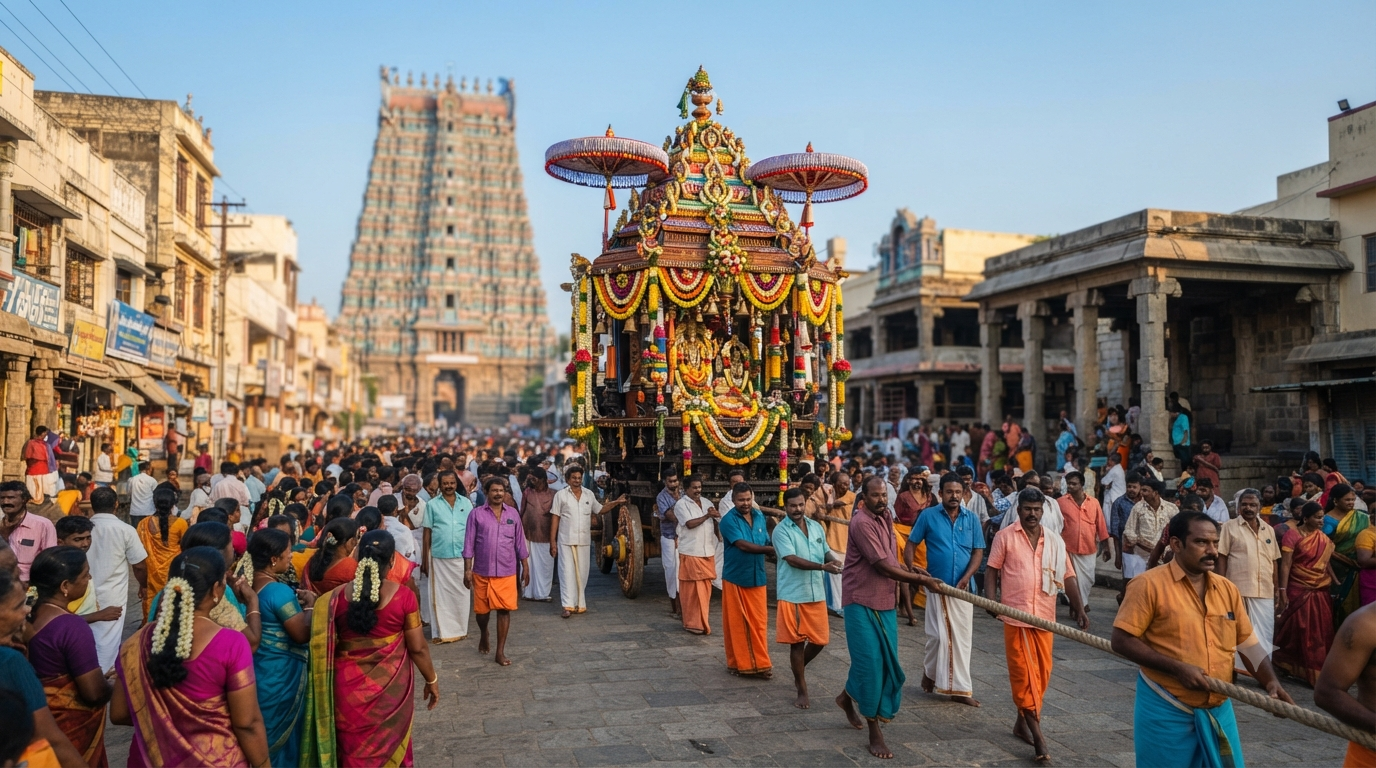
Rameshwaram Temple Events are shaped by the Tamil lunar calendar, so the most important festival dates and daily arrangements change every year. The biggest celebrations centre on Maha Shivaratri, Aadi Thirukalyanam, Ramalinga Pratishtha and Navaratri, while Amavasai days bring especially heavy pilgrimage traffic to Agni Theertham.
Temples Map is an independent pilgrimage guide. We are not affiliated with Arulmigu Ramanathaswamy Temple or the Tamil Nadu Hindu Religious and Charitable Endowments Department, and we do not accept bookings, donations or payments. Use the official Ramanathaswamy Temple website for current notices and official services.
Rameshwaram Temple Events at a Glance
The festival calendar is not a fixed Gregorian list because many observances follow Tamil months and lunar tithis. Rameshwaram Temple Events therefore move across the Gregorian calendar. A July festival can move into August, while Maha Shivaratri may fall in February or March. For travel planning, the month range matters more than an old date copied from another year.
| Festival or observance | Usual period | What visitors should expect |
|---|---|---|
| Maha Shivaratri / Masi festival | February-March | Extended worship, processions, chariot events and very heavy crowds |
| Vasanthotsavam | May-June | Seasonal worship with special decoration and ritual programmes |
| Ramalinga Pratishtha Utsavam | May-June | Processions linked to the temple’s Ramayana tradition |
| Aadi Thirukalyanam | July-August | Long festival cycle with Aadi Amavasai, Therottam, Aadi Pooram and divine wedding events |
| Navaratri and Dussehra | September-October | Devi worship, festive decoration and special programmes |
| Thai, Aadi and Mahalaya Amavasai | Varies by lunar calendar | Large numbers of pilgrims for ancestral rites and sea bathing |
The Rameswaram Municipality’s festival page identifies Maha Shivaratri, Vasanthotsavam, Ramalinga Pratishtha, Thirukalyanam and Navaratri among the town’s major observances. However, the exact day-wise programme can change, so always treat old schedules as examples rather than permanent timetables.
Why the Old Festival Lists Can Be Wrong
The biggest problem with old Rameswaram festival pages is that they freeze a moving calendar. Rameshwaram Temple Events follow moving tithis and temple programmes. A lunar tithi does not remain on the same Gregorian date every year.
Festival duration can also change. Therefore, a page that says a festival is always exactly ten days can become wrong even if the festival itself has not changed.
A good example is Maha Shivaratri. Older tourism pages often describe a ten-day celebration, while the 2026 Ramanathaswamy Temple Masi Maha Shivaratri programme ran for 12 days. That does not make every older description false, but it does show why visitors should confirm the current programme instead of assuming the duration is fixed.
The same caution applies to procession times, chariot days and temporary temple closures. Normal opening hours remain useful for planning, but festival arrangements can override them. Check the official temple portal again shortly before travel.
Rameshwaram Temple Events: Maha Shivaratri and Masi Festival
Maha Shivaratri is the most important Shiva festival in Rameswaram. The surrounding Masi period can include flag hoisting, daily vehicle processions and special worship. A silver chariot procession and the main temple car festival may also feature. The programme often extends across several days rather than only the Shivaratri night.
Recent temple reporting shows why the day-wise schedule matters. In 2026, the Masi Maha Shivaratri festival ran for 12 days, with the main Shivaratri observance on 15 February and the temple car event on the following day. Future years will move because the festival follows the lunar calendar.
If Maha Shivaratri is your reason for visiting, use the site’s Maha Shivaratri date and time guide to identify the correct annual date. Then verify the Rameswaram-specific procession and darshan arrangements on the official temple website.
What changes for pilgrims during Maha Shivaratri?
Expect much larger queues, more security controls and possible changes to regular pooja or bathing access. Processions may also affect movement around the four temple streets. Arrive with time in hand because a normal-day itinerary can fail quickly during the festival.
Do not rely on private agents who promise special access during crowded days. Official services, when available, should come only through the temple’s government portal. If a quota or service is unavailable, there is no safe private shortcut.
Rameshwaram Temple Events: Aadi Thirukalyanam Festival Cycle
Aadi Thirukalyanam is one of the most distinctive Rameshwaram Temple Events. It takes place in the Tamil month of Aadi, usually across July and August. The observance honours the divine wedding of Lord Ramanathaswamy and Goddess Parvathavardhini and unfolds through several linked festival days.
The 2026 programme ran for 17 days. That matches the long duration in Rameswaram’s official municipal festival overview. Key events included Aadi Amavasai, the temple car festival, Aadi Pooram, Aadi Tapasu and the main Thirukalyanam. The final phase also included a procession connected with Gandamadana Parvatham.
This sequence is useful for understanding the festival, but do not copy its calendar dates into a future trip. The Aadi lunar schedule shifts. Instead, use it as a model of what the festival contains and verify the current year’s official notice.
Aadi Amavasai and ancestral rites
Aadi Amavasai is especially important in Rameswaram because many pilgrims come for ancestral rites and sacred bathing. Agni Theertham becomes much busier than on an ordinary day, and the temple approach can feel crowded from early morning. Build extra time for bathing, changing and darshan.
If you plan to use the sacred wells after the sea bath, read the site’s Rameshwaram Temple 22 Wells guide. It covers the official bathing windows, current fee information and the practical order before darshan.
Ramalinga Pratishtha Utsavam: What the Festival Remembers
Ramalinga Pratishtha Utsavam recalls the Ramayana-linked tradition behind the Ramanathaswamy shrine. Rameswaram Municipality describes the observance as commemorating the installation of the Shiva lingam created by Sita and worshipped by Lord Rama. Processions of Ramanathaswamy and Lord Rama form part of the traditional festival description.
This corrects a common web error. Some older pages say Lord Rama personally formed the sand lingam, while the municipal account attributes its creation to Sita. Because this is a sacred tradition rather than a modern historical record, it is best presented as temple mythology and local religious tradition.
The observance normally falls around May or June. However, exact dates depend on the temple calendar, so verify them before booking transport or accommodation.
Vasanthotsavam is the spring festival and traditionally extends across several days. The municipal overview describes sandal paste, flowers, incense and rose water among its ritual elements. It usually falls around May or June, although the final programme belongs to the temple calendar.
Navaratri and Dussehra arrive later in the year, usually around September or October. Devi worship becomes the focus, with special decoration and religious programmes. The old version of this page claimed a specific Sri Chakra ritual as an annual certainty, but that detail could not be confirmed on the current official temple pages, so it should not be presented as fact.
Other important Rameshwaram Temple Events include Thai Amavasai, Mahalaya Amavasai, Tamil New Year and Panguni Uthiram. Karthigai-related observances also appear on the annual religious calendar. Their crowd impact varies. Therefore, distinguish a major multi-day festival from a single special tithi.
Is Arudra Darshan a Ramanathaswamy Temple festival?
Arudra Darshan is important in the Ramanathapuram region, but the Rameswaram Municipality page specifically places the famous sandal-covered Nataraja unveiling at Uthirakosamangai. Therefore, do not assume every Arudra Darshan description online refers to an event inside Ramanathaswamy Temple itself.
This distinction matters for travel planning because Uthirakosamangai is a separate pilgrimage stop. A regional festival list and a Ramanathaswamy Temple festival list are not always the same thing.
Planning Rameshwaram Temple Events Without Getting Caught by Schedule Changes
The official Tamil Nadu HR&CE page currently lists the temple’s normal opening windows as 4:00 AM to 1:00 PM and 3:00 PM to 8:00 PM. It also notes that general darshan begins after the early morning ritual sequence. Festival programmes can still change these hours on specific days.
- Check the festival month first. Use the table above to narrow your travel window, then confirm the current lunar date.
- Verify the temple programme. Recheck the official Ramanathaswamy Temple portal for notices, service changes and closures.
- Allow more time than on a normal day. Processions, police barricades and bathing queues can slow movement through the temple streets.
- Keep your plan flexible. A festival procession may temporarily affect entry, sacred-well bathing or the usual darshan flow.
- Use only official transaction channels. Do not pay a private contact for festival access, sevas, tickets or queue shortcuts.
If you are combining the temple with sightseeing, keep the festival morning for worship and move sightseeing to a quieter part of the day. The site’s Rameshwaram attractions guide can help you build the second half of the itinerary.
Which Festival Is Best for Your Type of Visit?
Choose Maha Shivaratri if you want the strongest Shiva-festival atmosphere and do not mind very heavy crowds. Choose Aadi Thirukalyanam if you want a longer sequence of processions and the divine-wedding tradition. Navaratri offers a different devotional focus, while Ramalinga Pratishtha is especially relevant to pilgrims interested in the shrine’s Ramayana tradition.
For a quieter pilgrimage, avoid the peak day of a large festival and visit just before or after it. You can still experience the temple’s sacred setting without the same crowd pressure. By contrast, visitors who want the chariot or procession should target the official event day and accept that darshan will take longer.
There is no single best festival for everyone. Rameshwaram Temple Events suit different kinds of pilgrimage. Your choice depends on ritual intensity, processions, ancestral observances or a calmer darshan.
Rameshwaram Temple Events: Crowd and Safety Tips
Rameshwaram’s heat, humidity and sea air can make long queues tiring, especially when crowds are dense. Carry water where permitted, keep any regular medicine with you and avoid scheduling a tight train connection immediately after darshan. Older pilgrims should plan rest breaks rather than trying to complete every ritual at once.
Festival fasting is a religious practice, not a medical requirement. Anyone who is pregnant, elderly, diabetic or managing another health condition should speak with a doctor before attempting a strict fast or overnight vigil. A shorter observance is safer than pushing beyond your physical limits.
Keep valuables minimal during crowded processions. Also follow current police and temple instructions because barricades and one-way pedestrian routes can change with crowd conditions.
Common Mistakes to Avoid
- Do not copy last year’s festival date into this year’s calendar.
- Do not assume a multi-day festival always lasts the same number of days.
- Do not treat normal temple hours as guaranteed on a major procession day.
- Do not confuse a Ramanathapuram district festival with an event inside Ramanathaswamy Temple.
- Do not use private phone numbers or agents for darshan, seva or festival access.
- Do not present temple legends as proven historical events; describe them as sacred tradition.
These checks matter because Rameshwaram Temple Events are easy to misreport when old schedules get copied from site to site. The safest approach is simple: use evergreen month ranges for planning, then confirm the current official programme close to the visit.
Before You Plan Your Visit
Rameswaram’s festival calendar is rich because the temple follows both annual seasons and lunar observances. Maha Shivaratri and Aadi Thirukalyanam create the biggest multi-day experiences, while Ramalinga Pratishtha, Vasanthotsavam, Navaratri and Amavasai days add their own devotional character.
Use this page to choose the Rameshwaram Temple Events that fit your trip. Then use the official temple portal for the final date and day-wise schedule. That two-step method prevents the most common planning mistake: travelling on a date copied from an old calendar.
Rameshwaram Temple Events FAQs
What are the main festivals celebrated at Rameshwaram Temple?
The major festivals include Maha Shivaratri, Aadi Thirukalyanam, Ramalinga Pratishtha Utsavam, Vasanthotsavam and Navaratri. Amavasai days are also highly significant because many pilgrims visit Rameswaram for ancestral rites and sacred bathing.
When is Maha Shivaratri celebrated in Rameshwaram?
Maha Shivaratri falls in February or March, depending on the lunar calendar. The surrounding Masi festival can run for several days, so confirm the current year’s Ramanathaswamy Temple programme instead of relying on a fixed annual date.
How long does Aadi Thirukalyanam last?
Aadi Thirukalyanam is a long multi-day festival, and recent programmes have run for 17 days. The exact start and end dates shift with the Tamil calendar, so use the official temple notice for the year you plan to visit.
Is Rameshwaram Temple open normally during festivals?
Not always. Normal HR&CE opening windows are useful as a baseline, but processions and major festival events can change darshan flow or cause temporary closures. Recheck the official portal close to your visit.
Which Rameshwaram festival has the biggest crowds?
Maha Shivaratri is among the busiest periods because Ramanathaswamy Temple is a major Shiva pilgrimage centre. Aadi Amavasai can also draw very large numbers of pilgrims for ancestral rites and sea bathing.
Can I book festival darshan through Temples Map?
No. Temples Map is an independent information website and does not accept darshan, seva, donation or festival bookings. Use only the official Tamil Nadu HR&CE Ramanathaswamy Temple portal for official services.
Is Ramalinga Pratishtha a historical event?
It belongs to the temple’s sacred Ramayana tradition. The municipal festival account links the observance to the installation of the Shiva lingam created by Sita and worshipped by Lord Rama, so it should be understood as religious tradition rather than modern documentary history.
Should I visit on the main festival day or a nearby day?
Visit on the main day if the procession or ritual itself is your priority. Choose a nearby day if you prefer shorter queues and a calmer darshan, because peak festival dates can change the normal temple routine.