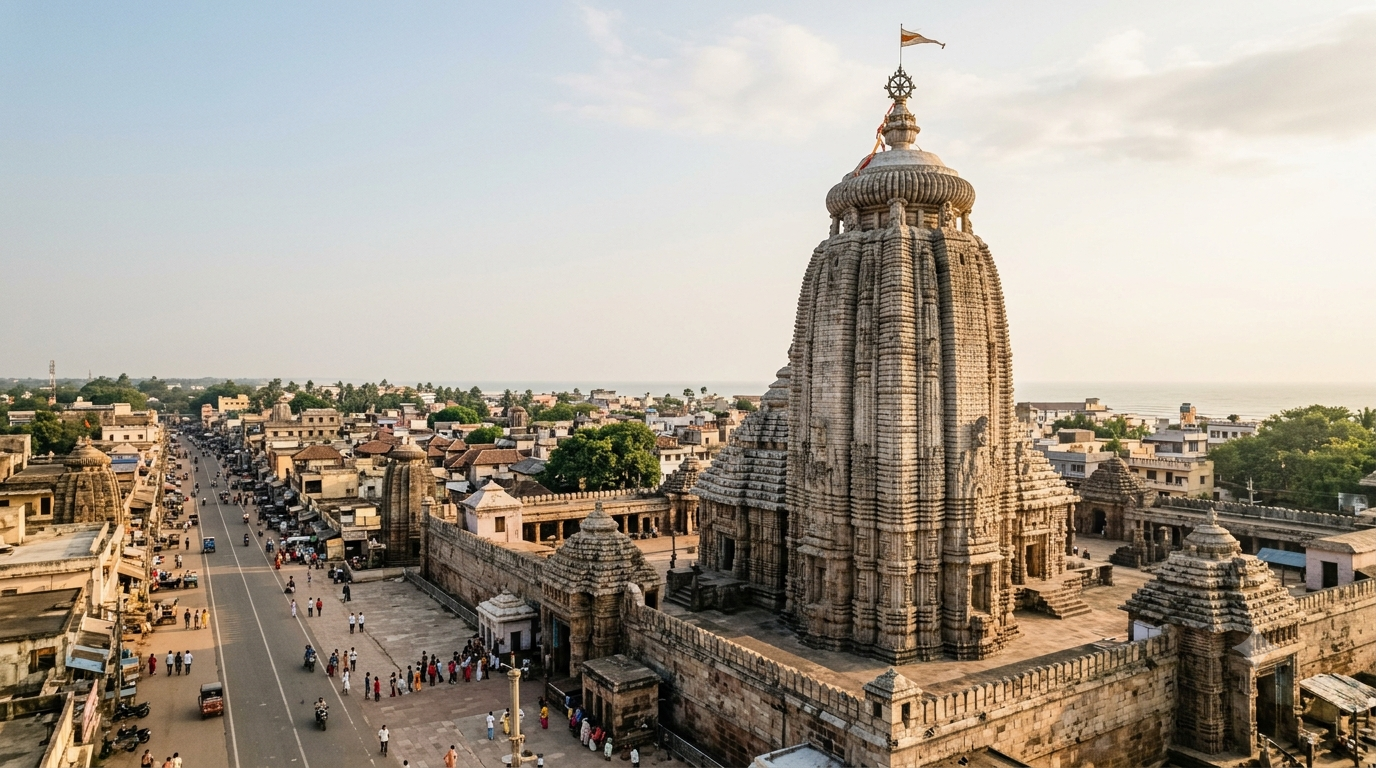
Planning a Chennai to Puri Temple trip means choosing between one long train ride, a quick flight, or a marathon road journey. Puri sits about 1,230 to 1,250 kilometres from Chennai, so the mode you pick shapes your whole pilgrimage. This guide lays out every route with verified timings, indicative fares, and the temple rules you must know before you arrive. It also fixes a few facts that older travel pages still get wrong.
Temples Map is an independent pilgrim guide. We are not affiliated with, endorsed by, or the official website of the Shree Jagannatha Temple. We accept no bookings, donations, or payments. Use the official portal linked below for darshan, seva, and travel reservations.
Chennai to Puri Temple: Quick Travel Summary
Here is the short version of the Chennai to Puri Temple trip before we dig into details. Because the distance is long, most pilgrims fly or take the one weekly direct train.
- Distance: roughly 1,230–1,250 km by rail and road.
- By train: one direct weekly train (about 21 hours 30 minutes).
- By flight: Chennai to Bhubaneswar in about 1 hour 45 minutes, then 60 km by road to Puri.
- By car: roughly 20 hours of driving along NH16.
- Nearest airport: Biju Patnaik International Airport, Bhubaneswar (no airport at Puri).
- Temple entry: free darshan; only Hindus may enter the inner sanctum.
How Far Is Puri From Chennai?
The Chennai to Puri Temple distance is roughly 1,230 to 1,250 kilometres, running north-east along India’s eastern coast. Many older pages call Puri a “North India” temple, but that is wrong. Puri is in Odisha, which sits in eastern India on the Bay of Bengal.
The temple stands on Grand Road in Puri town, close to the sea. Since the two cities lie on the same coastline, the rail and road routes both run north through Andhra Pradesh before reaching Odisha. The direct train covers about 1,247 km, while the coastal highway runs a similar length.
Chennai to Puri Temple by Train
Only one train runs the Chennai to Puri Temple route directly, so it books out fast. The 22860 MGR Chennai Central – Puri Superfast Express leaves Chennai Central on Mondays at 16:25 and reaches Puri the next day at 13:55. The trip takes about 21 hours 30 minutes.
Because it runs just once a week, plan around that Monday departure. The return service is the 22859 Puri – MGR Chennai Superfast Express, which leaves Puri on Sundays. Sleeper-class fares start around ₹620, though air-conditioned classes cost more.
Connecting Trains Through Bhubaneswar
If the weekly direct train does not suit your dates, take any Chennai–Bhubaneswar train instead. Several daily services run to Bhubaneswar or Khurda Road, such as the 12829 Chennai–Bhubaneswar Express and the 12839/12840 Chennai–Howrah Mail. From Bhubaneswar, frequent local trains and buses reach Puri in about 90 minutes.
Fares change with class, quota, and season, so treat any figure here as indicative. Always confirm the live fare and seat availability on the official IRCTC portal before you book.
| Train | Route | Approx. duration | Runs |
|---|---|---|---|
| 22860 Chennai–Puri SF Express | Chennai Central → Puri (direct) | 21h 30m | Weekly (Mon) |
| 12829 Chennai–Bhubaneswar Express | Chennai → Bhubaneswar + 60 km | ~24h + local hop | Most days |
| 12839/12840 Chennai–Howrah Mail | Chennai → Bhubaneswar + 60 km | ~24h + local hop | Daily |
Chennai to Puri Temple by Flight
Flying is the fastest way to cover the Chennai to Puri Temple route. There is no airport at Puri, so you fly into Biju Patnaik International Airport in Bhubaneswar, about 60 km away.
A non-stop Chennai to Bhubaneswar flight takes about 1 hour 45 minutes. IndiGo, Air India, Air India Express, and Akasa Air run several daily services. One-way fares typically fall between ₹5,500 and ₹8,000, though they climb during festivals and school holidays.
After you land, a taxi or bus covers the final 60 km to Puri in around 1.5 to 2 hours. Prepaid taxis wait outside the airport, and app cabs work well too. So a morning flight can put you at the temple by mid-afternoon.
Chennai to Puri by Road and Bus
Driving the Chennai to Puri Temple route takes roughly 20 hours, covering about 1,240 km on National Highway 16. This coastal route passes Nellore, Vijayawada, and Visakhapatnam before entering Odisha. Since it is a long haul, most drivers split it across two days with an overnight stop near Vizag.
Direct buses along the full route are rare. Instead, most bus travellers ride to Bhubaneswar or Visakhapatnam first, then switch to a Puri-bound bus. While cheaper than flying, this option demands patience and a flexible schedule.
Bhubaneswar to Puri: The Final Leg
Whether you fly or take a connecting train, you will likely pass through Bhubaneswar. Puri sits about 60 km south of the state capital, and three options cover that stretch.
- Taxi or cab: around 1.5 hours via NH316, the smoothest choice for families.
- Bus: state-run OSRTC and private buses run often; fares stay low, and the ride takes about 2 hours.
- Train: frequent local trains link Bhubaneswar and Khurda Road to Puri in roughly 90 minutes.
Puri railway station sits just 2 to 3 km from the temple. After you arrive, autos and cycle rickshaws reach Grand Road in minutes.
Which Travel Option Should You Choose?
The right Chennai to Puri Temple option depends on your budget, time, and comfort. Fly if you value speed and can spend more. Take the direct train if you want a single-seat journey and your dates match the Monday service.
Choose road travel only if you enjoy long drives or want to stop at coastal towns along the way. For most pilgrims travelling with elderly parents, the flight plus a short taxi transfer is the least tiring plan.
| Mode | Approx. time | Indicative cost | Best for |
|---|---|---|---|
| Flight + taxi | 4–5 hours total | ₹5,500–8,000+ | Speed, comfort |
| Direct train | ~21.5 hours | ₹620 upward by class | Single-seat travel |
| Car / road | ~20 hours | Fuel + tolls | Flexible, scenic stops |
Puri Jagannath Temple Darshan Timings and Entry Rules
The Puri Jagannath Temple opens around 5:00 AM and stays open until roughly 9:00 to 10:00 PM, with the day built around fixed rituals. General darshan is completely free, and no entry ticket is needed. Timings shift during festivals and special rituals, so confirm them on the official site before you travel.
The temple honours three deities: Lord Jagannath, his elder brother Balabhadra, and their sister Subhadra. Built in the 12th century by King Ananta Varman Chodaganga Deva, the shrine rises about 65 metres in classic Kalinga style. It is one of the four sacred Char Dham sites.
Footwear, leather items, mobile phones, and cameras are not allowed inside. Free cloakrooms near the gates hold your belongings while you have darshan. A dress code applies too: men should wear a dhoti or full trousers rather than shorts, and women a saree or salwar kameez with modest cover.
Can Non-Hindus Enter Puri Jagannath Temple?
No. Only Hindus may enter the main temple complex and inner sanctum, a rule the administration has upheld for centuries. Non-Hindus and foreign visitors cannot go inside, and gate staff may ask about your faith during busy periods.
However, non-Hindus can still see the temple. The rooftop of the Raghunandan Library, opposite the Lion’s Gate, gives a clear view of the 65-metre tower and the sacred Neelachakra. During the annual Rath Yatra, everyone can also see the deities on the chariots.
Where to Stay Near Puri Temple
Puri offers everything from budget lodges to beach resorts. Rooms cluster along Grand Road and near Swargadwar beach, both within walking reach of the temple. Indicative tariffs run from about ₹800 for basic lodges to ₹4,000 or more for sea-view hotels, and they rise sharply during Rath Yatra.
The temple administration also runs official guest houses, Nilachal Bhakta Niwas and Nilachal Yatri Niwas, right beside the shrine on Grand Road. Book these only through the official temple portal, never through unverified agents. If you plan a festival-season visit, reserve a room three to four months ahead.
Best Time to Visit Puri Temple
The most comfortable months to visit run from October to February, when the coastal weather stays pleasant. Summers turn hot and humid, while the monsoon brings heavy rain. Early morning or late evening darshan avoids both the midday heat and the thickest crowds.
The temple’s grandest event is the Rath Yatra, when the three deities ride massive wooden chariots along Grand Road. This festival falls in June or July each year; in 2026 it was held on 16 July. Because millions attend, book travel and rooms far in advance if you plan a festival trip.
What Most Travel Guides Miss
A few practical points save real trouble on the ground. First, the single direct train sells out weeks ahead, so book the moment the window opens. Second, keep your phone in the cloakroom rather than risk it at the gate.
- Carry cash: small shops and cloakrooms near the temple prefer it.
- Stay hydrated: the coastal heat tires pilgrims fast, especially seniors and children.
- Guard your belongings: crowds swell near the gates during peak hours.
- Try the Mahaprasad: the temple’s sanctified food is offered at Ananda Bazar on a donation basis.
One health note matters for a long trip. Because the journey is tiring and Puri gets hot, elderly pilgrims and anyone with a medical condition should pace the day and drink safe water. Plan darshan for cooler hours whenever you can.
Before You Set Off
The Chennai to Puri Temple journey rewards a little planning. Fly for speed, take the weekly direct train for a single-seat ride, or drive if you love the open road. Whichever you choose, lock in the train seat or flight early, since both fill up during festival season.
Verify the current darshan timings, fares, and seva details on the official Shree Jagannatha Temple portal before you leave. That one check keeps your pilgrimage smooth from Chennai all the way to the Lion’s Gate. You can also read our related route guides below to compare journeys from other cities.
For official information, visit the Shree Jagannatha Temple Administration, book rail tickets on the official IRCTC portal, and check destination details on the Puri district tourism page. If you are travelling from other cities, see our guides on how to reach Puri from Bangalore and Mumbai to Puri, plus the nearby Puri to Alarnath Temple route.
Frequently Asked Questions
How long does the Chennai to Puri Temple journey take?
By flight it takes about 4 to 5 hours in total, including the 60 km road transfer from Bhubaneswar. The direct train takes around 21 hours 30 minutes. Driving covers the distance in roughly 20 hours.
Is there a direct train from Chennai to Puri?
Yes. The 22860 MGR Chennai Central – Puri Superfast Express runs directly, but only once a week on Mondays. It departs Chennai Central at 16:25 and reaches Puri the next day at 13:55.
Which airport is nearest to Puri?
Biju Patnaik International Airport in Bhubaneswar is the nearest, about 60 km from Puri. There is no airport in Puri itself, so a taxi or bus covers the final leg in roughly 1.5 to 2 hours.
Can non-Hindus enter the Puri Jagannath Temple?
No. Only Hindus may enter the main complex and inner sanctum. Non-Hindus can view the temple tower from the Raghunandan Library rooftop opposite the Lion’s Gate, and see the deities during Rath Yatra.
What are the Puri Jagannath Temple darshan timings?
The temple generally opens around 5:00 AM and stays open until about 9:00 to 10:00 PM, with breaks for rituals. General darshan is free. Confirm the current schedule on the official portal, as timings change during festivals.
What is the dress code at Puri Temple?
Traditional, modest attire is expected. Men should wear a dhoti or full trousers, not shorts, while women should wear a saree or salwar kameez. Footwear, leather items, and mobile phones are not allowed inside.
What is the best time to visit Puri?
October to February offers the most pleasant weather for darshan and sightseeing. The famous Rath Yatra falls in June or July, drawing huge crowds, so book travel and stay well ahead if you visit then.