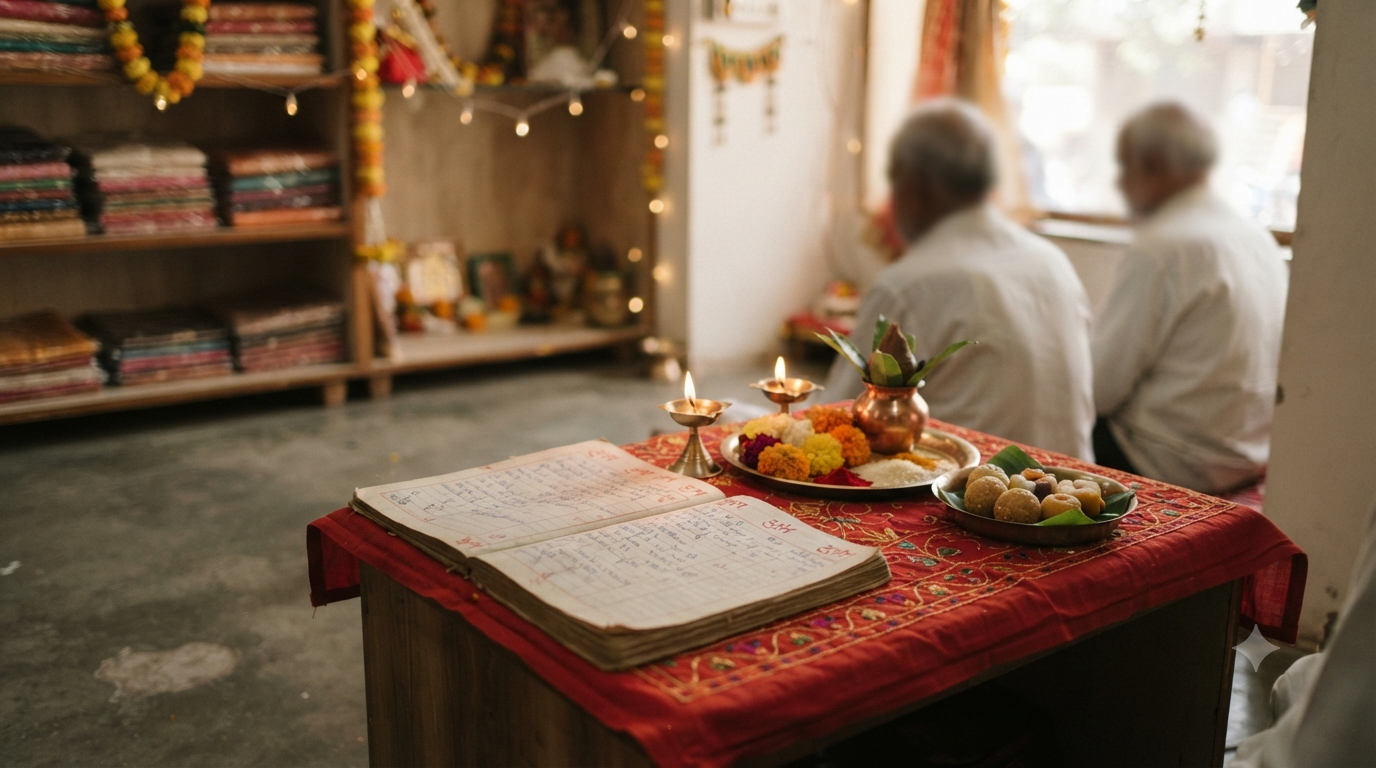
Labh Panchami 2026 falls on Saturday, 14 November 2026, and it marks the close of the Diwali festive period for many Gujarati families and businesses. The festival is observed on Kartika Shukla Panchami, with prayers for auspicious beginnings, prosperity, learning and steady progress. This guide gives the verified date, Ahmedabad timing references, puja steps and the calendar correction that older pages often miss.
Temples Map is an independent festival and temple guide. We are not affiliated with any temple, trust, religious body or government department, and we do not accept puja bookings, donations or payments.
2026 Date at a Glance
- Date: Saturday, 14 November 2026.
- Tithi: Kartika Shukla Panchami.
- Ahmedabad Panchami begins: about 8:43 PM on 13 November.
- Ahmedabad Panchami ends: about 11:24 PM on 14 November.
- Common names: Labh Pancham, Saubhagya Panchami and, in some traditions, Gyan Panchami.
- Main Gujarat custom: many traders reopen shops, worship account books and write auspicious symbols such as Shubh and Labh.
- Important correction: Labh Panchami is not Gujarati New Year itself. Bestu Varas falls earlier, on Kartika Shukla Pratipada.
Two established panchang sources agree on the 14 November date. Drik Panchang and Prokerala both place the festival on Saturday, 14 November 2026. Their clock times differ slightly because location and calculation settings affect local sunrise-based periods.
Panchami Tithi Timings for 14 November
Labh Panchami 2026 is observed on 14 November because Panchami prevails through sunrise and most of the day. For Ahmedabad, city-based panchang calculations place Panchami from about 8:43 PM on 13 November until about 11:24 PM on 14 November. Some national panchang pages differ by roughly one minute, which is normal.
The tithi matters more than a midnight-to-midnight calendar date because Hindu festival observance follows the lunar day. Therefore, do not reuse the 2022 timing of 29 October or copy a previous year’s date forward. The festival moves each year with the lunar calendar.
| Festival detail | 2026 timing | Planning note |
|---|---|---|
| Labh Panchami date | 14 November, Saturday | Main observance day |
| Panchami begins | 13 November, about 8:43 PM | Ahmedabad reference |
| Panchami ends | 14 November, about 11:24 PM | Ahmedabad reference |
| Ahmedabad sunrise | About 6:52 AM | Local panchang reference |
If you live outside Gujarat, use a city-specific panchang before fixing the clock time. The festival date remains 14 November across the Indian references checked, while sunrise-based muhurat and Choghadiya windows shift from city to city.
Puja Muhurat for Gujarat
Labh Panchami 2026 puja is commonly performed in the morning, although Gujarati business families may also choose an auspicious Choghadiya later in the day. There is no safe single clock time for all of India because sunrise and local Choghadiya change by city. For Ahmedabad, the city-based windows below are the practical reference.
| Ahmedabad window | Time | Traditional use |
|---|---|---|
| Shubh Choghadiya | 8:15 AM to 9:38 AM | Auspicious start or puja |
| Labh Choghadiya | 1:46 PM to 3:09 PM | Favoured for gain and business work |
| Amrit Choghadiya | 3:09 PM to 4:32 PM | Widely treated as highly auspicious |
| Night Labh | 5:55 PM to 7:32 PM | Evening option in families that use Choghadiya |
Ahmedabad Rahu Kaal falls around 9:38 AM to 11:01 AM on 14 November. Therefore, a family using the morning Shubh Choghadiya would finish before that period. If your family follows a specific priest, temple or Gujarati panchang, keep that inherited practice first.
Dedicated Labh Panchami pages may publish a broader Pratah Kala window. For example, Drik Panchang and Prokerala show morning puja periods that begin near local sunrise, yet the end time changes by city. Select your own location rather than copying a Haridwar, Ujjain or Delhi clock into a Gujarat plan.
Why the Day Is Important in Gujarat
Labh means gain or benefit, while Panchami means the fifth lunar day. In Gujarati custom, the festival closes the Diwali holiday stretch for many traders and shopkeepers. Families pray to Lord Ganesha and Goddess Lakshmi, reopen workplaces and seek an auspicious start to the new business cycle.
Many business owners worship fresh account books or ledgers on this day. They may write Shubh on one side and Labh on the other, with a traditional sathiya symbol in the centre. These customs express hope for orderly work, honest income and a favourable year ahead.
The benefits associated with the day belong to religious belief and family tradition. They are not guarantees of profit, health or financial success. A puja can carry devotional meaning, while business results still depend on real-world decisions and conditions.
The Gujarati New Year Distinction
This is the most important correction to the older version of this page. Labh Panchami is not the first calendar day of the Gujarati New Year. Gujarati New Year, or Bestu Varas, is observed on Kartika Shukla Pratipada, while Labh Panchami comes several lunar days later.
For 2026, Drik Panchang’s Gujarati New Year calendar places Bestu Varas on Tuesday, 10 November. Labh Panchami follows on Saturday, 14 November. The older article blurred these two ideas by calling Labh Panchami the start of the Gujarati New Year.
The more accurate wording is that Labh Panchami often serves as a first working or reopening day for businesses after the Diwali break. That business custom explains why some pages loosely connect the festival with the new year, even though the calendar new year begins earlier.
How to Perform the Puja at Home or Work
A simple Labh Panchami puja does not require an elaborate setup. The exact sequence differs by family, community and priestly tradition, so use the steps below as a practical outline. Keep inherited household practice first when it differs.
- Clean the puja area. Tidy the home, shop or office before the chosen muhurat. Place the account books, notebook or business ledger on a clean cloth.
- Set up Ganesha and Lakshmi worship. Use an existing idol or framed image. Light a diya safely and offer flowers, kumkum, turmeric and fruit or sweets.
- Begin with Ganesha prayer. Many families invoke Lord Ganesha first because Hindu custom associates him with removing obstacles before a new beginning.
- Offer prayers to Goddess Lakshmi. Pray according to your family tradition. Avoid treating any prayer as a guarantee of wealth or business success.
- Prepare the ledger. Traders may write Shubh and Labh and draw a sathiya on the opening page. Some also record the new year’s first entry.
- Offer naivedyam and aarti. Use simple sweets or fruit. Complete the worship with aarti and distribute prasad among family or staff.
- Reopen work calmly. Some shops resume trade after the puja, while others use the day mainly for worship and greetings.
Simple Puja Items You May Need
Keep the list modest because the meaning of the observance does not depend on buying a large kit. A diya, flowers, kumkum, turmeric, rice, fruit or sweets and the account book are enough for a simple family or workplace puja.
- Ganesha and Lakshmi idol or framed image
- Oil or ghee diya with wick
- Flowers or a small garland
- Kumkum, turmeric and akshata
- Fruit, sweets or another simple naivedyam
- Account book, notebook or ledger
- Pen for writing Shubh and Labh
- Incense or camphor, if your family uses them safely
What Do Shubh, Labh and Sathiya Mean?
Shubh means auspiciousness, while Labh means gain or benefit. Writing the two words on a ledger expresses the wish that future work should begin well and produce useful results. The sathiya is a traditional Hindu auspicious symbol used in Gujarati homes and businesses.
These marks are devotional and cultural symbols, not financial tools. Therefore, avoid pages that promise guaranteed profit, luck or investment returns from a ritual. Labh Panchami belongs to faith and custom, while financial decisions need ordinary care and professional advice when the stakes are high.
What If You Miss the Morning Puja Time?
Missing the first morning window does not mean the entire day is unusable. Families that follow Choghadiya may choose a later Shubh, Labh or Amrit period, while others simply complete the puja according to household custom. The exact choice is a matter of tradition, not a guaranteed outcome.
For Ahmedabad on 14 November, Labh Choghadiya falls around 1:46 PM to 3:09 PM, followed by Amrit from 3:09 PM to 4:32 PM. An evening Labh period follows from about 5:55 PM to 7:32 PM. If your priest or local panchang gives a different accepted method, follow that local guidance.
Common Date and Timing Mistakes
The easiest mistake is copying an old year’s date. The previous article correctly listed 29 October for 2022, yet that timing belongs only to 2022. Reusing it in 2026 would move the observance by more than two weeks.
Another mistake is treating one city’s clock as universal. A panchang page may show Haridwar, Ujjain, Ahmedabad or another default city. The festival date can match while sunrise, Rahu Kaal and Choghadiya differ.
A third mistake is calling Labh Panchami Gujarati New Year itself. The two are related within the Diwali season, but they are separate observances. In 2026, Gujarati New Year occurs before Labh Panchami.
- Check the year before trusting any date graphic.
- Check the city before copying any muhurat.
- Do not confuse first working day with first calendar day.
- Keep family and community customs separate from universal claims.
Gyan Panchami and Jain Traditions
Some calendars use the names Gyan Panchami or Saubhagya Panchami alongside Labh Panchami. However, practices are not identical in every community. Jain families may place stronger emphasis on knowledge, sacred texts and study, while Gujarati Hindu business families often focus on Ganesha, Lakshmi and account books.
Because the same Panchami tithi carries more than one regional or community meaning, avoid forcing a single ritual sequence on everyone. The safest approach is to use the shared date and tithi for planning, then follow your family’s own religious tradition for the worship itself.
Planning the Wider Kartik Festival Period
Labh Panchami sits inside a much longer Kartik festival cycle. If you are following the month beyond Diwali, the site’s refreshed Kartik Ganga Snan 2026 guide explains the North Indian bathing period and the 24 November Kartik Purnima date.
South Indian readers should note that regional month systems differ. The Karthika Pournami date and timings guide explains the full-moon observance from the South Indian perspective. For Deepavali evening worship, the Dhana Lakshmi Pooja procedure covers a separate Lakshmi-focused tradition.
Before You Observe Labh Panchami 2026
Labh Panchami 2026 falls on Saturday, 14 November, with Panchami continuing until late evening in Ahmedabad. Use your own city when fixing the puja clock because sunrise-based periods can shift. For Ahmedabad, the Shubh, Labh and Amrit Choghadiya windows give practical options through the day.
Most importantly, keep the calendar distinction clear. Gujarati New Year comes earlier, while Labh Panchami often marks the practical reopening of business after the Diwali break. That small correction makes the festival sequence much easier to understand.
Frequently Asked Questions About Labh Panchami 2026
What is the Labh Panchami 2026 date?
Labh Panchami 2026 falls on Saturday, 14 November 2026. Drik Panchang and Prokerala both list the same observance date, although their exact clock timings vary by location. The festival falls on Kartika Shukla Panchami and is especially important in Gujarat.
What are the Panchami tithi timings in Ahmedabad?
For Ahmedabad, Panchami begins at about 8:43 PM on 13 November and ends at about 11:24 PM on 14 November. Other Indian panchang services may differ by roughly a minute. Use a city-specific panchang if you need an exact local sankalpa time.
What is the best puja time for Labh Panchami?
Many families prefer the morning, while Gujarati business families may also use an auspicious Choghadiya. In Ahmedabad, Shubh runs about 8:15 AM to 9:38 AM, Labh about 1:46 PM to 3:09 PM and Amrit about 3:09 PM to 4:32 PM on 14 November.
Is Labh Panchami the Gujarati New Year?
No. Gujarati New Year is Bestu Varas on Kartika Shukla Pratipada, which falls earlier than Labh Panchami. In 2026, Drik Panchang places Gujarati New Year on 10 November, while Labh Panchami falls on 14 November.
Why do businesses reopen on Labh Panchami?
Many Gujarati traders treat Labh Panchami as an auspicious first working day after the Diwali holiday period. They may worship account books, write Shubh and Labh and reopen business afterward. This is a regional business custom rather than a legal or financial requirement.
Can I perform Labh Panchami puja at home?
Yes. A simple home puja can include Ganesha and Lakshmi worship, a diya, flowers, sweets and prayer. If your family uses a particular mantra, ledger ritual or priest-led sequence, follow that inherited practice because customs differ by community.
Is Gyan Panchami the same as Labh Panchami?
The names can overlap on the same Panchami tithi, yet the emphasis differs by community. Some Jain traditions focus on knowledge and sacred texts, while Gujarati Hindu business customs often focus on Ganesha, Lakshmi and ledgers. Avoid assuming every family follows the same ritual.
Can I use old Labh Panchami timings for 2026?
No. The 2022 timing on this page belonged only to that year’s lunar cycle. Labh Panchami 2026 falls on 14 November, so use a 2026 panchang with your city selected. Copying an old year’s date is the most common festival-calendar error.