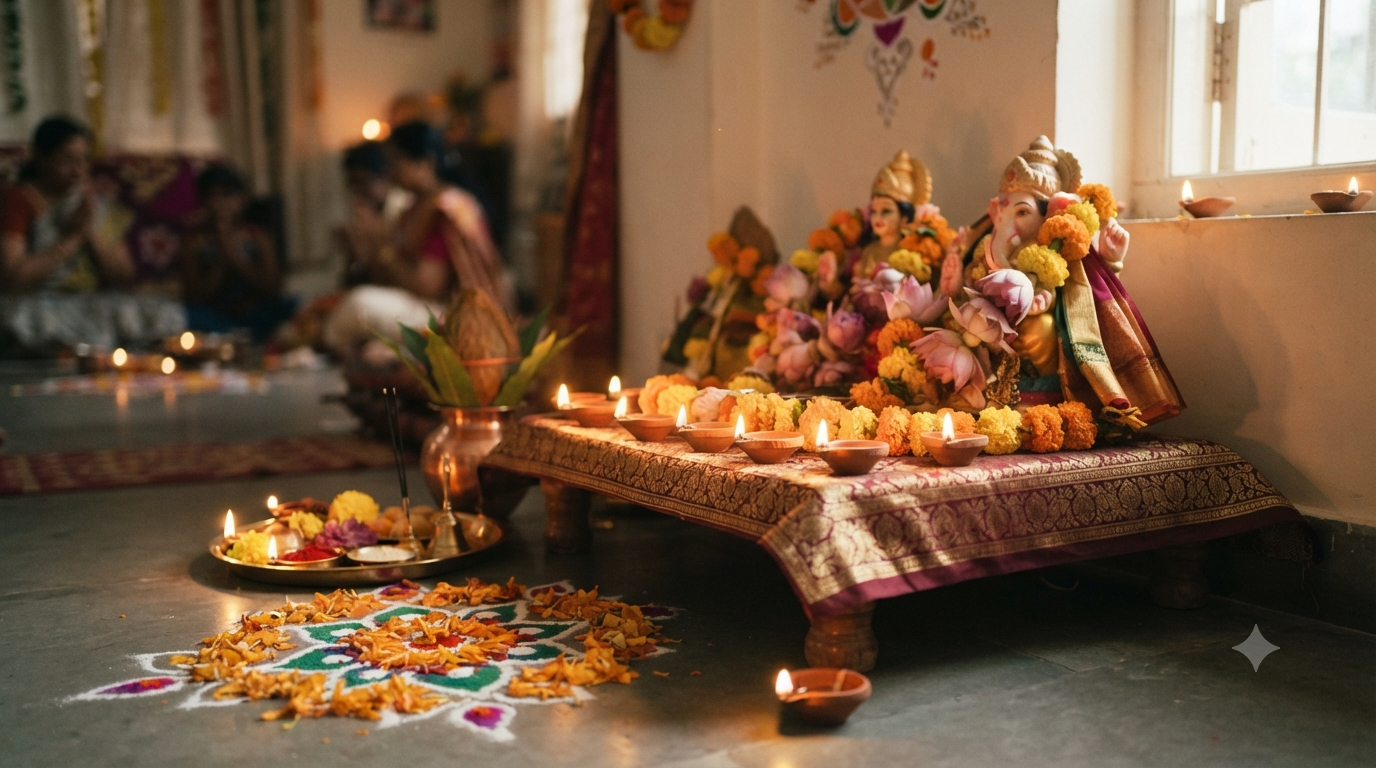
Diwali Lakshmi Ganesha Puja in 2026 falls on Sunday, 8 November, when Amavasya continues through the evening and families traditionally worship Lord Ganesha with Goddess Lakshmi. The most useful rule is simple: do not copy an old fixed clock time, because the Lakshmi Puja muhurat changes by city and local sunset.
Independent guide: Temples Map is not affiliated with any temple, trust, panchang publisher, or government body. We do not accept pooja bookings, donations, or payments, so use the cited panchang sources for current timings and follow your family tradition for ritual details.
Diwali Lakshmi Ganesha Puja 2026 at a Glance
- Main date: Sunday, 8 November 2026.
- Tithi: Amavasya begins at about 11:27-11:28 AM on 8 November and ends at about 12:31-12:32 PM on 9 November.
- General puja period: Pradosh Kaal after sunset while Amavasya is active.
- Common worship order: Lord Ganesha first, followed by Goddess Lakshmi.
- Main purpose in tradition: prayers for auspicious beginnings, wisdom, well-being, prosperity, and responsible use of wealth.
- Important caution: exact muhurat times differ by city, so a single all-India time is misleading.
Two established panchang sources agree on the main 2026 date. Drik Panchang places Lakshmi Puja on 8 November, while Prokerala also gives 8 November for Diwali and Lakshmi Puja. Their Amavasya calculations differ by about one minute, which is normal for different calculation settings and reference locations.
Diwali Lakshmi Ganesha Puja Date and Tithi in 2026
The 2026 Diwali Lakshmi Ganesha Puja takes place on Sunday, 8 November. Drik Panchang gives Amavasya from 11:27 AM on 8 November until 12:31 PM on 9 November for Indian reference cities. Prokerala gives about 11:28 AM to 12:32 PM, so both sources place Amavasya across the evening of 8 November.
That evening presence of Amavasya matters more than the civil date at midnight. Lakshmi Puja is traditionally associated with the Pradosh period after sunset, so families should check a location-based muhurat for the current festival year.
A single all-India clock time is too broad. A person in Hyderabad, Tirupati, Delhi, or Mumbai will not receive exactly the same local muhurat because sunset and the relevant fixed-lagna window shift with location.
2026 Lakshmi Puja Muhurat by City
For most household worshippers, Drik Panchang recommends the evening Pradosh window when Amavasya prevails and a fixed, or Sthir, Lagna overlaps. The table below uses its 2026 city calculations as a planning reference. Always recheck your city close to the festival because panchang settings and local tradition can affect the final choice.
| City | 2026 Lakshmi Puja Muhurat | Planning note |
|---|---|---|
| Hyderabad | 6:07 PM-8:08 PM | Local time; Pradosh begins earlier |
| Vijayawada | 6:00 PM-8:01 PM | Use city-specific sunset |
| Tirupati | 6:09 PM-8:11 PM | Vrishabha Lagna overlaps Pradosh |
| Chennai | 6:07 PM-8:09 PM | Local city reference |
| Bengaluru | 6:17 PM-8:20 PM | Local city reference |
| New Delhi | 5:54 PM-7:50 PM | Earlier sunset shifts the window |
| Mumbai | 6:27 PM-8:27 PM | Later local sunset shifts the window |
| Pune | 6:24 PM-8:24 PM | Local city reference |
These are not universal temple timings. They are household Lakshmi Puja muhurat references. If your family priest or inherited sampradaya uses a different recognised calculation, follow that tradition rather than mixing two systems midway through the pooja.
Why Are Lakshmi and Ganesha Worshipped Together on Diwali?
Diwali worship commonly brings Goddess Lakshmi and Lord Ganesha together because their symbolism complements each other. Lakshmi represents prosperity and abundance, while Ganesha is widely invoked for wisdom, auspicious beginnings, and removal of obstacles. The Government of India’s Utsav portal also describes both deities as central to main-day Diwali worship.
Devotees often understand the pairing as a reminder that wealth alone is not the whole goal. Prosperity is most useful when it comes with judgment, discipline, and a clear beginning. That is a devotional interpretation rather than a guarantee of financial results.
One story repeated online says Goddess Lakshmi adopted Ganesha from Parvati and declared that no one could prosper without worshipping him. That story appears in popular retellings, but it is not necessary to explain the practice. Regional traditions vary, so it is safer to describe the established symbolism without presenting one later legend as the single scriptural reason.
What Do You Need for Diwali Lakshmi Ganesha Puja?
A simple home setup needs only clean worship space and the items your family normally uses. You do not need to buy an elaborate kit simply because a website labels it “complete.” Prepare before sunset, so the muhurat is spent in worship rather than searching for missing items.
- Lakshmi and Ganesha murti, framed image, or the form used by your family.
- A clean chowki or low wooden platform with a fresh cloth.
- One or more oil or ghee lamps, cotton wicks, and matches.
- Flowers, turmeric, kumkum, sandal paste, and akshata or uncooked rice.
- A kalash if your household tradition uses one.
- Fresh fruit, sweets, or another simple naivedyam prepared for the family.
- Incense and camphor if you normally use them safely at home.
- Coins, account books, or work tools if your family includes business worship.
Customs differ across India, so this list is deliberately practical rather than absolute. Gujarati Chopda Pujan, Telugu household Lakshmi worship, and North Indian Lakshmi-Ganesh pujan can use different additional items.
Diwali Lakshmi Ganesha Puja Procedure at Home
The Diwali Lakshmi Ganesha Puja procedure below is a simple household sequence, not a replacement for a family priest or inherited vidhi. It keeps the order clear while leaving room for regional practice. If your family already follows a set sankalpa, mantra, or Shodashopachara sequence, keep that method.
- Clean the worship area. Finish sweeping, bathing, and most decoration before the muhurat begins. Then place the chowki in a calm, well-lit part of the home.
- Arrange the deities. Place Lakshmi and Ganesha according to your family custom. Avoid treating internet diagrams as universal because placement conventions can vary.
- Light the main lamp. Keep the diya on a stable, heat-safe surface. Then begin only after children and loose fabrics are away from the flame.
- Take the sankalpa. State the intention of the puja in the form your family uses. A simple prayer for well-being, wisdom, right conduct, and prosperity is enough when no formal text is followed.
- Worship Ganesha first. Offer flowers, akshata, and a short prayer to Lord Ganesha. Many families begin with “Om Gan Ganapataye Namah.”
Complete the Lakshmi Worship and Aarti
- Worship Goddess Lakshmi. Offer kumkum, turmeric, flowers, fragrance, lamp, and naivedyam. Families who know the Lakshmi Ashtottara or Sri Suktam may recite them.
- Offer naivedyam. Place fruit, sweets, or your household prasadam before the deities. Keep the food simple and clean rather than buying items only for display.
- Include books or business items if customary. Traders may place account books or a cash box before the altar. This is a devotional custom, not a promise of profit.
- Perform aarti. Complete the worship with aarti and family prayer. Then distribute prasadam after the offering is concluded.
- Light household diyas safely. Place lamps where they cannot tip over, and never leave open flames unattended.
For a longer Telugu-style vidhanam, use the site’s separate Dhana Lakshmi Pooja procedure. That page covers the detailed Telugu sequence, while this page stays focused on the combined Lakshmi-Ganesha worship and 2026 timing.
Should Ganesha Be Worshipped Before Lakshmi?
In many Diwali household traditions, Lord Ganesha is invoked before Goddess Lakshmi because Ganesha is honoured at the start of auspicious work. This order is common, but ritual details can differ by sampradaya, region, and family. If your inherited puja paddhati specifies another sequence, follow that established household practice.
There is no need to turn the order into a source of anxiety. The practical point is to avoid combining fragments from several online guides. Choose one recognised family or priest-guided method and complete it calmly within the appropriate evening period.
Simple Mantras for Lakshmi and Ganesha Puja
A short prayer is enough if you do not know a full Sanskrit vidhi. For Ganesha, many families chant “Om Gan Ganapataye Namah.” For Lakshmi, “Om Shreem Mahalakshmyai Namah” is a common devotional mantra. You may repeat each respectfully while offering flowers or akshata.
If your household already recites the Lakshmi Ashtottara Shatanamavali or Sri Suktam, keep that tradition. Do not rush through unfamiliar verses merely to imitate a long online ritual. Clear pronunciation, attention, and family custom matter more than the number of items on a checklist.
Regional Differences You Should Expect
Diwali is pan-Indian, but the ritual language and sequence are not identical everywhere. Telugu families may connect the evening with Dhana Lakshmi worship, while Gujarati business families often include Chopda Pujan. Other households may also worship Saraswati or Kubera alongside Lakshmi and Ganesha.
Andhra Pradesh and Telangana families should also distinguish evening Lakshmi Puja from other Deepavali observances. A household nomu may follow a separate inherited procedure, while Naraka Chaturdashi concerns the pre-dawn oil-bath observance rather than the evening Lakshmi Puja.
This separation matters in 2026 because Naraka Chaturdashi morning and Lakshmi Puja evening both fall on 8 November in many Telugu calendars. The Diwali Lakshmi Ganesha Puja therefore belongs to the evening worship plan, not the pre-dawn oil-bath observance. Treating them as one ritual can create unnecessary timing confusion.
Common Mistakes With Diwali Lakshmi Ganesha Puja
The first mistake is treating a festival date or puja time as permanent. The lunar date changes each year, while the clock window changes by location. Check the current-year panchang for your city instead.
- Using one city’s muhurat everywhere: sunset differs, so Delhi and Mumbai cannot share one exact clock window.
- Presenting popular legends as settled scripture: devotional stories vary by source and region.
- Mixing Lakshmi Puja with a family nomu: both may happen around Deepavali, yet their sankalpa and procedure can differ.
- Buying a paid “online puja booking” from an unrelated portal: this page does not take bookings or payments. Use a trusted local priest only if your family wants priest-led worship.
- Treating wealth claims as guarantees: worship expresses faith and tradition; it cannot guarantee money, business success, or investment outcomes.
- Leaving diyas unattended: a devotional lamp is still an open flame, so basic fire safety applies.
What If You Miss the Exact Muhurat?
Do not panic if a family delay makes the ideal city-specific window difficult. A muhurat is a traditional auspicious period, but household circumstances differ. If you miss it, ask your family priest or consult a reliable local panchang for the next suitable option instead of inventing a new time from a generic website.
The outcome of a ritual is not something any site can guarantee. What can go wrong is usually practical: the family starts late, follows the wrong city timing, or mixes two different procedures. The safest fallback is to use one trusted panchang and one coherent family tradition.
Deepavali Safety Around Lamps and Firecrackers
Place diyas on flat, non-flammable surfaces and keep them away from curtains, paper decorations, and synthetic clothing. Children should not handle open flames without close adult supervision. If you use firecrackers, follow your local legal restrictions and use them only in an open area.
People with asthma, breathing problems, or sensitivity to smoke should limit exposure to heavy firecracker pollution. Keep prescribed medicines available and follow medical advice for any health condition. Religious observance should not replace sensible safety or health care.
Before You Begin the Puja
For 2026, Diwali falls on Sunday, 8 November, and Lakshmi Puja belongs to the evening while Amavasya is active. Use a city-specific muhurat because the exact clock window changes with local sunset.
Prepare the altar before sunset, then perform the Diwali Lakshmi Ganesha Puja according to your household tradition. Keep the ritual simple enough to complete with attention rather than rushing through unfamiliar steps. If your family follows a detailed Telugu vidhanam, Chopda Pujan, or another inherited method, let that tradition guide the extra steps.
Diwali Lakshmi Ganesha Puja FAQs
When is Diwali Lakshmi Ganesha Puja in 2026?
Diwali Lakshmi Ganesha Puja is on Sunday, 8 November 2026. Both Drik Panchang and Prokerala place the main Lakshmi Puja on that date. Amavasya continues through the evening, which supports the traditional Pradosh-period worship.
What is the Lakshmi Puja muhurat in Hyderabad in 2026?
Drik Panchang lists the Hyderabad Lakshmi Puja muhurat at about 6:07 PM to 8:08 PM on 8 November 2026. Because timings are location-based, confirm the city setting before using the window for your household.
What is the Lakshmi Puja muhurat in Tirupati in 2026?
For Tirupati, Drik Panchang gives about 6:09 PM to 8:11 PM on 8 November 2026. Its Pradosh Kaal begins earlier, at about 5:43 PM, while the listed Lakshmi Puja window overlaps the fixed Vrishabha Lagna.
Why do people worship Lakshmi and Ganesha together on Diwali?
Devotees commonly associate Lakshmi with prosperity and Ganesha with wisdom, auspicious beginnings, and removal of obstacles. Worshipping them together therefore expresses a wish for prosperity guided by good judgment. Specific legends and ritual explanations can differ by region.
Do I have to worship Ganesha before Lakshmi?
Many families worship Ganesha first because he is traditionally invoked at the start of auspicious work. However, household traditions can vary. Follow your family’s established puja paddhati if it gives a specific order.
Can I perform Lakshmi Ganesha Puja at home without a priest?
Yes, many families perform a simple home puja themselves with lamps, flowers, naivedyam, and short prayers. If your family follows a formal Vedic or inherited ritual, you may prefer guidance from a trusted priest. A priest is not required for every simple household observance.
Which mantra can beginners chant during the puja?
Beginners commonly chant “Om Gan Ganapataye Namah” for Ganesha and “Om Shreem Mahalakshmyai Namah” for Lakshmi. If your family uses another mantra, keep that tradition. A short sincere prayer is better than rushing through unfamiliar text.
Is the Lakshmi Puja muhurat the same in every city?
No. The practical Lakshmi Puja muhurat depends on local sunset, Amavasya, and the panchang method. Always select your city on a current panchang instead of using one nationwide clock time.
Is Lakshmi Puja the same as Deepavali Nomulu or Kedara Gowri Vratham?
No, not necessarily. They may occur around the same Deepavali Amavasya, but the deity focus, sankalpa, fasting rule, thread, and procedure can differ. Follow the separate ritual your family actually observes rather than combining all of them into one puja.