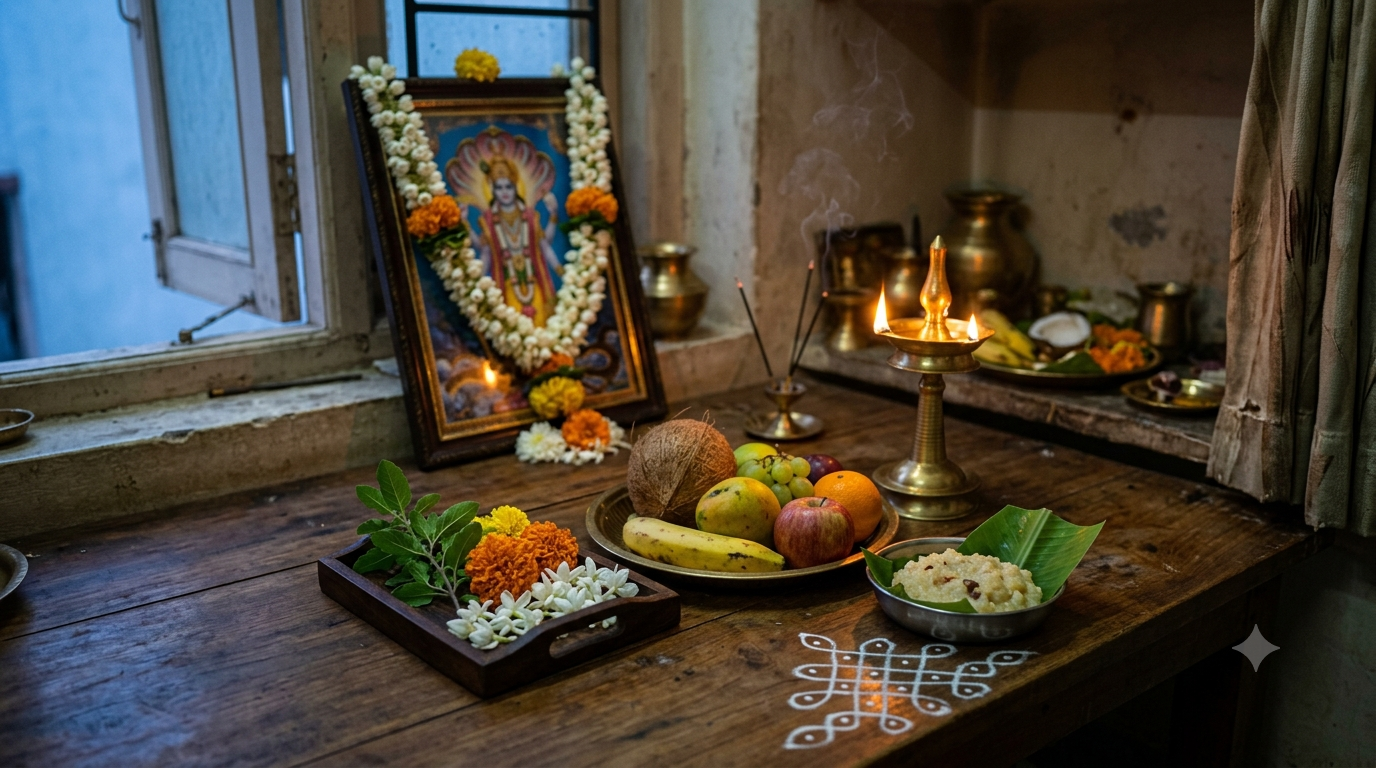
A good Dhanurmasam puja vidhanam is simpler than most people fear. You can follow the whole routine at home with items you already keep on your pooja shelf. This guide gives you the exact daily steps, the full samagri items list, the correct timing, and the naivedyam for each half of the month.
It also clears up the year confusion floating around online. Dhanurmasam is a solar month that returns every year, so a page dated to one fixed year is misleading. The upcoming cycle runs from December 16, 2026 to January 14, 2027. On that final day, the Sun moves from Dhanu Rashi into Makara Rashi on Makara Sankranti.
TemplesMap is an independent devotional guide. It is not a temple, trust, or booking service, so it does not accept bookings, donations, or payments. Every ritual here is meant for your own home worship. Any official temple detail should be confirmed on the temple’s own website.
Dhanurmasam Puja Vidhanam at a Glance
Here is the quick version of the Dhanurmasam puja vidhanam before the detail. Keep it handy for the first morning.
- Wake in Brahma Muhurta, well before sunrise, then bathe and clean the pooja space.
- Worship Lord Vishnu, often addressed as Madhusudana, along with Sri Krishna and Godadevi (Andal).
- Offer tulasi, flowers, fruits, and a lamp, because these form the heart of the daily puja.
- Recite Thiruppavai, since Andal’s verses define this month across South India.
- Offer sweet Pongal for the first 15 days, then curd rice (Dadhojanam) for the last 15 days.
- Finish before sunrise whenever you can, as dawn worship carries the special merit of this month.
What Is Dhanurmasam and When Does It Fall?
Dhanurmasam is the sacred month when the Sun travels through Dhanu Rashi, the sign of Sagittarius. It begins on Dhanu Sankranti and ends the day before Makara Sankranti. Because it follows the Sun and not the Moon, the English dates stay almost fixed each year.
The month opens around December 16 and closes around January 14. A regional panchangam may still shift a start or end by a day. For the current cycle, Dhanurmasam runs from December 16, 2026 to January 14, 2027. Tamil tradition calls the same period Margazhi, while the Telugu calendar places it inside the Margasira and Pushya months.
You can cross-check the exact Sankramanam moment for your city on Drik Panchang before you start. Vaishnavas treat this as the dearest month of Lord Vishnu. Lord Krishna names it in the Bhagavad Gita as the month he most represents.
That devotion is why homes and temples turn toward dawn worship for these 30 days. It is also why a proper Dhanurmasam puja vidhanam is built around the early morning. For the tithis and festivals inside the month, our Margasira Masam panchangam guide lists the key dates.
Why Weddings and Housewarmings Pause This Month
Many families notice that no marriages or gruhapravesams happen during Dhanurmasam. The month is called Shoonya Masam, so it is set aside from worldly ceremonies. This is not a bad omen, though. Tradition treats the same period as the finest time for sadhana, japa, and daily worship, which is exactly why the puja matters so much here.
Dhanurmasam Puja Items List (Full Samagri)
Your Dhanurmasam puja vidhanam needs nothing rare. Most items sit in your kitchen or nearby market already. The table below groups the samagri by how you will use it, so nothing gets missed on the first morning.
| Category | Items to Keep Ready |
|---|---|
| Deity | A small idol or framed photo of Lord Vishnu, Krishna, and Godadevi (Andal) |
| Lamp and light | Ghee or oil lamp, cotton wicks, matchbox, camphor (karpuram) |
| Fragrance | Incense sticks or sambrani, sandalwood powder (gandham) |
| Kumkum tray | Kumkum, turmeric (pasupu), akshata (rice mixed with turmeric) |
| Offerings | Fresh flowers, tulasi sprigs, a coconut, betel leaves and nuts, five kinds of fruit |
| Abhishekam | Milk, curd, ghee, sugar, honey for Panchamrita, plus coconut water |
| Naivedyam | Rice, moong dal, ghee, pepper, curry leaves for Pongal; curd for Dadhojanam |
| Extras | A small bell, a plate or panchapatra for water, rangoli powder for the doorstep |
Two items deserve care. Tulasi should be picked as three-leaf sprigs called dalams, not single leaves, because that is the traditional form offered to Vishnu. A conch (shankam) is ideal for pouring the abhishekam, yet a clean small pot works if you do not own one. If you cannot arrange a metal idol, a printed photo is fully accepted for home practice.
Dhanurmasam Puja Vidhanam: Step-by-Step at Home
This daily Dhanurmasam puja vidhanam follows a steady order. Keep it short and repeatable, since consistency across the month matters more than a long ritual on day one.
- Wake in Brahma Muhurta, roughly 4 to 5 a.m., and take a bath before you sit for puja.
- Clean the pooja mandir, then decorate the doorstep with a small rangoli if you can.
- Light the lamp and incense, and place fresh flowers and tulasi before the deity.
- Do a short Sankalpa, chanting “Om Namo Narayanaya” to set your intention for the day.
- Offer a simple abhishekam with Panchamrita and coconut water if you keep a metal idol; for a photo, offer flowers and tulasi instead.
- Apply gandham, kumkum, and akshata, then offer fruits, coconut, and the day’s naivedyam.
- Recite Thiruppavai, Vishnu Sahasranama, or a few names of Krishna and Godadevi.
- Show harati with camphor, then share the prasadam with everyone at home.
The whole routine can finish in 15 to 20 minutes. Do not stretch it so long that you cannot repeat it daily. The daily rhythm is the real vratam, so a steady Dhanurmasam puja vidhanam beats an elaborate one you cannot sustain.
Best Time for the Dhanurmasam Puja
Dawn is the whole point, so timing shapes the entire Dhanurmasam puja vidhanam. Tradition ranks it in a simple way. Worship done while stars are still visible is called Uttama, the best form. Worship after the stars fade but before sunrise is Madhyama.
A puja done after sunrise is treated as an ordinary puja, not a true Dhanurmasa puja. So aim to finish before the Sun clears the horizon whenever your schedule allows. Even a short worship in that window carries the special merit of the month.
Naivedyam: First 15 Days vs Last 15 Days
The food offering changes at the halfway mark, and this is the one part of the Dhanurmasam puja vidhanam that shifts mid-month. For the first 15 days, offer Chakkera Pongali, a sweet Pongal of rice, moong dal, ghee, and jaggery. For the last 15 days, offer Dadhojanam, which is simple curd rice.
Pulihora and plain sweet Pongal are also common offerings. Many home guides get this next point wrong, so note it carefully. The puja timing itself stays anchored to dawn throughout, because only the naivedyam changes, not the hour of worship.
Thiruppavai: The Heart of Dhanurmasam
No Dhanurmasam routine is complete without Thiruppavai. Andal, also called Godadevi, composed these 30 Tamil verses in longing for Lord Vishnu. Devotees recite one pasuram a day across the month, so the last verse lands near Bhogi.
At Tirumala, Thiruppavai even replaces the daily Suprabhatam during this month. If you want the verses to chant at home, our Thiruppavai pasuram lyrics guide has them in Telugu. You can read more about the temple observances on the official TTD website and through the Jeeyar Educational Trust, which publishes traditional Dhanurmasam guidance.
What Most Home Guides Get Wrong
Several myths circulate about this month, and clearing them saves you worry.
- You do not need a gold or silver idol. Old texts mention them, yet a copper idol or even a clean photo is accepted for household worship.
- The puja stays at dawn all month. Some pages claim the last 15 days move to evening, but only the naivedyam changes to curd rice while the worship time stays early.
- After-sunrise puja still has value as devotion. It simply does not carry the special Dhanurmasa merit, so do not feel it is worthless if you are late.
- A missed day is not a failure. If a full month is hard, tradition itself allows 15, 8, or even a single sincere day.
The Ekadashi inside this month, Vaikunta Ekadashi, deserves its own attention. See our Vaikunta Ekadashi puja procedure for the fasting rules on that day.
Dhanurmasam Puja Vidhanam for First-Timers
If this is your first year, keep the Dhanurmasam puja vidhanam small and regular. Fix your idol or photo the night before, so the morning stays calm. Keep the flowers, tulasi, and fruit washed and ready on a plate.
Pick one text to chant, such as a single Thiruppavai pasuram, rather than attempting everything at once. Cook the naivedyam fresh, because freshly made offerings are the tradition. A steady 15-minute puja every day will always beat an elaborate one you cannot sustain.
Health and Safety for Early-Morning Worship
December mornings turn cold across most of India, and this month asks you to rise very early. Dress warm and avoid slipping on wet floors after your bath. If you are elderly, pregnant, diabetic, or managing blood pressure or heart issues, check with your doctor before cold-water baths or any fasting.
Never skip prescribed medicine for a vratam. Devotion is a spiritual practice, not a medical treatment, so keep both in their place. Treat these rituals as faith and tradition, and rely on qualified care for any health concern.
The Bottom Line Before You Begin
Dhanurmasam rewards steadiness more than scale, so a simple daily puja done with care is the real goal. Keep your samagri ready, worship at dawn, offer sweet Pongal early in the month and curd rice later, and let Thiruppavai carry your mornings.
Confirm this year’s exact Sankramanam timing for your city, and route any temple booking through the official portal rather than a third party. Do that, and your home Dhanurmasam puja vidhanam will match temple tradition closely.
Frequently Asked Questions
How do I perform Dhanurmasam puja vidhanam at home?
Wake in Brahma Muhurta, bathe, and clean the pooja space first. Light a lamp, offer tulasi, flowers, and fruit to Lord Vishnu, chant “Om Namo Narayanaya” and a Thiruppavai verse, offer the day’s naivedyam, and finish with harati. The full routine takes about 15 to 20 minutes daily.
When does Dhanurmasam start and end?
Dhanurmasam runs from December 16, 2026 to January 14, 2027 in the current cycle. It begins on Dhanu Sankranti and ends at Makara Sankranti. Because it follows the Sun, the dates barely change year to year, though a local panchangam may vary by a day.
What items are needed for Dhanurmasam pooja?
Keep a Vishnu or Krishna idol or photo, a lamp with ghee and wicks, camphor, incense, gandham, kumkum, akshata, flowers, tulasi sprigs, a coconut, betel leaves, and five fruits. For naivedyam, keep rice, moong dal, ghee, pepper, and curd ready.
What naivedyam should I offer during Dhanurmasam?
Offer sweet Chakkera Pongali or Pulagam for the first 15 days. Switch to Dadhojanam, which is curd rice, for the last 15 days. Pulihora is also a common offering. Always cook the naivedyam fresh before you offer it.
Can I do Dhanurmasam puja without a metal idol?
Yes, a clean framed photo of Lord Vishnu, Krishna, or Godadevi is fully accepted at home. A metal idol allows abhishekam, but it is not compulsory. Sincere daily worship matters far more than the material of the idol.
Why is Thiruppavai recited in Dhanurmasam?
Thiruppavai is Andal’s set of 30 Tamil verses expressing her devotion to Lord Vishnu. Devotees chant one verse a day through the month. The recitation is so central that Tirumala replaces its daily Suprabhatam with Thiruppavai during Dhanurmasam.
Is fasting compulsory during Dhanurmasam?
No, daily fasting is not required for the whole month. Many devotees only fast on special days like Vaikunta Ekadashi. If you have any health condition, consult your doctor before observing any fast during this period.
What if I miss a day of the vratam?
A missed day does not cancel your observance. Tradition allows shorter versions of 15, 8, 6, or even a single sincere day. Simply resume the next morning and continue with the same devotion.